Supplement
Berberine HCl
Glycemic control (fasting glucose, HbA1c A blood test that reflects average blood sugar over the previous two to three months.) and LDL Low-density lipoprotein cholesterol, the cholesterol fraction most closely tied to plaque in the arteries. cholesterol in type 2 diabetes and dyslipidemia, on placebo-controlled trials and pooled analyses; insulin sensitivity by HOMA-IR, not by clamp.
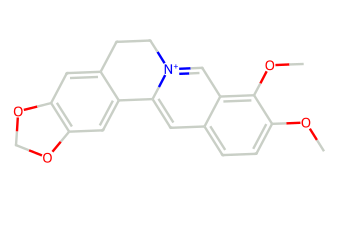
Berberine is a plant compound found in several herbs. In people with type 2 diabetes, it lowered average blood sugar and LDL cholesterol more than a dummy pill did. A large study at 20 hospitals found the same thing as earlier, smaller ones. The drop was modest, and stomach upset was more common on berberine. It carries risks in pregnancy and breastfeeding, for newborns, and in serious liver disease.
A letter describes the human evidence, not the product, the manufacturer, or the ingredient's worth.
See the full evidence record →Who responds: this record's trial reading reports no subgroup that identifies who responds.
HbA1c, fasting glucose and LDL cholesterol in type 2 diabetes and dyslipidemia, on placebo-controlled trials and pooled analyses.
A grade describes the intervention that was tested. Where the product on the shelf differs from it, this says so.
How this letter has changed · latest: October 2026 · Corrected
Placebo-controlled replication The same finding reproduced by a separate research group. A result seen once can be chance or bias; a replicated one is harder to explain away. is on the record: Zhang et al. (J Clin Endocrinol Metab, 2008; PMID 18397984), PREMOTE (PMID 33024120), Ming 2021 (PMID 34365978) and Zhao 2023 (PMID 37598753), so the flag applied only to the metformin comparison, which the reading already confines to the 36-person pilot (Yin et al., Metabolism, 2008; PMID 18442638). Flag removed. The written B attaches to the dose the trials used, and those trials gave 1.0 to 1.2 g/day where the name said 1.5 g/day, so the name now reads Berberine 1.0 to 1.2 g/day (with meals). Applied the written grade definition under the editor's standing instruction of October 2026 (Arnold Sandlow, D.C.).PMID 18397984 PMID 18442638 PMID 33024120 PMID 34365978 PMID 37598753
The description gave Zhang 2008 (PMID 18397984) within-arm changes as differences versus placebo, called the single 36-person Yin 2008 pilot (PMID 18442638) a metformin equivalence, and said Zhang's primary outcome was HbA1c when it was plasma glucose and lipids; all corrected. Xie 2022 (PMID 36467075) is described as pooling berberine with and without other drugs. The placebo-controlled replication is now cited: PREMOTE (PMID 33024120), Ming 2021 (PMID 34365978), Zhao 2023 (PMID 37598753). The 'mandatory interaction check' wording is replaced by the interaction evidence itself, Guo 2012 (PMID 21870106). The record now says the B is drawn from 1.0 to 1.2 g/day trials and that 1.5 g/day matches only the pilot. Letter unchanged.PMID 18397984 PMID 18442638 PMID 36467075 PMID 33024120 PMID 34365978 PMID 37598753 PMID 21870106
The best-use line listed AMPK activation and microbiome modulation, which are mechanisms, and insulin sensitivity, which Zhang 2008 (PMID 18397984) did not show by clamp; rewritten to the surrogates the trials measured. Added PREMOTE (PMID 33024120), the placebo-only pooled analyses Zhao 2023 (PMID 37598753) and Blais 2023 (PMID 36941490) for lipids, and Lei 2026 (PMID 41543854), null on visceral and liver fat. The dihydroberberine absorption claim now cites its source, Moon 2021 (PMID 35010998), with its supplier funding and null glucose result. The CYP interaction evidence, Guo 2012 (PMID 21870106), is on the record. The unsourced 'higher doses in Chinese medicine' line is gone. Letter unchanged.PMID 18397984 PMID 33024120 PMID 37598753 PMID 36941490 PMID 41543854 PMID 35010998 PMID 21870106
Every change to a letter on this site is dated and published. The full evidence log →
Commercial disclosure
EBL earns no commission on any supplement it grades. A purchase made through the dispensary link below pays EBL nothing, the practitioner discount goes to you in full. The dispensary is Fullscript, a practitioner dispensary, and many of the professional-grade brands in it are sold mainly through practitioners rather than in health food stores. Grades are assigned by published rubric before any commercial relationship exists and are never influenced by one. Full disclosure.
1.0 to 1.2 g/day (500 mg two to three times daily) in the placebo-controlled trials; the 1.5 g/day used in the metformin-comparison pilot is the highest dose a cited trial gave.
Berberine HCl is the form used in nearly every human trial. The claim that dihydroberberine is absorbed several times better rests on one 5-man crossover A trial design in which each participant receives both the treatment and the comparison, one after the other, and serves as their own control. (Moon et al., Nutrients, 2021; PMID 35010998) funded by a dihydroberberine supplier with a paid advisor among the authors; it found higher berberine blood levels after 100 mg dihydroberberine than after 500 mg berberine and no difference in glucose or insulin. No outcome trial has used dihydroberberine.
The cited diabetes trial gave 1.0 g a day (PMID 18397984). Its summary does not state how the dose was split or whether it was taken with meals.
Checked against the published summary; the full paper could not be read. What the cited trials did, not a schedule. Every supplement, by trial timing →
How to buy this: quality criteria, not a brand
500mg 2–3x/day with meals (1,000–1,500mg total): underdosing is the common failure.
Berberine HCl (the trial form). Dihydroberberine absorbs better but has less outcome data.
Third-party tested for purity.
A single 500mg/day (underdose); blends hiding the mg; DHB marketed as “proven superior.”
The grade and these criteria are set only from human trials. Any purchase link is convenience and does not affect the grade.
Pregnancy, on uterotonic activity, and breastfeeding. Neonates, on the risk of displacing bilirubin. Severe hepatic impairment.
Berberine inhibits CYP2D6, CYP2C9 and CYP3A4 in humans after two weeks at 300 mg three times daily (Guo et al., 2012; PMID 21870106), so blood levels of drugs cleared by those enzymes can rise: many antidepressants and antipsychotics, warfarin and losartan, statins and calcium channel blockers among them. Added to glucose-lowering drugs, additive lowering is the expectation. Gastrointestinal side effects are more frequent than on placebo in the pooled trials. Ciclosporin: berberine raised ciclosporin blood concentrations in a randomized pharmacokinetic study in renal transplant recipients, which is unusually strong evidence for a supplement interaction and matters because ciclosporin has a narrow therapeutic window. Diabetes medication including metformin and sulfonylureas: additive glucose lowering. Berberine inhibits CYP3A4 and P-glycoprotein, so drugs cleared by those routes may reach higher levels. Ibrutinib is one of those drugs: it is cleared by CYP3A4, and no study of berberine with ibrutinib exists.
Berberine raises ciclosporin blood levels. Berberine increased ciclosporin A blood concentrations in renal transplant recipients in a randomized clinical and pharmacokinetic study, which matters because ciclosporin has a narrow therapeutic window. Wu et al. (European Journal of Clinical Pharmacology, 2005; PMID 16133554): randomized clinical and pharmacokinetic study of the effects of berberine on the blood concentration of ciclosporin A in renal transplant recipients.
Berberine inhibits CYP3A4, the enzyme that clears ibrutinib. Two weeks of berberine at 300 mg three times daily raised midazolam exposure by about 40% in healthy men, a measure of CYP3A4 inhibition. Ibrutinib is cleared by CYP3A4: grapefruit juice, a CYP3A4 inhibitor, roughly doubled its absolute bioavailability The share of a dose that reaches the bloodstream in a form the body can use. in healthy adults, and the prescribing information lowers the ibrutinib dose alongside moderate CYP3A inhibitors. A PubMed search in September 2026 located no study giving berberine with ibrutinib. Guo et al. (European Journal of Clinical Pharmacology, 2012; PMID 21870106): repeated administration of berberine inhibits cytochromes P450 in humans. de Vries et al. (British Journal of Clinical Pharmacology, 2016; PMID 26382728): absolute bioavailability of ibrutinib and the effect of grapefruit juice in healthy adults.
Fasting glucose, HbA1c, fasting insulin, lipid panel (LDL, TG) at 3 months
Primary evidenceNine papers, each linked to its PubMed record.
Zhang et al. (J Clin Endocrinol Metab, 2008; PMID 18397984): placebo-controlled randomized trial, 116 adults with type 2 diabetes and dyslipidemia, berberine 1 g/day for 3 months; HbA1c fell from 7.5 to 6.6 percent and LDL cholesterol from 3.23 to 2.55 mmol/L within the berberine arm, each significantly different from placebo; clamp-measured glucose disposal did not differ from placebo (P = 0.063). The comparison with metformin is a different trial, Yin et al. (Metabolism, 2008; PMID 18442638), a 36-person pilot cited on the berberine protocol record. Replication: PREMOTE (Zhang et al., Nat Commun, 2020; PMID 33024120), 409 newly diagnosed patients, 20 centers, HbA1c the primary outcome, 0.99 points down on berberine alone versus 0.59 on placebo, with more gastrointestinal side effects. Pooled, placebo-controlled only: Zhao et al. (J Nutr, 2023; PMID 37598753), 20 trials, fasting glucose 0.52 mmol/L lower, HbA1c about 0.4 percent lower, HOMA-IR 0.85 lower; Blais et al. (Drugs, 2023; PMID 36941490), 18 trials, 1,788 adults, LDL cholesterol 0.46 mmol/L lower, triglycerides 0.34 lower, apolipoprotein B lower, gastrointestinal adverse events more frequent than on placebo. Lan et al. (J Ethnopharmacol, 2015; PMID 25498346): 27 trials; effects versus oral hypoglycemic drugs not significant. Lei et al. (JAMA Netw Open, 2026; PMID 41543854): 337 diabetes-free adults with obesity and fatty liver, 1 g/day for 6 months; LDL and apolipoprotein B lower, but null on the primary endpoints The one outcome a trial names in advance as its main test. Results on other outcomes carry less weight., visceral fat and liver fat. Interactions: Guo et al. (Eur J Clin Pharmacol, 2012; PMID 21870106), berberine 300 mg three times daily for 2 weeks inhibited CYP2D6, CYP2C9 and CYP3A4 in healthy men. Form: the dihydroberberine absorption claim rests on Moon et al. (Nutrients, 2021; PMID 35010998), a 5-man crossover funded by a dihydroberberine supplier, with no difference in glucose or insulin (see form note). Grade B: replicated placebo-controlled trials on glycemic and lipid surrogates.
The trials below gave the supplement in addition to a prescribed drug, with the drug present in both arms. Each result is stated as it was measured. EBL does not translate these findings into anything about a prescription.
A meta-analysis of 11 randomized trials totalling 1,386 patients found berberine added to simvastatin lowered triglycerides (mean difference -0.33 mmol/L, 95 percent CI -0.46 to -0.20) and total cholesterol (-0.36, 95 percent CI -0.60 to -0.12) more than simvastatin alone. LDL, the lipid endpoint The outcome a trial measures to decide whether the treatment worked, such as heart attacks, blood pressure or a symptom score. that carries the cardiovascular claim, is not reported for the combination. The review rates the quality and quantity of its own included studies as unsatisfactory, and the trials were drawn largely from the Chinese-language databases SinoMed, CNKI and WanFang.
Background therapy. Simvastatin was continued in both arms across the pooled trials; berberine was added to it.
Zhang et al. (The American Journal of Chinese Medicine, 2019; PMID 31094214): systematic review A review that searches for every study on a question using a method set in advance, then assesses them together. and meta-analysis of 11 randomized trials of berberine alone or combined with statins in hyperlipidemia.
A systematic review of berberine in hypertension examined the combination of berberine with amlodipine and found it was not significantly better than amlodipine alone at reducing either systolic or diastolic blood pressure. The review rates the whole body of evidence as low quality and heterogeneous, and reports that the heterogeneity How much the results of the pooled trials differ from each other. High heterogeneity makes a combined estimate less reliable. prevented a meaningful meta-analysis, so this is a null result from weak evidence rather than a firm demonstration of no effect. It is recorded because the pair is widely assumed to work and the assumption has been tested.
Background therapy. Amlodipine was given in both arms; berberine was added in one of them.
Suadoni and Atherton (Complementary Therapies in Clinical Practice, 2021; PMID 33461163): systematic review of 7 controlled trials, 614 participants, of berberine for hypertension.
Educational use only · Not medical advice · Starting, stopping or changing any supplement or medication is a decision for your physician
These statements have not been evaluated by the Food and Drug Administration. This product is not intended to diagnose, treat, cure, or prevent any disease. The grade on this page describes the strength of published human trial evidence in the populations studied. It is not a recommendation for any individual and is not medical advice. Starting, stopping or changing any supplement or medication is a decision for your physician.
This page carries a letter. EBL takes no commission, referral fee or payment of any kind on anything it grades. No letter has been bought and none is for sale.
How this is enforced
That is not a promise, it is a build condition. Two checks run on every deploy: one refuses to publish if a commission is claimed on anything graded, the other refuses if a page names a commercial relationship that is not declared in the register. If either fails, this page does not go live. You can read how the checks work, and what they do not cover, on the evidence integrity page.
How EBL searched for the trials (1 search)
The search that was run, what it returned, and what was left out and why, so the absence of evidence can be checked as well as its presence.
berberine[tiab] AND (diabetes[tiab] OR glyc*[tiab] OR HbA1c[tiab]) AND (randomized controlled trial[pt] OR meta-analysis[pt]) AND humans[mesh]Grades move when new trials publish. A free monthly email lists every grade EBL moved, with the reason and the trial behind it: the sign-up is on the Evidence Log →