Supplement · graded by use, 10 uses
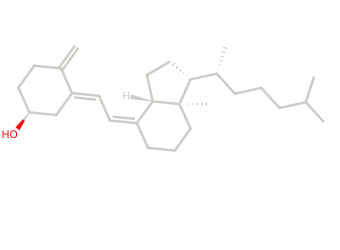
Vitamin D3
Fracture prevention, vitamin D3 with calcium, older adults living in institutions.
Vitamin D is best known for bones. In older people living in care homes, vitamin D taken together with calcium led to fewer broken bones. Taken alone, it did not. In very large studies of adults who were not short of vitamin D, it did not prevent cancer, heart attacks, strokes or broken bones. Results for falls and for chest infections are mixed. Very high doses over a long time can push blood calcium too high.
The B belongs to one of the 10 uses graded on this record. The other nine carry their own letters.
As studied, and the trials
Tested with vitamin D3 alone, and no benefit. Avenell et al. (Cochrane Database Syst Rev, 2014; PMID PubMed ID: the permanent number the US National Library of Medicine gives a published paper. Each one links to that paper's record on PubMed. 24729336) found high-quality evidence that vitamin D alone does not prevent hip or any fracture; vitamin D with calcium gave a small hip fracture reduction, which is a different intervention and is graded on its own row below. Massé et al. (BMJ, 2026; PMID 42161415), a meta-analysis A study that pools the numbers from several trials into one combined estimate. of 69 randomized trials, found no effect of vitamin D alone on any fracture (RR 1.00). Recent trials in older adults were null: Waterhouse et al. (Lancet Diabetes Endocrinol, 2023; PMID 37011645) and Rikkonen et al. (Bone, 2026; PMID 42704968). The two sources this use previously rested on test something else: Chapuy et al. (N Engl J Med, 1992; PMID 1331788) gave vitamin D3 with calcium to institutionalized women, and the 2005 fracture meta-analysis (PMID 15886381) has been superseded by the larger analyses above. Moved from B in October 2026 by editor adjudication.
As studied, and the trials
Mixed. The cited meta-analysis (Bischoff-Ferrari et al., BMJ, 2009; PMID 19797342; 8 trials) was positive, but later and larger evidence is not: Ling et al. (Clin Nutr, 2021; PMID 34656949) found no overall effect of vitamin D alone (RR 1.00), with benefit only in people with low baseline levels. High doses increased falls: Sanders et al. (JAMA, 2010; PMID 20460620) with an annual 500,000 IU dose, and Bischoff-Ferrari et al. (JAMA Intern Med, 2016; PMID 26747333) with monthly 60,000 IU. Appel et al. (Ann Intern Med, 2021; PMID 33284677) found 1,000 IU/day or more did not prevent falls in older adults with low vitamin D and raised fall risk, with safety concerns at higher doses. Two further pooled analyses: Massé et al. (BMJ, 2026; PMID 42161415), 69 trials, found vitamin D alone had no effect on the risk of falling (high certainty), while Wei et al. (Front Endocrinol, 2022; PMID 36034418), 38 trials, found fewer falls at 700 IU a day or more. Pooled analyses disagree: C. Moved from B in October 2026 by editor adjudication.
As studied, and the trials
Mixed, and the split follows the population. Chapuy et al. (N Engl J Med, 1992; PMID 1331788): 3,270 ambulatory women in institutions, mean age 84, 800 IU vitamin D3 with 1.2 g calcium daily for 18 months; hip fractures 43 percent lower and nonvertebral fractures 32 percent lower than double placebo An inactive substitute made to look like the real treatment, so participants cannot tell which one they received.. Avenell et al. (Cochrane Database Syst Rev, 2014; PMID 24729336): nine trials, 49,853 participants, vitamin D plus calcium reduced hip fracture (RR 0.84), which the review translates to nine fewer hip fractures per 1,000 per year in institutions and one fewer per 1,000 in the community. Jackson et al. (N Engl J Med, 2006; PMID 16481635), the Women's Health Initiative: 36,282 community-dwelling postmenopausal women, 400 IU with 1,000 mg calcium for 7 years; hip fracture hazard ratio How often an event happened in the treated group compared with the control group over the same period. A ratio of 0.80 means 20 percent fewer events. 0.88 with a confidence interval The range the true effect probably falls in. A wide interval means the estimate is uncertain. crossing 1, and renal calculi more frequent. Grant et al. (Lancet, 2005; PMID 15885294), RECORD: 5,292 adults aged 70 or over after a low-trauma fracture, 800 IU with 1,000 mg; no reduction in new fractures. Replicated The same finding reproduced by a separate research group. A result seen once can be chance or bias; a replicated one is harder to explain away. benefit on a hard endpoint, pooled across nine trials with high-quality evidence by the Cochrane reviewers, and null in the two largest trials outside institutions: B, scoped to older adults living in institutions, the population in which the trials were positive. Not A: the pooled benefit is carried by the institutional trials, and the community trials did not reproduce it. This row grades the combination; vitamin D3 alone for fracture is D Route 2 Human randomized trials have been run and did not show benefit on the stated outcome. One of the two routes to the lowest letter on EBL's scale. on the row above.
As studied, and the trials
VITAL (Manson et al., N Engl J Med, 2019; PMID 30415629; 25,871 adults not selected for vitamin D status) found no reduction in invasive cancer incidence, and a meta-analysis of 12 trials found none either (Keum et al., Br J Cancer, 2022; PMID 35676320; RR 0.99). Tested; no benefit on incidence. Cancer death is a different endpoint: the same meta-analysis found a lower cancer mortality among trials of daily dosing (0.87), a subgroup result that this row does not grade.
As studied, and the trials
VITAL (Manson et al., N Engl J Med, 2019; PMID 30415629) found no reduction in major cardiovascular events. D-Health (Thompson et al., BMJ, 2023; PMID 37380191; 21,302 older Australians, 60,000 IU monthly) found a borderline lower rate (hazard ratio 0.91, 0.81 to 1.01) with fewer heart attacks, which its authors describe as consistent with no effect. ViDA (Scragg et al., JAMA Cardiol, 2017; PMID 28384800; 5,110 adults aged 50 to 84 in New Zealand, 200,000 IU then 100,000 IU monthly for a median 3.3 years) found no reduction in cardiovascular disease (hazard ratio 1.02, 0.87 to 1.20), including in the quarter who were deficient at baseline. Three large trials without a clear benefit: tested, no benefit.
As studied, and the trials
VITAL ancillary (LeBoff et al., N Engl J Med, 2022; PMID 35939577) found supplemental vitamin D did not reduce fractures in generally healthy midlife and older adults not selected for vitamin D status. D-Health (Waterhouse et al., 2023; PMID 37011645) and the Finnish FIND trial (Rikkonen et al., Bone, 2026; PMID 42704968) were also null, and FIND recorded more fractures in its 1,600 IU/day arm (hazard ratio 1.52) while 3,200 IU/day did not differ from placebo. DO-HEALTH (Bischoff-Ferrari et al., JAMA, 2020; PMID 33170239; 2,157 adults aged 70 and over, 2,000 IU/day for 3 years) found no effect on nonvertebral fractures. Tested; no benefit. Vitamin D3 alone in deficient or older adults is also D on the row above; only vitamin D3 with calcium in institutions carries the B.
As studied, and the trials
Mixed. Martineau et al. (BMJ, 2017; PMID 28202713) pooled individual-patient data from randomized trials and found a modest reduction, largest in very deficient people. The same group's update, Jolliffe et al. (Lancet Diabetes Endocrinol, 2025; PMID 39993397), with 40 trials, found the overall effect no longer statistically significant Unlikely to be explained by chance alone at the threshold the study set. It says nothing about whether the difference is large enough to matter. (OR 0.94, 95% CI 0.88 to 1.00) and no modification by baseline vitamin D status. A test-and-treat trial in people with low levels, Jolliffe et al. (BMJ, 2022; PMID 36215226), found no reduction in acute respiratory infection. Moved from B in October 2026 by editor adjudication.
As studied, and the trials
D-Health (Neale et al., Lancet Diabetes Endocrinol, 2022; PMID 35026158): 21,315 Australians aged 60 and over, 60,000 IU monthly for 5 years; deaths 5.3 against 5.1 percent (hazard ratio 1.04, 0.93 to 1.18), with point estimates the authors describe as consistent with more cancer deaths. Zhang et al. (BMJ, 2019; PMID 31405892), 52 randomized trials and 75,454 participants: no effect on all-cause mortality (risk ratio 0.98, 0.95 to 1.02). Cancer death was lower in that pool (0.84), a different endpoint this row does not grade. A large trial built for this endpoint and a large pooled analysis, both null: tested, no benefit.
As studied, and the trials
D2d (Pittas et al., N Engl J Med, 2019; PMID 31173679): 2,423 adults with prediabetes not selected for vitamin D status, 4,000 IU a day for a median 2.5 years; diabetes in 9.39 against 10.66 per 100 person-years (hazard ratio 0.88, 0.75 to 1.04), not significant. The same research group's pooled analysis of three trials (Pittas et al., Ann Intern Med, 2023; PMID 36745886), which includes D2d and a trial of eldecalcitol, a prescription vitamin D analog, found 15 percent fewer cases (hazard ratio 0.85, 0.75 to 0.96). The largest trial alone was null, and the positive pool rests on it and on a drug that is not vitamin D3: mixed, C. New-onset diabetes here is a diagnosis defined by glucose thresholds.
As studied, and the trials
VITAL-DEP (Okereke et al., JAMA, 2020; PMID 32749491): 18,353 adults aged 50 and over, 2,000 IU a day for a median 5.3 years; depression or clinically relevant symptoms in 12.9 against 13.3 per 1,000 person-years (hazard ratio 0.97, 0.87 to 1.09), with no difference in first episodes, recurrences or mood scores (mean difference 0.01 points). One large trial built for this endpoint, null: tested, no benefit, on the same footing as other single-trial Route 2 rows. This does not grade vitamin D as a treatment for people who already have depression.
Read the grade that matches your goal. How EBL grades by use →
A letter describes the human evidence, not the product, the manufacturer, or the ingredient's worth.
See the full evidence record →Vitamin D3 with calcium for fracture prevention in older adults living in institutions. Vitamin D3 alone for fracture is Grade D.
Why this gradeThe reasoning, and what the grade does not cover.
Headline Grade B. The headline follows the best-supported use: vitamin D3 with calcium for fracture prevention in older adults living in institutions, B on replicated hard-endpoint benefit in institutions with the large community trials null. Fracture prevention with vitamin D3 alone moved from B to D on Route 2 in October 2026, because the Cochrane review and a 69-trial meta-analysis found no effect of vitamin D alone and the trial previously cited gave calcium as well. Falls and respiratory infection are C on mixed randomized evidence. Cancer, cardiovascular and fracture prevention in adults not selected for vitamin D status are D on Route 2.
WHAT THIS GRADE DOES NOT COVERtreating diagnosed vitamin D deficiency or conditions such as rickets and osteomalacia, which are medical treatment rather than supplementation; and vitamin D3 on its own for fracture, which is D. Safety signals from the trials: annual 500,000 IU and monthly 60,000 IU doses increased falls, and the 1,600 IU/day arm of the Finnish trial had more fractures than placebo.
A grade describes the human evidence for a named use. It is not advice, and it is not a judgment on any individual prescription. How the letters are decided →
Trials report an average. This box says whether any trial on this record looked at who the result applies to, and what it found.
For Fall prevention (older adults), Grade C · Subgroup tested, effect differedA pooled analysis, Ling et al. (Clin Nutr, 2021; PMID 34656949), found no overall effect of vitamin D alone on falls, with benefit only in people with low baseline vitamin D levels. A trial that enrolled only older adults with low vitamin D, Appel et al. (Ann Intern Med, 2021; PMID 33284677), found that 1,000 IU a day or more did not prevent falls and raised fall risk. The two results disagree, so a low baseline level has not been shown to identify who benefits. A subgroup result shows who the effect appeared in within these trials. It does not change the letter.
For Prevention of acute respiratory tract infection (esp. in vitamin D-deficient people), Grade C · Subgroup tested, no differenceAn individual-patient analysis, Martineau et al. (BMJ, 2017; PMID 28202713), reported the reduction was largest in very deficient people. The same group's larger update, Jolliffe et al. (Lancet Diabetes Endocrinol, 2025; PMID 39993397), with 40 trials, found the effect did not differ by baseline vitamin D status, and a test-and-treat trial in people with low levels, Jolliffe et al. (BMJ, 2022; PMID 36215226), found no reduction in acute respiratory infection.
As studied: dose, form, population and duration for every use
A grade describes the intervention that was tested. Where the product on the shelf differs from it, this says so.
How this letter has changed · latest: October 2026 · Added
VITAL-DEP (Okereke et al., JAMA, 2020; PMID 32749491) randomized 18,353 adults aged 50 and over to 2,000 IU a day or placebo for a median 5.3 years, with depression as a primary endpoint The one outcome a trial names in advance as its main test. Results on other outcomes carry less weight., and found no difference in depression or mood scores. One large null trial on the endpoint it was built for is Route 2, as on other single-trial rows, so this use enters at D. The record's top letter does not change.PMID 32749491
A completeness check against the large vitamin D trials found two the record did not cite. ViDA (Scragg et al., JAMA Cardiol, 2017; PMID 28384800), 5,110 adults given monthly high doses, found no reduction in cardiovascular disease. DO-HEALTH (Bischoff-Ferrari et al., JAMA, 2020; PMID 33170239), 2,157 adults aged 70 and over, found no effect on nonvertebral fractures. Both agree with the existing rows, so both letters hold at D.PMID 28384800 PMID 33170239
The completeness check found two endpoints the record did not grade. All-cause mortality: D-Health (Neale et al., Lancet Diabetes Endocrinol, 2022; PMID 35026158), 21,315 older Australians, found no reduction, and a pooled analysis of 52 trials (Zhang et al., BMJ, 2019; PMID 31405892) agrees, so this use enters at D, tested and no benefit. Progression from prediabetes to diabetes: D2d (Pittas et al., N Engl J Med, 2019; PMID 31173679), 2,423 adults, was not significant, while a three-trial pooled analysis by the same group (Pittas et al., Ann Intern Med, 2023; PMID 36745886), which includes a prescription vitamin D analog, was positive. Results that disagree are C under the written definition. The record's top letter does not change.PMID 35026158 PMID 31405892 PMID 31173679 PMID 36745886
An outside audit of October 2026 read Massé et al. (BMJ, 2026; PMID 42161415), 69 trials, no effect of vitamin D alone on falls with high certainty, as moving this use to D. Wei et al. (Front Endocrinol, 2022; PMID 36034418), 38 trials, found fewer falls at 700 IU a day or more. Pooled analyses that disagree are C under the written definition, so the letter holds and both are now on the record.PMID 42161415 PMID 36034418
The dose field said the graded trials used 2,000 to 5,000 IU/day; the positive fracture trial used 800 IU/day with calcium, VITAL 2,000 IU/day, D-Health 60,000 IU monthly and FIND 1,600 or 3,200 IU/day, now stated. grade_basis and ref still read Headline Grade C after the October calcium row set the headline at B; both now say B and why. The replete-adult fracture row said it did not contradict a Grade B for deficiency, which moved to D in October; corrected, with D-Health (Waterhouse et al., 2023; PMID 37011645) and FIND (Rikkonen et al., Bone, 2026; PMID 42704968) added, including FIND's higher fracture count at 1,600 IU/day. The cardiovascular row adds D-Health (Thompson et al., BMJ, 2023; PMID 37380191), borderline and consistent with no effect; the cancer row adds Keum et al. (Br J Cancer, 2022; PMID 35676320), null on incidence with a daily-dosing subgroup signal on cancer mortality. The trial populations now read not selected for vitamin D status rather than replete. All letters unchanged. Applied the written grade definition under the editor's standing instruction of October 2026 (Arnold Sandlow, D.C.).PMID 35676320 PMID 37011645 PMID 37380191 PMID 42704968
The B row was labeled for institutionalized or deficient older adults. The positive trial (Chapuy et al., N Engl J Med, 1992; PMID 1331788) and the institutional benefit in the Cochrane review (Avenell et al., 2014; PMID 24729336) are in people living in institutions, while the two largest community trials were null (Jackson et al., N Engl J Med, 2006; PMID 16481635; Grant et al., Lancet, 2005; PMID 15885294), and vitamin D3 alone in deficient or older adults is graded D on its own row. The label now names the population the trials support. The letter is unchanged.PMID 1331788 PMID 24729336 PMID 16481635 PMID 15885294
The use was built at C in October and the editor corrected it the same night: the Cochrane pooling (Avenell et al., 2014; PMID 24729336) is high-quality evidence of a hip-fracture reduction (RR 0.84) across nine randomized trials, and Chapuy et al. (N Engl J Med, 1992; PMID 1331788) is a 3,270-patient trial on the same endpoint, so the combination has replicated randomized evidence on a hard outcome, which is B. The null community trials (Jackson et al., N Engl J Med, 2006; PMID 16481635; Grant et al., Lancet, 2005; PMID 15885294) keep the scope to institutionalized or deficient older adults and keep it from A. The record's headline follows its best use to B. Decided October 2026 by editor adjudication (Arnold Sandlow, D.C.).PMID 1331788 PMID 15885294 PMID 16481635 PMID 24729336
The fracture row graded vitamin D3 alone (D Route 2) while citing Chapuy et al. (N Engl J Med, 1992; PMID 1331788), a trial of vitamin D3 with calcium. The combination is a different intervention with its own evidence: positive in 3,270 institutionalized women (Chapuy 1992) and in the Cochrane pooling (Avenell et al., 2014; PMID 24729336; hip fracture RR 0.84, benefit concentrated in institutions), null in the Women's Health Initiative (Jackson et al., N Engl J Med, 2006; PMID 16481635) and RECORD (Grant et al., Lancet, 2005; PMID 15885294) outside institutions. Mixed by population: C, scoped to institutionalized or deficient older adults. Added because a reader asking about D3 with calcium was being answered with the D3-alone result. Decided October 2026 by editor adjudication (Arnold Sandlow, D.C.).PMID 1331788 PMID 15885294 PMID 16481635 PMID 24729336
Hua et al. (BMJ Open, 2026; PMID 41571412) followed 5,065 US adults for six years and found slightly faster cognitive decline among vitamin D supplement users, confined to those whose blood level was already normal at baseline. An observational association cannot show the supplement caused it. It is now cited on the record as context beside the existing D grades for already-replete adults, where randomized trials found no benefit. No letter moves.PMID 41571412
Vitamin D3 held a B headline on fracture reduction in deficient or older adults. The trial it rested on, Chapuy et al. (N Engl J Med 1992; PMID 1331788), gave vitamin D3 with calcium. For vitamin D alone, the Cochrane review (Avenell et al., Cochrane Database Syst Rev 2014; PMID 24729336) and a 69-trial meta-analysis (Masse et al., BMJ 2026; PMID 42161415) found no fracture benefit: D on Route 2. Falls moved to C: a later meta-analysis was null (Ling et al., Clin Nutr 2021; PMID 34656949) and high doses increased falls (Sanders et al., JAMA 2010; PMID 20460620). Respiratory infection moved to C: the same group's update is no longer significant (Jolliffe et al., Lancet Diabetes Endocrinol 2025; PMID 39993397). The headline follows to C. Editor adjudication, October 2026.PMID 1331788 PMID 24729336 PMID 42161415 PMID 34656949 PMID 20460620 PMID 39993397
Every change to a letter on this site is dated and published. The full evidence log →
Grade scope · Grade B overall, on vitamin D3 with calcium for fracture in older adults living in institutions. Fall prevention in older adults is Grade C, because later and larger meta-analyses are null, and high doses increased falls (Ling, Clin Nutr 2021; Sanders, JAMA 2010). Prevention of acute respiratory infection is Grade C, because the updated meta-analysis is no longer significant (Jolliffe, Lancet Diabetes Endocrinol 2025). Deficiency correction and fracture risk with vitamin D3 alone is Grade D, tested with no benefit (Avenell, Cochrane 2014; Masse, BMJ 2026). Fracture prevention with vitamin D3 with calcium in older adults living in institutions is Grade B: replicated hard-endpoint benefit in institutions, null in the large community trials (Chapuy, NEJM 1992; Avenell, Cochrane 2014; Jackson, NEJM 2006). In adults not selected for deficiency, cancer prevention, cardiovascular prevention, and fracture prevention are each Grade D (VITAL, NEJM 2019 and 2022, n=25,871, randomized, placebo-controlled, found no benefit).
Commercial disclosure
EBL earns no commission on any supplement it grades. A purchase made through the dispensary link below pays EBL nothing, the practitioner discount goes to you in full. The dispensary is Fullscript, a practitioner dispensary, and many of the professional-grade brands in it are sold mainly through practitioners rather than in health food stores. Grades are assigned by published rubric before any commercial relationship exists and are never influenced by one. Full disclosure.
As studied, by row: 800 IU/day of vitamin D3 with 1.2 g calcium (the positive institutional fracture trial); 400 to 800 IU/day with 1,000 mg calcium in the null community trials; 2,000 IU/day (VITAL); 60,000 IU once a month (D-Health); 1,600 or 3,200 IU/day (the Finnish FIND trial). No concentration target is published: no randomized trial establishes one, and a three-year trial found lower radial bone density at achieved levels of 53 and 58 ng/mL (PMID 31454046).
Vitamin D3 (cholecalciferol) generally raises and maintains serum 25(OH)D more effectively than vitamin D2. Universal K2 co-supplementation is not part of the vitamin D evidence unless a cited study or guideline specifically supports it.
VITAL gave 2,000 IU of vitamin D3 a day (PMID 30415629). Its report does not state a time of day or whether the capsule was taken with food, and the other trial summaries cited on this record do not either.
Checked against the full published report. What the cited trials did, not a schedule. Every supplement, by trial timing →
How to buy this: quality criteria, not a brand
2,000 to 5,000 IU/day of D3 is the range used in the graded trials. K2 was NOT part of any trial on this record and is not what was studied. 25(OH)D is tested, but no concentration target is published: no randomized trial establishes one.
D3 (cholecalciferol), not D2. D3 is 87% more potent than D2. The K2-MK7 pairing is a common practice claim; it is not the intervention graded here and no trial on this record tested it.
USP Verified.
D2 instead of D3; mega-dosing without a blood test.
The grade and these criteria are set only from human trials. Any purchase link is convenience and does not affect the grade.
Hypercalcemia from any cause. Sarcoidosis, tuberculosis and other granulomatous disease, where extrarenal conversion can produce hypercalcemia at ordinary doses. Primary hyperparathyroidism. Sustained intake above 10,000 IU/day without monitoring.
Thiazide diuretics: both raise calcium, so the combination raises hypercalcemia risk. Digoxin: hypercalcemia increases digoxin toxicity, which makes this the interaction with the sharpest consequence. Corticosteroids, some anticonvulsants, rifampicin and cholestyramine all reduce vitamin D levels or absorption. Calcium supplements: additive.
Additive hypercalcemia with thiazides and with calcium is a mechanism documented in the drug-induced hypercalcemia literature. Vitamin D raises intestinal calcium absorption, renal calcium reabsorption and bone resorption; thiazides reduce urinary calcium excretion; calcium supplements add substrate. The three push the same direction and the combination is a recognized cause of drug-induced hypercalcemia. What sits behind this is a clinical review of the mechanisms and their management rather than a trial randomizing people to the combination, which is unlikely ever to be run. Lecoq et al. (Endocrinology and Metabolism Clinics of North America, 2021;50(4):743-752; PMID 34774245): review of drug-related hypercalcemia, including vitamin D supplements and 1-alpha-hydroxylated analogues and the predominant mechanism for each drug.
The digoxin concern is real and is case-level: hypercalcemia from any cause potentiates digoxin arrhythmia. The interaction is not between vitamin D and digoxin directly. It runs through calcium: hypercalcemia potentiates the arrhythmogenic effect of digoxin, and vitamin D raises calcium. That makes it the interaction on this page with the sharpest consequence and the thinnest evidence at the same time, because what is published is case reports and cardiac physiology, not a trial. Nobody will randomize digoxin patients to hypercalcemia. Vella et al. (Postgraduate Medical Journal, 1999;75(887):554-6; PMID 10616693): case report and review of digoxin, hypercalcemia and cardiac conduction, describing a symptomatic arrhythmia in a patient on digoxin who became hypercalcemic.
The three drugs said to reduce vitamin D do not have the same evidence behind them. Grouping anticonvulsants, rifampicin and cholestyramine in one sentence flattens three different evidence levels, and the difference is worth stating. Carbamazepine has a meta-analysis of human studies measuring 25-hydroxyvitamin D. Rifampicin rests on a laboratory pathway, an inducible CYP3A4-dependent route that catabolises 25-hydroxyvitamin D, which explains the clinical observation without measuring it. Cholestyramine binds bile salts and reduced vitamin D absorption in rats; the human evidence for that specific pair is not there. All three are plausible, only one is measured in people. LoPinto-Khoury et al. (Epilepsy Research, 2021;178:106829; PMID 34847425): meta-analysis of studies measuring 25-hydroxyvitamin D levels in people taking carbamazepine. Wang et al. (Molecular Pharmacology, 2012;81(4):498-509; PMID 22205755): the inducible CYP3A4-dependent vitamin D catabolic pathway proposed to explain antiepileptic and rifampicin-related osteomalacia. Thompson and Thompson (Gut, 1969;10(9):717-22; PMID 4318526): cholestyramine reduced vitamin D3 absorption in rats, with calcium absorption unchanged.
25(OH)D blood level, for which no target is established and which is read against the clinical indication. Retested at 12 weeks after starting or changing dose, then every 6 months until stable. Calcium and PTH where dosing exceeds 5,000 IU/day.
Primary evidence17 papers, each linked to its PubMed record.
Avenell et al. (Cochrane Database Syst Rev, 2014; PMID 24729336) and Massé et al. (BMJ, 2026; PMID 42161415): vitamin D alone does not prevent fractures. Ling et al. (Clin Nutr, 2021; PMID 34656949): no overall effect of vitamin D alone on falls. Jolliffe et al. (Lancet Diabetes Endocrinol, 2025; PMID 39993397): the effect on respiratory infection is no longer significant. Manson et al. (VITAL, 2019; PMID 30415629) and LeBoff et al. (2022; PMID 35939577): no cancer, cardiovascular or fracture benefit in adults not selected for deficiency. Bischoff-Ferrari et al. (JAMA, 2005; PMID 15886381) and Bischoff-Ferrari et al. (BMJ, 2009; PMID 19797342) are earlier positive fracture and fall meta-analyses, superseded by the larger analyses above. Chapuy et al. (1992; PMID 1331788) tested vitamin D3 with calcium, not vitamin D3 alone. Garland et al. (2014; PMID 24922127) is an observational meta-analysis of blood levels and mortality; it carries no grade. Thompson et al. (BMJ, 2023; PMID 37380191), D-Health: 21,315 Australians aged 60 to 84, 60,000 IU monthly for up to five years; major cardiovascular events hazard ratio 0.91 (0.81 to 1.01), myocardial infarction 0.81, a result its authors call consistent with no effect. Keum et al. (Br J Cancer, 2022; PMID 35676320): 12 trials, cancer incidence unchanged (0.99); in six trials, cancer mortality 0.92 overall and 0.87 among trials of daily dosing, a subgroup result. Rikkonen et al. (Bone, 2026; PMID 42704968): 2,495 older Finns, 1,600 or 3,200 IU/day for 5 years; no fracture reduction, and more fractures in the 1,600 IU arm (hazard ratio 1.52). Headline Grade B, use-specific, on vitamin D3 with calcium. Hua et al. (BMJ Open, 2026; PMID 41571412): in 5,065 US adults from the Health and Retirement Study followed for six years, vitamin D supplement users showed slightly faster decline in global cognition (difference -0.052 points per year) than non-users, and only among those whose blood 25(OH)D was already normal at baseline. Observational, so it cannot separate the supplement from the kind of person who takes it; it carries no grade and sits beside the replete-adult D grades as context.
Educational use only · Not medical advice · Starting, stopping or changing any supplement or medication is a decision for your physician
These statements have not been evaluated by the Food and Drug Administration. This product is not intended to diagnose, treat, cure, or prevent any disease. The grade on this page describes the strength of published human trial evidence in the populations studied. It is not a recommendation for any individual and is not medical advice. Starting, stopping or changing any supplement or medication is a decision for your physician.
This page carries a letter. EBL takes no commission, referral fee or payment of any kind on anything it grades. No letter has been bought and none is for sale.
How this is enforced
That is not a promise, it is a build condition. Two checks run on every deploy: one refuses to publish if a commission is claimed on anything graded, the other refuses if a page names a commercial relationship that is not declared in the register. If either fails, this page does not go live. You can read how the checks work, and what they do not cover, on the evidence integrity page.
How EBL searched for the trials (4 searches)
The search that was run, what it returned, and what was left out and why, so the absence of evidence can be checked as well as its presence.
("vitamin D"[tiab] OR cholecalciferol[tiab]) AND fracture*[tiab] AND (meta-analysis[pt] OR randomized controlled trial[pt]) AND 2014:2026[dp]("vitamin D"[tiab] OR cholecalciferol[tiab]) AND fall*[tiab] AND meta-analysis[pt] AND 2018:2026[dp]("vitamin D"[tiab] OR cholecalciferol[tiab]) AND calcium[tiab] AND fracture*[tiab] AND (older[tiab] OR elderly[tiab] OR postmenopausal[tiab]) AND (randomized controlled trial[pt] OR meta-analysis[pt]) AND 1992:2026[dp]("vitamin D"[tiab] OR cholecalciferol[tiab]) AND ("respiratory infection"[tiab] OR "respiratory tract infection"[tiab]) AND (meta-analysis[pt] OR randomized controlled trial[pt]) AND 2017:2026[dp]Grades move when new trials publish. A free monthly email lists every grade EBL moved, with the reason and the trial behind it: the sign-up is on the Evidence Log →