Supplement
Niacin (extended-release, for lipids)
Tested at scale on top of statins.
Grade D, tested: a human randomized trial looked for a benefit on the endpoint The outcome a trial measures to decide whether the treatment worked, such as heart attacks, blood pressure or a symptom score. graded and did not find one. How to read a grade →
Niacin is vitamin B3. At high doses it raises good cholesterol and lowers some bad fats. Two large studies gave slow-release niacin to people already taking statins. Heart attacks and strokes did not go down. One study was stopped early because niacin was not helping. In the other, a version combined with another drug caused more serious side effects.
A letter describes the human evidence, not the product, the manufacturer, or the ingredient's worth.
See the full evidence record →Extended-release niacin on a statin did not reduce vascular events in AIM-HIGH or HPS2-THRIVE; serious adverse events rose with laropiprant.
Why this gradeGrade D, tested, no benefit. The reasoning, and what the grade does not cover.
Grade D on Route 2 Human randomized trials have been run and did not show benefit on the stated outcome. One of the two routes to the lowest letter on EBL's scale.: tested, no benefit. Two large randomized trials on top of statin therapy found none. AIM-HIGH (Boden et al., 2011; PMID PubMed ID: the permanent number the US National Library of Medicine gives a published paper. Each one links to that paper's record on PubMed. 22085343) gave extended-release niacin alone to 3,414 patients and was stopped early for futility, hazard ratio How often an event happened in the treated group compared with the control group over the same period. A ratio of 0.80 means 20 percent fewer events. 1.02; it is the clean test of this record's product. HPS2-THRIVE (Landray et al., 2014; PMID 25014686) gave 2 g extended-release niacin combined with 40 mg laropiprant, a flushing blocker, to 25,673 adults for a median of 3.9 years; major vascular events were not reduced and serious adverse events rose (new-onset diabetes, disturbed diabetes control, bleeding, infection, gastrointestinal, musculoskeletal and skin events; Haynes et al., 2019; PMID 31447131). Because that pill combined two drugs, the excess harm cannot be assigned to niacin alone, which is why the record reads no benefit with a harm signal rather than harm found. The Cochrane review of 23 trials (PMID 28616955) found no reduction in death, heart attack or stroke and more discontinuations for side effects. This is the clearest case on the site of a surrogate moving while the outcome did not: niacin does to the lipid panel what it is advertised to do, and the events it was meant to prevent did not fall. HPS2-THRIVE standardized background therapy in a run-in that excluded people who could not tolerate niacin, so adverse effects in ordinary use are likely higher than the trial recorded.
WHAT THIS GRADE DOES NOT COVERthis letter grades extended-release niacin added on top of a statin for cardiovascular event prevention. It does not grade niacin as a vitamin, where deficiency is a defined clinical condition with its own treatment. It does not grade immediate-release niacin alone before statins existed, where the Coronary Drug Project (PMID 3782631) found fewer reinfarctions and lower long-term mortality in men with prior infarction. And it does not grade nicotinamide or nicotinamide riboside, which are different molecules carrying their own records and their own letters.
A grade describes the human evidence for a named use. It is not advice, and it is not a judgment on any individual prescription. How the letters are decided →
Who responds: this record's trial reading reports no subgroup that identifies who responds.
How this letter has changed · latest: October 2026 · Corrected
The record described HPS2-THRIVE (Landray et al., NEJM, 2014; PMID 25014686) as extended-release niacin and badged it harm found; the trial gave niacin combined with laropiprant in one pill, so its excess serious adverse events (Haynes et al., 2019; PMID 31447131) cannot be assigned to niacin alone. The large trial of extended-release niacin alone on a statin, AIM-HIGH (Boden et al., NEJM, 2011; PMID 22085343), was missing and is now the record's clean test, null. The badge reads TESTED, NO BENEFIT with the combination trial's harm signal stated in the certainty line, the title and the basis. Added: the Cochrane review of 23 trials with no effect on death, infarction or stroke (Schandelmaier et al., 2017; PMID 28616955), both trials' maker co-funding, the run-in that excluded niacin-intolerant people, and the Coronary Drug Project (Canner et al., J Am Coll Cardiol, 1986; PMID 3782631) as the reason immediate-release niacin is excluded rather than graded. D Route 2 unchanged. Applied the written grade definition under the editor's standing instruction of October 2026 (Arnold Sandlow, D.C.).PMID 22085343 PMID 25014686 PMID 28616955 PMID 31447131 PMID 3782631
Every change to a letter on this site is dated and published. The full evidence log →
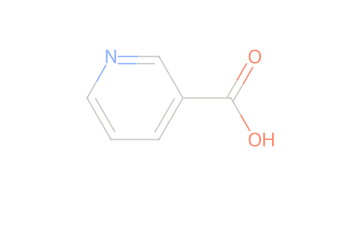
- Dose tested
- 2 g/day (extended-release)
- Form
- Extended-release nicotinic acid
This was not skipped. It was tested in humans, at scale, and the trial did not find a benefit on the endpoint below. That is different from an untested intervention, which may still turn out to work. A Route 1 No human randomized trial has been run, so the record rests on animal or mechanistic evidence only. One of the two routes to the lowest letter on EBL's scale. Grade D means nobody has looked. A Route 2 Grade D means somebody looked and the answer was no.
HPS2-THRIVE (NEJM 2014; PMID 25014686) randomized 25,673 adults with atherosclerotic vascular disease to 2g extended-release niacin with laropiprant or placebo An inactive substitute made to look like the real treatment, so participants cannot tell which one they received. on top of statin therapy. Niacin lowered LDL Low-density lipoprotein cholesterol, the cholesterol fraction most closely tied to plaque in the arteries. by roughly 10 mg/dL and raised HDL by roughly 6 mg/dL, and did NOT significantly reduce major vascular events over a median 3.9 years, while significantly increasing serious adverse events. This is the clean example of a plausible mechanism, raising HDL, both failing to help and causing harm in a large trial. The biomarker A measurable sign in the body, such as a blood test value, used to track a condition or the effect of a treatment. moved. The outcome did not.
The summaries of the cited trials do not state when the extended-release niacin was taken (PMID 25014686, PMID 22085343).
Checked against the published summaries; the full papers could not be read. What the cited trials did, not a schedule. Every supplement, by trial timing →
No validated human outcome to track. Surrogate lipid changes are not the outcome.
There is no dose section on this page. EBL publishes a dose for an intervention at the dose the trials studied. These trials studied it and it did not work, so there is no dose to publish. There is no dispensary link for the same reason.
Evidence notes: randomized trial
Last reviewed: July 2026
Active liver disease. Sustained-release preparations carry more hepatotoxicity than immediate-release at equivalent doses. Flushing is a nuisance effect, not the reason for caution here.
Statins: adding extended-release niacin with laropiprant to statin therapy raised myopathy and disturbances of diabetes control in a 25,673-patient randomized trial, and extended-release niacin alone added no benefit in a 3,414-patient trial. Diabetes medication: niacin raises blood glucose, and new-onset diabetes rose in the combination trial.
Niacin added to statin therapy. Adding extended-release niacin to statin therapy increased myopathy and disturbances of diabetes control without reducing vascular events. Haynes et al. (European Heart Journal, 2013; PMID 23444397): HPS2-THRIVE, randomized placebo-controlled trial in 25,673 high-risk patients, with pre-specified muscle and liver outcomes.
Educational use only · Not medical advice · EBL grades published human evidence and does not recommend treatment. Stopping a prescription is a decision for your physician. · Privacy · Disclosure · Terms · Accessibility
Evidence Based Longevity, Inc. is owner-operated and edited by Arnold Sandlow, D.C., a California-licensed chiropractor. Evidence Based Longevity publishes in English only · Machine translations are not produced or reviewed by EBL for accuracy
© Evidence Based Longevity, Inc.. All rights reserved
Primary evidenceFive papers, each linked to its PubMed record.
Boden et al., AIM-HIGH (NEJM, 2011; PMID 22085343): 3,414 patients with established cardiovascular disease on simvastatin, extended-release niacin 1,500 to 2,000 mg/day alone against placebo; stopped after 3 years for lack of efficacy, primary events 16.4 against 16.2 percent (hazard ratio 1.02) despite higher HDL and lower triglycerides; funded by the National Heart, Lung, and Blood Institute and Abbott, the product's maker. Landray et al., HPS2-THRIVE (NEJM, 2014; PMID 25014686): 25,673 adults with vascular disease on statin-based therapy after a run-in that excluded people who could not tolerate niacin, 2 g extended-release niacin with 40 mg laropiprant in one pill against placebo for a median of 3.9 years; major vascular events 13.2 against 13.7 percent, not significant; serious adverse events increased; funded by Merck, the combination's maker, with the trial run by Oxford. Haynes et al. (Clin Ther, 2019; PMID 31447131): the HPS2-THRIVE adverse-effect report; new-onset diabetes hazard ratio 1.32, with excess disturbances of diabetes control, bleeding, infection and gastrointestinal events; the pill combined two drugs, so the harms cannot be assigned to niacin alone. Schandelmaier et al. (Cochrane, 2017; PMID 28616955): 23 trials, 39,195 people, median dose 2 g/day; no reduction in overall mortality (RR 1.05, high quality), cardiovascular mortality, myocardial infarction or stroke, and more discontinuations for side effects. Canner et al. (J Am Coll Cardiol, 1986; PMID 3782631): the Coronary Drug Project, immediate-release niacin alone in men with prior infarction before statins existed; fewer nonfatal reinfarctions and 11 percent lower 15-year mortality, the reason this record excludes immediate-release preparations rather than grading them. D Route 2: tested, no benefit; harm signal in the combination trial.
This page carries a letter. EBL takes no commission, referral fee or payment of any kind on anything it grades. No letter has been bought and none is for sale.
How this is enforced
That is not a promise, it is a build condition. Two checks run on every deploy: one refuses to publish if a commission is claimed on anything graded, the other refuses if a page names a commercial relationship that is not declared in the register. If either fails, this page does not go live. You can read how the checks work, and what they do not cover, on the evidence integrity page.
These statements have not been evaluated by the Food and Drug Administration. This product is not intended to diagnose, treat, cure, or prevent any disease. The grade on this page describes the strength of published human trial evidence in the populations studied. It is not a recommendation for any individual and is not medical advice. Starting, stopping or changing any supplement or medication is a decision for your physician.
Grades move when new trials publish. A free monthly email lists every grade EBL moved, with the reason and the trial behind it: the sign-up is on the Evidence Log →