Supplement
Glutathione (Oral)
Blood glutathione stores, where one 6-month trial of standard oral glutathione found a rise and one 4-week placebo-controlled trial found none; oxidative stress markers, where the placebo-controlled trials that measured them as primary endpoints The one outcome a trial names in advance as its main test. Results on other outcomes carry less weight. were null.
Grade C: human trials exist, but they are small, mixed or not yet repeated. This is not a finding that it does not work. How to read a grade →
Glutathione is a protective substance the body makes. This record covers glutathione taken by mouth. One 6-month study found it raised glutathione in the blood. A shorter study against a dummy pill found no change. A third study found better insulin use but no change in signs of cell damage. So the small studies do not agree.
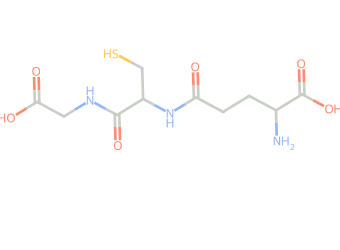
- Dose studied
- 1,000 mg/day
- Form graded
- Reduced (liposomal or S-acetyl) glutathione, oral bioavailability The share of a dose that reaches the bloodstream in a form the body can use. debated
- Cited PMIDs PubMed ID: the permanent number the US National Library of Medicine gives a published paper. Each one links to that paper's record on PubMed.
- PMID 24791752 →
A letter describes the human evidence, not the product, the manufacturer, or the ingredient's worth.
See the full evidence record →Oral glutathione for oxidative-stress and glutathione-status markers, graded on published human trial evidence.
Why this gradeGrade C, small or unreplicated trials. The reasoning, and what the grade does not cover.
Grade C. One 6-month trial found standard oral glutathione raised blood stores; one 4-week placebo-controlled trial found no change in glutathione status or oxidative stress markers; a 3-week trial found better insulin sensitivity and no change in oxidative stress markers. Mixed small trials, not a replicated The same finding reproduced by a separate research group. A result seen once can be chance or bias; a replicated one is harder to explain away. signal.
WHAT THIS GRADE DOES NOT COVERliposomal glutathione, where the only human study is an uncontrolled seller-funded pilot; intravenous glutathione; and any clinical outcome, which no trial measured.
A grade describes the human evidence for a named use. It is not advice, and it is not a judgment on any individual prescription. How the letters are decided →
Who responds: this record's trial reading reports no subgroup that identifies who responds.
How this letter has changed · latest: October 2026 · Corrected
The record rested on Richie 2015 (PMID 24791752) alone and called the grade 'one small RCT Randomized controlled trial: people are assigned to the treatment or a comparison by chance, so the groups differ only in what they received. It is the design that can show cause and effect.'; Allen and Bradley 2011 (PMID 21875351), NIH-funded, found no change in glutathione status or oxidative stress markers at 1,000 mg/day, and Søndergård 2021 (PMID 33740389) found no change in oxidative stress markers, so the grade reason is now mixed small trials and the best-use line no longer lists oxidative stress markers as a supported use. Sinha 2018 (PMID 28853742) is cited for form only: a 12-person uncontrolled pilot of liposomal glutathione funded by a company that sells it. Richie 2015's funder is not in its indexed record and an ingredient maker lists the trial as its own, so the record does not call it independent. Letter unchanged.PMID 24791752 PMID 21875351 PMID 33740389 PMID 28853742
Every change to a letter on this site is dated and published. The full evidence log →
Commercial disclosure
EBL earns no commission on any supplement it grades. A purchase made through the dispensary link below pays EBL nothing, the practitioner discount goes to you in full. The dispensary is Fullscript, a practitioner dispensary, and many of the professional-grade brands in it are sold mainly through practitioners rather than in health food stores. Grades are assigned by published rubric before any commercial relationship exists and are never influenced by one. Full disclosure.
No dose is published here. This record carries no authored dose, because the cited trials do not converge on a single figure. Each trial cited on this page states the dose it used, and EBL has not turned those into a recommendation.
The grade is for glutathione taken by mouth. In the one trial that compared routes, a transdermal form did not raise plasma reduced glutathione while the oral form did (Kern et al., Med Sci Monit, 2011; PMID 22129897), so the grade does not extend to sprays or creams.
The cited 6-month trial gave 250 or 1,000 mg a day (PMID 24791752). Its summary does not state a time of day or whether doses were taken with food.
Checked against the published summary; the full paper could not be read. What the cited trials did, not a schedule. Every supplement, by trial timing →
Asthma: inhaled forms have provoked bronchoconstriction. Pregnancy.
No prominent drug interaction at oral doses. Chemotherapy is the exception worth naming: antioxidant supplementation during treatment is an oncology decision, not a supplement decision, because some regimens depend on oxidative damage.
The glutathione chemotherapy trials are real, and they used the intravenous form, not the oral one this entry grades. This is the only one of the antioxidant entries with randomized trials run alongside chemotherapy, and they point the reassuring way: two placebo-controlled trials found reduced cisplatin and oxaliplatin neurotoxicity without a fall in response rate. Both gave glutathione intravenously at 1,500 mg/m2. This entry grades oral glutathione, and a human pharmacokinetic study found that a single oral dose did not significantly raise plasma glutathione, cysteine or glutamate. Under dose and form locking those trials describe a different object, so they neither reassure nor caution about a capsule. The class-level human evidence is real but it is not about this compound. Neither study tested it, and neither result is statistically significant Unlikely to be explained by chance alone at the threshold the study set. It says nothing about whether the difference is large enough to matter. on its own: the breast cancer analysis was observational Research that watches what people already do rather than assigning a treatment. It can show that two things travel together, not that one causes the other. within a randomized trial and its antioxidant signal did not reach significance, and the head and neck trial's recurrence signal was a trend. Two independent trends in the same direction, on hard endpoints An outcome that matters directly to a person and is counted without judgment, such as death, heart attack, stroke or fracture., in a setting where the mechanism predicts exactly that direction, is why the caution exists. It is not a measured effect for any supplement here. Cascinu et al. (Journal of Clinical Oncology, 1995;13(1):26-32; PMID 7799029): randomized double-blind placebo-controlled trial, 50 patients on weekly cisplatin, intravenous glutathione 1,500 mg/m2. Cascinu et al. (Journal of Clinical Oncology, 2002;20(16):3478-83; PMID 12177109): randomized double-blind placebo-controlled trial, 52 patients on an oxaliplatin regimen, same route and dose. Witschi et al. (European Journal of Clinical Pharmacology, 1992;43(6):667-9; PMID 1362956): systemic availability of oral glutathione in 7 healthy volunteers, with no significant rise in plasma glutathione after 0.15 mmol/kg. Ambrosone et al. (Journal of Clinical Oncology, 2020;38(8):804-814; PMID 31855498): prospective study of 1,134 patients ancillary to the randomized SWOG S0221 breast cancer trial; any antioxidant use both before and during chemotherapy carried an adjusted hazard ratio How often an event happened in the treated group compared with the control group over the same period. A ratio of 0.80 means 20 percent fewer events. for recurrence of 1.41 (95% CI 0.98 to 2.04, P = .06). Bairati et al. (Journal of Clinical Oncology, 2005;23(24):5805-13; PMID 16027437): randomized double-blind placebo-controlled trial, 540 head and neck cancer patients given alpha-tocopherol and beta-carotene during radiotherapy; acute adverse effects fell, and local recurrence tended to rise (hazard ratio 1.37, 95% CI 0.93 to 2.02).
Serum glutathione (reduced/oxidized ratio) at baseline and 12 weeks: liposomal or acetylated forms are required for meaningful oral absorption. Oxidative stress markers (8-isoprostane, 8-OHdG) at baseline and 8 weeks if available. Standard oral glutathione has very low bioavailability; The product uses a delivery technology that the positive trials relied on.
Primary evidenceFive papers, each linked to its PubMed record.
Richie et al. (Eur J Nutr, 2015; PMID 24791752): randomized double-blind placebo-controlled trial, 54 non-smoking adults, 250 or 1,000 mg/day standard oral glutathione for 6 months; blood, erythrocyte, plasma and lymphocyte glutathione rose 30 to 35 percent at the high dose, the oxidized-to-reduced ratio fell, and natural killer cytotoxicity rose; funding is not stated in the indexed record, and an ingredient maker lists this as its study, so the trial is not called independent here. Against: Allen and Bradley (J Altern Complement Med, 2011; PMID 21875351): randomized double-blind placebo-controlled trial, 40 healthy adults, 1,000 mg/day for 4 weeks, NIH-funded; no change in urinary F2-isoprostanes or 8-OHdG, the primary endpoints The outcome a trial measures to decide whether the treatment worked, such as heart attacks, blood pressure or a symptom score., and no change in erythrocyte glutathione, oxidized glutathione or their ratio. Søndergård et al. (Appl Physiol Nutr Metab, 2021; PMID 33740389): randomized double-blind placebo-controlled trial, 20 obese adults with and without type 2 diabetes, 1,000 mg/day for 3 weeks; whole-body insulin sensitivity by clamp improved, muscle glutathione rose numerically without a change in the redox ratio, and no oxidative stress marker changed. Form: Sinha et al. (Eur J Clin Nutr, 2018; PMID 28853742) is a 12-person uncontrolled pilot of liposomal glutathione funded by a company that sells liposomal glutathione; a different form, and it cannot carry a grade. Grade C: mixed small trials on biomarker A measurable sign in the body, such as a blood test value, used to track a condition or the effect of a treatment. endpoints.
Educational use only · Not medical advice · Starting, stopping or changing any supplement or medication is a decision for your physician
These statements have not been evaluated by the Food and Drug Administration. This product is not intended to diagnose, treat, cure, or prevent any disease. The grade on this page describes the strength of published human trial evidence in the populations studied. It is not a recommendation for any individual and is not medical advice. Starting, stopping or changing any supplement or medication is a decision for your physician.
This page carries a letter. EBL takes no commission, referral fee or payment of any kind on anything it grades. No letter has been bought and none is for sale.
How this is enforced
That is not a promise, it is a build condition. Two checks run on every deploy: one refuses to publish if a commission is claimed on anything graded, the other refuses if a page names a commercial relationship that is not declared in the register. If either fails, this page does not go live. You can read how the checks work, and what they do not cover, on the evidence integrity page.
How EBL searched for the trials (1 search)
The search that was run, what it returned, and what was left out and why, so the absence of evidence can be checked as well as its presence.
glutathione[ti] AND (oral[tiab] OR supplement*[tiab]) AND (randomized controlled trial[pt] OR randomized[tiab]) AND humans[mesh]Grades move when new trials publish. A free monthly email lists every grade EBL moved, with the reason and the trial behind it: the sign-up is on the Evidence Log →