Supplement · graded by use, two uses
Folic Acid (supplemental, 1mg/day)
Major cardiovascular events in people with vascular disease (folic acid with vitamins B6 and B12).
Grade D, tested: a human randomized trial looked for a benefit on the endpoint The outcome a trial measures to decide whether the treatment worked, such as heart attacks, blood pressure or a symptom score. graded and did not find one. How to read a grade →
Folic acid is the man-made form of folate, a B vitamin. In three studies of people who had colon polyps removed, 1 mg a day did not stop new polyps. The largest study raised a worry about more serious growths. In China, where flour has no added folate, folic acid with blood pressure medicine lowered first strokes. In people with existing heart disease, folic acid with other B vitamins did not prevent heart attacks.
The D belongs to one of the two uses graded on this record. The other one carries its own letter.
As studied, and the trials
Huo et al., CSPPT (JAMA, 2015; PMID PubMed ID: the permanent number the US National Library of Medicine gives a published paper. Each one links to that paper's record on PubMed. 25771069): 20,702 Chinese adults with hypertension and no history of stroke or myocardial infarction, randomized double-blind Neither the participants nor the people assessing them know who received the real treatment until the trial ends. to a single pill of enalapril 10 mg with folic acid 0.8 mg or enalapril 10 mg alone for a median 4.5 years; first stroke 2.7 percent against 3.4 percent (hazard ratio How often an event happened in the treated group compared with the control group over the same period. A ratio of 0.80 means 20 percent fewer events. 0.79, 95% CI 0.68 to 0.93). Both arms received enalapril, so the trial isolates folic acid, but only on a background of ACE inhibitor therapy and at 0.8 mg/day, a different dose from the 1 mg/day the headline grades. Participants were not selected for folate deficiency. Zhang et al. (Clin Nutr, 2024; PMID 38824900): meta-analysis A study that pools the numbers from several trials into one combined estimate. of 21 randomized trials, 115,559 participants, stroke risk 10 percent lower overall; efficacy did not vary by baseline folate, and was concentrated in areas without grain fortification (RR 0.83) and in people without prior stroke or MI (RR 0.77); no effect in fortified areas (RR 1.04). Yang et al. (Front Nutr, 2024; PMID 39155933): meta-analysis of 12 primary-prevention trials, 75,042 participants, null overall (RR 0.92, 95% CI 0.80 to 1.05) and positive only without grain fortification (RR 0.78). Grade B rather than A: a hard endpoint, but the benefit is confined to unfortified populations, was tested on a background of ACE inhibitor therapy, and the primary-prevention pool is null overall. In fortified populations such as the US the pooled trials show no benefit. This does not change the base Grade D, which reflects folic acid's failure to prevent colorectal adenoma recurrence. Funding: PubMed's record of the CSPPT report lists no funder and no conflict statement; the full JAMA report was not read in this pass, and nonfinancial support from the maker of the combination pill reported in secondary sources is not asserted here.
As studied, and the trials
HOPE-2 (Lonn et al., N Engl J Med, 2006; PMID 16531613): 5,522 adults aged 55 and over with vascular disease or diabetes, folic acid 2.5 mg with B6 and B12 daily for 5 years; homocysteine An amino acid in the blood that rises when vitamin B12, folate or B6 are low. fell, primary events 18.8 against 19.8 percent (relative risk The risk in one group expressed as a share of the risk in another. It can make a small absolute difference look large. 0.95, 0.84 to 1.07); stroke was lower (0.75) and hospitalization for unstable angina higher (1.24). NORVIT (Bønaa et al., N Engl J Med, 2006; PMID 16531614): 3,749 patients within a week of a heart attack; folic acid with B12 had no effect (risk ratio 1.08, 0.93 to 1.25), and the three-vitamin arm trended toward harm (1.22, 1.00 to 1.50). Martí-Carvajal et al. (Cochrane Database Syst Rev, 2017; PMID 28816346), 15 trials and 71,422 participants: no effect on myocardial infarction (risk ratio 1.02) or death from any cause (1.01), with a small stroke reduction (0.90). Lowering homocysteine did not lower heart attacks or deaths: tested, no benefit. Stroke prevention is graded on its own row.
Read the grade that matches your goal. How EBL grades by use →
A letter describes the human evidence, not the product, the manufacturer, or the ingredient's worth.
See the full evidence record →Tested for colorectal adenoma prevention and found not to work. The trial raised the possibility of increased neoplasia.
Why this gradeGrade D, tested, no benefit. The reasoning, and what the grade does not cover.
Grade D on Route 2 Human randomized trials have been run and did not show benefit on the stated outcome. One of the two routes to the lowest letter on EBL's scale.: tested, no benefit demonstrated. Cole 2007 (PMID 17551129) randomized 1,021 adults with a prior colorectal adenoma to 1 mg/day folic acid, with colonoscopic surveillance at three and six years. Adenoma recurrence was not reduced, and the authors flagged a possible increase in advanced and multiple neoplasia that they described as requiring further study. Wu 2009 (PMID 19864409) and ukCAP (PMID 18022173) replicated The same finding reproduced by a separate research group. A result seen once can be chance or bias; a replicated one is harder to explain away. the null, and the pooled analysis of all three trials (PMID 21170989) gives RR 0.98. The badge reads no benefit rather than harm because the neoplasia signal was raised by the investigators as a question and was not established as a finding; the long-term follow-up (PMID 31401653) found more sessile serrated lesions with extended use, a signal that did not persist after treatment stopped, and a 13-trial meta-analysis (PMID 23352552) found no overall cancer increase.
WHAT THIS GRADE DOES NOT COVERthis letter grades 1 mg/day supplemental folic acid for preventing colorectal adenoma recurrence. It does not grade folate in pregnancy, where randomized evidence supports neural tube defect prevention and the question is not in dispute. It does not grade repletion of a documented deficiency, and it does not grade dietary folate. A D on one indication says nothing about the others.
A grade describes the human evidence for a named use. It is not advice, and it is not a judgment on any individual prescription. How the letters are decided →
Trials report an average. This box says whether any trial on this record looked at who the result applies to, and what it found.
For First-stroke prevention in hypertensive adults without prior stroke or MI, in populations without grain folate fortification (0.8 mg/day with enalapril), Grade B · Subgroup tested, effect differedZhang et al. (Clin Nutr, 2024; PMID 38824900), a meta-analysis of 21 randomized trials, found the effect on stroke did not vary by baseline folate level and was concentrated in areas without grain folate fortification (RR 0.83), with no effect in fortified areas (RR 1.04). Yang et al. (Front Nutr, 2024; PMID 39155933) found benefit only without grain fortification (RR 0.78). The split follows the food supply where people live, not a blood test. A subgroup result shows who the effect appeared in within these trials. It does not change the letter.
How this letter has changed · latest: October 2026 · Added
HOPE-2 (Lonn et al., N Engl J Med, 2006; PMID 16531613) and NORVIT (Bønaa et al., N Engl J Med, 2006; PMID 16531614) lowered homocysteine without lowering heart attacks or cardiovascular deaths, and a Cochrane review of 15 trials (Martí-Carvajal et al., Cochrane Database Syst Rev, 2017; PMID 28816346) found no effect on heart attacks or deaths. This use enters at D, tested and no benefit. The separate first-stroke row and the record's top letter do not change.PMID 16531613 PMID 16531614 PMID 28816346
The stroke use was labeled 'folate-deficient'; CSPPT (Huo 2015, PMID 25771069) enrolled hypertensive adults without prior stroke or MI, not people selected for deficiency, gave 0.8 mg/day with enalapril in both arms, and Zhang 2024 (PMID 38824900) found efficacy did not vary by baseline folate, so the label now names the population, the dose and the fortification condition. Yang 2024 (PMID 39155933), the primary-prevention meta-analysis that is null overall and positive only without fortification, now sits beside the positive one. The headline's 'not-replicated' flag is removed: Wu 2009 (PMID 19864409) and Logan 2008, ukCAP (PMID 18022173), replicated the null of Cole 2007 (PMID 17551129) and Figueiredo 2011 (PMID 21170989) pooled all three at RR 0.98. Added: Passarelli 2019 (PMID 31401653), more sessile serrated lesions with extended use, as a safety note; Vollset 2013 (PMID 23352552), no overall cancer increase across 49,621 people; Gao 2013 (PMID 23682073), the open trial on initial occurrence, a different question. The maker's support for CSPPT reported in secondary sources is not asserted, because the JAMA full text was not read. Letters unchanged.PMID 25771069 PMID 38824900 PMID 39155933 PMID 19864409 PMID 18022173 PMID 17551129 PMID 21170989 PMID 31401653 PMID 23352552 PMID 23682073
Funding checked for the stroke-prevention use. The October review reports nonfinancial support to the CSPPT trial, Huo 2015 (PMID 25771069), from Shenzhen AUSA Pharmed, maker of the combination pill. PubMed's record of the trial carries no conflict statement, so the use note states only what the indexed record shows; the full report is to be read before the review's statement is added.PMID 25771069
Every change to a letter on this site is dated and published. The full evidence log →
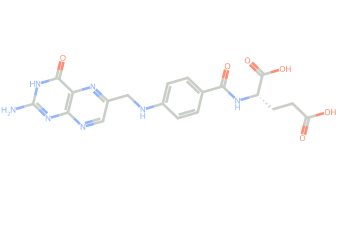
- Dose tested
- 1 mg/day
- Form
- Folic acid (synthetic)
This was not skipped. It was tested in humans, at scale, and the trial did not find a benefit on the endpoint below. That is different from an untested intervention, which may still turn out to work. A Route 1 No human randomized trial has been run, so the record rests on animal or mechanistic evidence only. One of the two routes to the lowest letter on EBL's scale. Grade D means nobody has looked. A Route 2 Grade D means somebody looked and the answer was no.
Cole et al. (JAMA 2007; PMID 17551129) randomized 1,021 adults with a history of colorectal adenoma to 1mg/day folic acid or placebo An inactive substitute made to look like the real treatment, so participants cannot tell which one they received. with colonoscopic surveillance. Adenoma incidence was 44.1% on folic acid versus 42.4% on placebo (RR 1.04, 95% CI 0.90-1.20, P=.58). The authors concluded folic acid does not reduce adenoma risk and called for research into whether it might INCREASE colorectal neoplasia. Timing appears to matter: folate may protect before neoplasia is established and promote growth afterwards. This entry is about supplemental folic acid at 1mg, not dietary folate and not periconceptional supplementation, where the evidence is different and strong.
The cited trials gave folic acid daily (PMID 25771069, PMID 17551129). Their summaries do not state a time of day or whether it was taken with food.
Checked against the published summaries; the full papers could not be read. What the cited trials did, not a schedule. Every supplement, by trial timing →
No validated human outcome to track for this indication.
There is no dose section on this page. EBL publishes a dose for an intervention at the dose the trials studied. These trials studied it and it did not work, so there is no dose to publish. There is no dispensary link for the same reason.
Evidence notes: randomized trial, not independently replicated
Last reviewed: July 2026
Untreated or unassessed vitamin B12 deficiency. Folic acid corrects the anemia of B12 deficiency while the neurological damage continues, so it can remove the sign that would have prompted the diagnosis.
Methotrexate: folic acid is given deliberately alongside it in rheumatology to reduce toxicity, and is avoided in oncology dosing, so the direction depends entirely on why the drug was prescribed and is a prescriber's decision, not a supplement decision. Phenytoin and some other anticonvulsants: folate lowers their blood levels and they lower folate.
Folic acid can mask vitamin B12 deficiency. Folic acid corrects the megaloblastic anemia of B12 deficiency while the neurological damage continues, removing the sign that would have prompted the diagnosis. Miller (Food and Nutrition Bulletin, 2024; PMID 38987872): review of excess folic acid and vitamin B12 deficiency and its clinical implications.
Educational use only · Not medical advice · EBL grades published human evidence and does not recommend treatment. Stopping a prescription is a decision for your physician. · Privacy · Disclosure · Terms · Accessibility
Evidence Based Longevity, Inc. is owner-operated and edited by Arnold Sandlow, D.C., a California-licensed chiropractor. Evidence Based Longevity publishes in English only · Machine translations are not produced or reviewed by EBL for accuracy
© Evidence Based Longevity, Inc.. All rights reserved
Primary evidenceSeven papers, each linked to its PubMed record.
Cole et al. (JAMA, 2007; PMID 17551129): the Aspirin/Folate Polyp Prevention Study, 1,021 adults with a prior colorectal adenoma, 1 mg/day folic acid for 3 then up to 6 years; adenoma recurrence not reduced, with a possible increase in advanced and multiple neoplasia flagged for further study. Wu et al. (Am J Clin Nutr, 2009; PMID 19864409): independent placebo-controlled trial in 672 participants of two cohorts, 1 mg/day for 3 to 6.5 years; recurrence not reduced overall (RR 0.82, 95% CI 0.59 to 1.13), with a reduction only in those with low baseline plasma folate and no sign of the increase seen in Cole 2007. Logan et al. (Gastroenterology, 2008; PMID 18022173): ukCAP, 945 patients, 0.5 mg/day for about 3 years; no effect on recurrence (RR 1.07). Figueiredo et al. (Int J Cancer, 2011; PMID 21170989): pooled analysis of the three trials, 2,632 patients, RR 0.98 for all adenomas and 1.06 for advanced lesions. Passarelli et al. (Am J Clin Nutr, 2019; PMID 31401653): long-term follow-up of the Cole trial; with extended treatment, sessile serrated lesions were more frequent on folic acid during the second surveillance interval (RR 1.94, 95% CI 1.02 to 3.68), a signal that did not persist after treatment stopped. Vollset et al. (Lancet, 2013; PMID 23352552): meta-analysis of 13 trials, 49,621 participants; folic acid did not increase overall cancer incidence during the trials. Gao et al. (Cancer Prev Res, 2013; PMID 23682073): open trial without placebo in Chinese adults over 50 with no adenoma; fewer first adenomas on 1 mg/day; it tests initial occurrence, a different question from recurrence, and does not change the headline. D Route 2 on adenoma recurrence: tested in three trials and pooled, no benefit.
This page carries a letter. EBL takes no commission, referral fee or payment of any kind on anything it grades. No letter has been bought and none is for sale.
How this is enforced
That is not a promise, it is a build condition. Two checks run on every deploy: one refuses to publish if a commission is claimed on anything graded, the other refuses if a page names a commercial relationship that is not declared in the register. If either fails, this page does not go live. You can read how the checks work, and what they do not cover, on the evidence integrity page.
These statements have not been evaluated by the Food and Drug Administration. This product is not intended to diagnose, treat, cure, or prevent any disease. The grade on this page describes the strength of published human trial evidence in the populations studied. It is not a recommendation for any individual and is not medical advice. Starting, stopping or changing any supplement or medication is a decision for your physician.
How EBL searched for the trials (1 search)
The search that was run, what it returned, and what was left out and why, so the absence of evidence can be checked as well as its presence.
"folic acid"[tiab] AND adenoma*[tiab] AND (randomized controlled trial[pt] OR meta-analysis[pt])Grades move when new trials publish. A free monthly email lists every grade EBL moved, with the reason and the trial behind it: the sign-up is on the Evidence Log →