Supplement
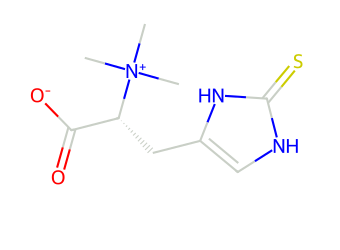
Ergothioneine (L-Ergothioneine)
Verbal learning in mild cognitive impairment: one randomized placebo-controlled pilot, 19 adults aged 60 or over, 25 mg three times a week for a year, improved Rey Auditory Verbal Learning Test performance and stable neurofilament light chain against placebo An inactive substitute made to look like the real treatment, so participants cannot tell which one they received..
Grade C: human trials exist, but they are small, mixed or not yet repeated. This is not a finding that it does not work. How to read a grade →
Ergothioneine is a compound found in mushrooms. In one small study, 19 adults over 60 with mild memory problems took it three times a week for a year. They did better on a word memory test than people taking a dummy pill. The study was a small first test, and no one has repeated it yet. So the result is promising but not proven.
A letter describes the human evidence, not the product, the manufacturer, or the ingredient's worth.
See the full evidence record →Verbal learning in mild cognitive impairment, on one unreplicated pilot trial of 19 older adults.
Why this gradeGrade C, small or unreplicated trials. The reasoning, and what the grade does not cover.
Grade C, scoped to verbal learning in mild cognitive impairment. Yau 2024 (PMID PubMed ID: the permanent number the US National Library of Medicine gives a published paper. Each one links to that paper's record on PubMed. 39544014) is a randomized double-blind Neither the participants nor the people assessing them know who received the real treatment until the trial ends. placebo-controlled trial that met its reported cognitive outcome, and under the written rule a single positive randomized trial is C. Not B: 19 participants, the authors' own description of a pilot, an unstated funder, and no second trial. Moved from D Route 1 No human randomized trial has been run, so the record rests on animal or mechanistic evidence only. One of the two routes to the lowest letter on EBL's scale. in October 2026 by editor adjudication, closing the review opened October.
WHAT THIS GRADE DOES NOT COVERhealthy adults and any aging outcome, where no trial exists; antioxidant or anti-inflammatory effects, where the human administration study (PMID 27488221) found mostly non-significant trends; and the observational Research that watches what people already do rather than assigning a treatment. It can show that two things travel together, not that one causes the other. association between low blood ergothioneine and cognitive decline (PMID 27444382, PMID 36139790, PMID 34673145), which is not evidence that taking it changes anything.
A grade describes the human evidence for a named use. It is not advice, and it is not a judgment on any individual prescription. How the letters are decided →
Who responds: this record's trial reading reports no subgroup that identifies who responds.
How this letter has changed · latest: October 2026 · Corrected
The October adjudication had already corrected the 'no human randomized trial' statement for Yau 2024 (PMID 39544014). Remaining from the review: the dose line said 5 to 30 mg/day with no trial behind it; it now states the one efficacy trial's 25 mg three times a week and the uptake study's 5 or 25 mg/day. Cheah 2017 (PMID 27488221), the first human administration of pure ergothioneine, is added with its mostly non-significant biomarker A measurable sign in the body, such as a blood test value, used to track a condition or the effect of a treatment. trends, which is why no antioxidant claim is made. The endpoint type moves from surrogate to functional because the one trial's outcome is a measured cognitive test. The form note says whole-mushroom trials do not support purified ergothioneine. The three observational papers, Cheah 2016 (PMID 27444382), Wu 2022 (PMID 36139790) and Wu 2021 (PMID 34673145), are labeled association only. Letter unchanged, still under review.PMID 39544014 PMID 27488221 PMID 27444382 PMID 36139790 PMID 34673145
The record held D Route 1 while linking Yau et al. (J Alzheimers Dis, 2024; PMID 39544014), a randomized double-blind placebo-controlled pilot in 19 adults aged 60 or over with mild cognitive impairment, 25 mg three times a week for a year, in which Rey Auditory Verbal Learning Test performance improved and plasma neurofilament light chain stayed stable against placebo. Under the written rule a single positive randomized trial is C, and holding D while citing the trial read as hedging. The C is scoped to that population and endpoint; the pilot size, the unstated funder and the absence of a second trial are the reasons it is not more. Cheah et al. (Antioxid Redox Signal, 2017; PMID 27488221), the human uptake study, and the observational papers by Cheah 2016 (PMID 27444382), Wu 2022 (PMID 36139790) and Wu 2021 (PMID 34673145) remain context. Moved October 2026 by editor adjudication (Arnold Sandlow, D.C.), closing the review opened October.PMID 39544014 PMID 27488221 PMID 27444382 PMID 36139790 PMID 34673145
Every change to a letter on this site is dated and published. The full evidence log →
Commercial disclosure
EBL earns no commission on any supplement it grades. Grades are assigned by published rubric before any commercial relationship exists and are never influenced by one. Full disclosure.
Grade C reflects one randomized placebo-controlled pilot, 19 adults with mild cognitive impairment, positive on verbal learning and not yet independently replicated. The observational association between low plasma ergothioneine and cognitive decline is context, not evidence that supplementing it changes anything. The human evidence does not currently meet the bar for Grade B. EBL re-grades when new RCT Randomized controlled trial: people are assigned to the treatment or a comparison by chance, so the groups differ only in what they received. It is the design that can show cause and effect. evidence is published.
No dose is established from human trials. The one efficacy trial used 25 mg three times a week, about 11 mg/day averaged, for a year; the human uptake study gave 5 or 25 mg/day for a week. Most commercial products are 5 to 10 mg.
L-ergothioneine is the orally studied form. Mushrooms are a dietary source, but whole-mushroom trials are a different intervention and do not support purified L-ergothioneine; supplement claims should be tied to purified L-ergothioneine studies rather than transporter or tissue-concentration mechanisms.
The cited trial gave 25 mg three times a week for a year (PMID 39544014); its summary does not state a time of day or whether doses were taken with food. The observational studies measured ergothioneine already in people's blood (PMID 27444382, PMID 36139790, PMID 34673145).
Checked against the full report for 1 of the 4 cited studies, and the published summary for the rest. What the cited trials did, not a schedule. Every supplement, by trial timing →
How to buy this: quality criteria, not a brand
5–30mg/day L-ergothioneine (optimal dose not yet established).
Fermentation-produced L-ergothioneine.
Third-party purity; ergothioneine mg stated.
Mushroom “blends” without a quantified ergothioneine content.
The grade and these criteria are set only from human trials. Any purchase link is convenience and does not affect the grade.
Pregnancy, on absence of data. Human safety data at supplement doses is very limited and confined to short studies.
No drug interaction has been identified. Ergothioneine is taken up by the OCTN1 transporter, which also carries several drugs, so competition at that transporter is the one plausible route and it has not been measured in people.
The transporter route the record names is real and has only been studied in vitro. The record names OCTN1 competition as the one plausible route and says it has not been measured in people. Twenty-three records returned in August 2026 and that holds. They are transporter biology: OCTN1 reviews, albumin binding, an analytical method. The closest paper is an organic cation transporter 1 drug-cocktail study, which is in vitro and does not involve ergothioneine at all. So the mechanism is well described and the interaction has still never been tested in a person. Basis: pharmacological mechanism, not a human study. Searched PubMed in August 2026: 1 query, 23 human results.
There is no validated routine clinical biomarker for ergothioneine response. If it is used for cognitive aging or mild cognitive impairment, repeat the same cognitive assessment over time. Plasma/whole-blood ergothioneine and neurofilament light can be measured in research settings, but should not be presented as established treatment-response markers.
Primary evidenceFive papers, each linked to its PubMed record.
Cheah et al. (Biochem Biophys Res Commun, 2016; PMID 27444382), Wu et al. (Antioxidants, 2022; PMID 36139790) and Wu et al. (2021; PMID 34673145): observational studies linking low plasma ergothioneine to cognitive decline; association only. Cheah et al. (Antioxid Redox Signal, 2017; PMID 27488221): the first administration of pure ergothioneine to healthy volunteers; it was absorbed and retained, with low urinary excretion, and markers of oxidative damage and inflammation showed decreasing trends that were mostly not significant, so no antioxidant effect in people is established. Yau et al. (J Alzheimers Dis, 2024; PMID 39544014): randomized double-blind placebo-controlled pilot, 19 adults aged 60 or over with mild cognitive impairment, 25 mg three times a week for a year; Rey Auditory Verbal Learning Test performance improved and plasma neurofilament light chain was stable against placebo; safety markers unchanged; funding not stated in the indexed record, authors declare no conflicts. Unreplicated. Grade C on this one trial, scoped to its population and endpoint.
Educational use only · Not medical advice · Starting, stopping or changing any supplement or medication is a decision for your physician
These statements have not been evaluated by the Food and Drug Administration. This product is not intended to diagnose, treat, cure, or prevent any disease. The grade on this page describes the strength of published human trial evidence in the populations studied. It is not a recommendation for any individual and is not medical advice. Starting, stopping or changing any supplement or medication is a decision for your physician.
This page carries a letter. EBL takes no commission, referral fee or payment of any kind on anything it grades. No letter has been bought and none is for sale.
How this is enforced
That is not a promise, it is a build condition. Two checks run on every deploy: one refuses to publish if a commission is claimed on anything graded, the other refuses if a page names a commercial relationship that is not declared in the register. If either fails, this page does not go live. You can read how the checks work, and what they do not cover, on the evidence integrity page.
How EBL searched for the trials (1 search)
The search that was run, what it returned, and what was left out and why, so the absence of evidence can be checked as well as its presence.
ergothioneine supplementation AND (randomized controlled trial[pt]) AND cognitionGrades move when new trials publish. A free monthly email lists every grade EBL moved, with the reason and the trial behind it: the sign-up is on the Evidence Log →