Supplement · graded by use, two uses
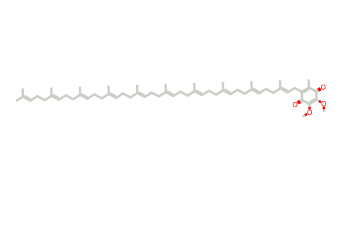
Coenzyme Q10 (CoQ10)
Chronic heart failure events, including hospitalization, as an adjunct A treatment tested on top of standard prescribed therapy rather than in place of it. to standard therapy.
CoQ10 is a substance the body uses to make energy inside cells. In one study of 420 people with heart failure, those taking CoQ10 with their usual treatment had fewer serious heart problems and fewer deaths over two years. No other research team has repeated that result, so it is not settled. For muscle aches from cholesterol drugs, results are mixed. Reports link it to a weaker effect of the blood thinner warfarin, but a small study found no change.
The B belongs to one of the two uses graded on this record. The other one carries its own letter.
As studied, and the trials
Q-SYMBIO (Journal of the American College of Cardiology: Heart Failure, 2014; PMID PubMed ID: the permanent number the US National Library of Medicine gives a published paper. Each one links to that paper's record on PubMed. 25282031) reported fewer major adverse cardiovascular events and fewer deaths in 420 patients. No independent group has reproduced the mortality result. Morisco et al. (1993; PMID 8241697) reported fewer heart-failure hospitalizations in 641 patients, and Cochrane (PMID 35608922) pools the two for that outcome. A 2024 pooled analysis (PMID 39462324) reports lower mortality and hospitalization across 33 mostly small studies of moderate to low quality. Grade B: a hard-outcome trial supported by an independent trial on one component of its composite, short of the independent replication The same finding reproduced by a separate research group. A result seen once can be chance or bias; a replicated one is harder to explain away. of the mortality result an A requires. The not-replicated flag was removed in October 2026: it was true of mortality and false of hospitalization, and the written B asks only that the trial not stand alone.
As studied, and the trials
The evidence is divided and every endpoint The outcome a trial measures to decide whether the treatment worked, such as heart attacks, blood pressure or a symptom score. is subjective. Qu 2018 (PMID 30371340, 12 RCTs Randomized controlled trial: people are assigned to the treatment or a comparison by chance, so the groups differ only in what they received. It is the design that can show cause and effect., 575 patients) reported reduced muscle pain, weakness, cramp and tiredness with no change in creatine kinase. Kennedy 2020 (PMID 32179207) found no benefit for myalgia or adherence. Kovacic 2025 (PMID 41158831, 7 RCTs, 389 patients) reported reduced pain intensity, significant in 4 of 7 trials. Self-report endpoints cap at Grade B; the disagreement between meta-analyses holds this at C.
Read the grade that matches your goal. How EBL grades by use →
A letter describes the human evidence, not the product, the manufacturer, or the ingredient's worth.
See the full evidence record →Chronic heart failure as an adjunct, on ubiquinone: one strong trial, not yet replicated on mortality. Statin muscle symptoms graded C.
Grade scope · The Grade B applies to CoQ10 as adjunctive treatment in chronic heart failure (Q-SYMBIO). Statin-related fatigue and general antioxidant uses are not graded B.
Why this gradeThe reasoning, and what the grade does not cover.
Grade B: one randomized trial on a hard outcome, supported by further trials rather than standing alone, but not reproduced by an independent group on the outcome it reports. Q-SYMBIO (Mortensen et al., Journal of the American College of Cardiology: Heart Failure, 2014; PMID 25282031) randomized 420 people with chronic heart failure and reported fewer major cardiovascular events and fewer deaths.
WHY NOT AGrade A needs the effect a record reports to replicate across independent research groups. The mortality result rests on Q-SYMBIO alone: the Cochrane review (Al Saadi et al., 2021; PMID 35608922) could pool only that one study of 420 people for mortality and concludes there is no convincing evidence to support or refute CoQ10 for heart failure, and the UK NIHR review (Claxton et al., 2022; PMID 35076012) found the pooled mortality result inconclusive and called for a new independent trial.
WHY NOT Cthe result does not stand alone. An independent trial from Naples (Morisco et al., 1993; PMID 8241697) randomized 641 patients and reported fewer hospitalizations for worsening heart failure, one part of the Q-SYMBIO composite, and Cochrane pools the two for that outcome. That second trial is a three-page 1993 report, measured a different endpoint, and ran on the heart-failure care of its time, which is why it supports a B and cannot carry an A.
WHAT THIS GRADE DOES NOT COVERthe B is for use ALONGSIDE standard heart-failure therapy in people who have heart failure. It is not a grade for CoQ10 as a general energy or longevity supplement in healthy adults, where no trial has tested a clinical outcome. It does not cover statin-associated muscle symptoms, the other reason CoQ10 is commonly taken, which sits at C on this same record. And it is a grade on the form that was studied: the trial evidence is on ubiquinone, not on ubiquinol, which is a different preparation that this evidence does not reach.
A grade describes the human evidence for a named use. It is not advice, and it is not a judgment on any individual prescription. How the letters are decided →
Who responds: this record's trial reading reports no subgroup that identifies who responds.
As studied: dose, form, population and duration for every use
Ubiquinol is what most retail capsules contain, and it is marketed as the better-absorbed form. It may well be. No cited trial on this record used it, so every outcome result here, including the mortality and hospitalization reduction, comes from ubiquinone. The heart-failure trials also predate routine SGLT2 inhibitor and ARNI therapy, so the result has not been replicated on contemporary background treatment.
A grade describes the intervention that was tested. Where the product on the shelf differs from it, this says so.
The trial that would change this grade.
Positive trials of this shape from independent research groups would move this entry to A.
Why the current trials fall short
Ubiquinone at the Q-SYMBIO dose of 100 mg three times daily, so the result speaks to the form this record grades. A positive result would give the mortality finding the independent replication it lacks.
How this letter has changed · latest: October 2026 · Corrected
The replication search of October found what the record already cited: Morisco et al. (Clin Investig, 1993; PMID 8241697), an independent Naples multicenter trial of 641 NYHA class III to IV patients, in which hospitalization for worsening heart failure fell from 118 to 73 over one year, with the Cochrane review (Al Saadi et al., 2021; PMID 35608922) pooling it with Q-SYMBIO (Mortensen et al., 2014; PMID 25282031) for that outcome. The written B requires a trial supported by further trials rather than standing alone, which this meets; it does not require independent replication of the pivotal endpoint, which is the A requirement. The flag said the finding was never repeated, which is false for hospitalization and true for mortality, so the flag comes off and the use is named for the events the two trials share, with the mortality result stated as single-trial in the reading. Applied the written grade definition under the editor's standing instruction of October 2026 (Arnold Sandlow, D.C.).PMID 25282031 PMID 35608922 PMID 8241697
The protocol held B on one trial, Q-SYMBIO (Mortensen et al., JACC Heart Fail, 2014; PMID 25282031; 420 patients, ubiquinone 100 mg three times daily), with the not-replicated flag set, and was named for ubiquinol, a form no cited trial gave. The pooled analysis (Xu et al., BMC Cardiovasc Disord, 2024; PMID 39462324) rests on the same trial for mortality. Under the single-trial rule that is C, and the name now states the form and dose studied, CoQ10 (ubiquinone) 300 mg/day. The CoQ10 supplement record's heart-failure use is held at B pending a replication search. Decided October 2026 by editor adjudication (Arnold Sandlow, D.C.).PMID 25282031 PMID 39462324
Grade A requires the effect a record reports to replicate across independent research groups. CoQ10's A reported fewer deaths and major cardiovascular events, and that result rests on one trial, Q-SYMBIO (Mortensen et al., Journal of the American College of Cardiology: Heart Failure, 2014; PMID 25282031). Cochrane (Al Saadi et al., 2021; PMID 35608922) could pool only that study for mortality. An independent 1993 trial from Naples (Morisco et al.; PMID 8241697) reported fewer heart-failure hospitalizations, which keeps the use above C. The record now names what would raise it back to A: an independent trial on current heart-failure therapy with mortality or major events as its primary endpoint. The change was prompted by an outside review of the site.PMID 25282031 PMID 35608922 PMID 8241697
Every change to a letter on this site is dated and published. The full evidence log →
Commercial disclosure
EBL earns no commission on any supplement it grades. A purchase made through the dispensary link below pays EBL nothing, the practitioner discount goes to you in full. The dispensary is Fullscript, a practitioner dispensary, and many of the professional-grade brands in it are sold mainly through practitioners rather than in health food stores. Grades are assigned by published rubric before any commercial relationship exists and are never influenced by one. Full disclosure.
100 to 300 mg/day. THE TRIALS BEHIND THIS GRADE USED UBIQUINONE, NOT UBIQUINOL: Q-SYMBIO (PMID 25282031) gave 100 mg of ubiquinone three times daily, and the Cochrane review (PMID 35608922) defines coenzyme Q10 as ubiquinone throughout. Ubiquinol is widely sold as the better-absorbed form and may well be, but no cited trial tested it and no outcome evidence attaches to it.
The heart-failure outcome evidence should be tied to the CoQ10 preparation actually used in Q-SYMBIO (ubiquinone). Ubiquinol may have pharmacokinetic advantages in some comparisons, but those data should not be substituted for the ubiquinone outcome trial.
Q-SYMBIO gave 100 mg three times daily (PMID 25282031), and the Naples trial gave 2 mg per kilogram of body weight a day (PMID 8241697). Neither summary states a time of day or whether doses were taken with meals.
Checked against the published summaries; the full papers could not be read. What the cited trials did, not a schedule. Every supplement, by trial timing →
How to buy this: quality criteria, not a brand
100 to 300 mg/day of ubiquinone, the form every cited outcome trial used.
Ubiquinone, oil-based, 100 mg three times daily in Q-SYMBIO. That is the form and dose behind the heart-failure grade.
USP Verified. The form to match is the oil-based ubiquinone the trial administered.
Ubiquinol sold as though it carried the heart-failure evidence; dry tablets or powder rather than an oil base; low dose.
The grade and these criteria are set only from human trials. Any purchase link is convenience and does not affect the grade.
No absolute contraindication has been established. Warfarin: case reports describe a reduced anticoagulant effect, but a randomized crossover A trial design in which each participant receives both the treatment and the comparison, one after the other, and serves as their own control. in stable warfarin patients found no significant change in INR or warfarin dose (see drug conflicts).
Warfarin: ubiquinone is structurally similar to vitamin K, and case reports describe reduced anticoagulant effect. When it was actually tested in a randomized double-blind crossover in stable warfarin patients, CoQ10 did not significantly change INR or warfarin dose. The honest position is that the concern is real enough to monitor and weaker than the warning usually implies. Antihypertensives: additive blood-pressure lowering. Statins deplete CoQ10, which is a depletion A fall in a nutrient's level caused by a medication, for example through reduced absorption or increased loss. rather than an interaction. Chemotherapy: antioxidant supplementation during treatment is an oncology decision.
The CoQ10 warfarin interaction was tested and largely did not appear. A randomized double-blind placebo-controlled crossover in stable long-term warfarin patients found no significant effect of CoQ10 on INR or warfarin dose, so the case-report-based warning overstates what testing found. Engelsen et al. (Thrombosis and Haemostasis, 2002; PMID 12083489): randomized, double-blind, placebo-controlled crossover of coenzyme Q10 and Ginkgo biloba on warfarin dosage in stable long-term warfarin outpatients.
Heart-failure symptom burden and functional capacity, which is the graded heart-failure use. Blood CoQ10 (optional) and lipid panel. Statin-associated muscle symptoms are graded separately on this record at C and are not what the heart-failure grade covers.
Primary evidenceFive papers, each linked to its PubMed record.
Mortensen et al. (Journal of the American College of Cardiology: Heart Failure, 2014; PMID 25282031): the Q-SYMBIO randomized controlled trial People are assigned to the treatment or a comparison by chance, so the groups differ only in what they received. It is the design that can show cause and effect.: coenzyme Q10 reduced major adverse cardiovascular events and mortality in chronic heart failure. Morisco et al. (Clinical Investigator, 1993; PMID 8241697): 641 patients with NYHA class III or IV heart failure, fewer hospitalizations for worsening heart failure over one year. Xu et al. (BMC Cardiovascular Disorders, 2024; PMID 39462324): 33 studies, lower all-cause mortality and heart-failure hospitalization and lower BNP, which its own authors rate moderate to low quality. Al Saadi et al. (Cochrane Database of Systematic Reviews A review that searches for every study on a question using a method set in advance, then assesses them together., 2021; PMID 35608922): mortality from one study of 420 people, heart-failure hospitalization from two studies of 1,061, and no convincing evidence to support or refute. Claxton et al. (Health Technology Assessment, 2022; PMID 35076012): pooled mortality inconclusive (RR 0.68, 95% CI 0.45 to 1.03), with a new independent trial called for. Grade B for heart-failure adjunct use: one strong trial, not yet independently replicated on mortality.
The trials below gave the supplement in addition to a prescribed drug, with the drug present in both arms. Each result is stated as it was measured. EBL does not translate these findings into anything about a prescription.
In 420 patients with moderate to severe chronic heart failure randomized on top of standard therapy, the two-year composite major adverse cardiovascular event rate was 15 percent with CoQ10 and 26 percent with placebo An inactive substitute made to look like the real treatment, so participants cannot tell which one they received. (hazard ratio How often an event happened in the treated group compared with the control group over the same period. A ratio of 0.80 means 20 percent fewer events. 0.50, 95 percent CI 0.32 to 0.80). Cardiovascular mortality was 9 percent versus 16 percent and all-cause mortality 10 percent versus 18 percent. The trial's own primary short-term endpoints at 16 weeks, NYHA class, six-minute walk distance and NT-proBNP, showed no significant change, so what moved was the long-term outcome measure and not the intermediate ones.
Background therapy. Standard heart failure therapy was continued in both arms; CoQ10 100 mg three times daily or matching placebo was added to it.
Mortensen et al. (Journal of the American College of Cardiology: Heart Failure, 2014; PMID 25282031): randomized double-blind multicenter trial, CoQ10 or placebo added to standard therapy in chronic heart failure over two years.
Educational use only · Not medical advice · Starting, stopping or changing any supplement or medication is a decision for your physician
These statements have not been evaluated by the Food and Drug Administration. This product is not intended to diagnose, treat, cure, or prevent any disease. The grade on this page describes the strength of published human trial evidence in the populations studied. It is not a recommendation for any individual and is not medical advice. Starting, stopping or changing any supplement or medication is a decision for your physician.
This page carries a letter. EBL takes no commission, referral fee or payment of any kind on anything it grades. No letter has been bought and none is for sale.
How this is enforced
That is not a promise, it is a build condition. Two checks run on every deploy: one refuses to publish if a commission is claimed on anything graded, the other refuses if a page names a commercial relationship that is not declared in the register. If either fails, this page does not go live. You can read how the checks work, and what they do not cover, on the evidence integrity page.
How EBL searched for the trials (1 search)
The search that was run, what it returned, and what was left out and why, so the absence of evidence can be checked as well as its presence.
("coenzyme Q10"[tiab] OR ubiquinone[tiab] OR ubiquinol[tiab]) AND "heart failure"[tiab] AND (mortality[tiab] OR cardiovascular events[tiab] OR hospitalization[tiab]) AND (randomized controlled trial[pt] OR meta-analysis[pt])Grades move when new trials publish. A free monthly email lists every grade EBL moved, with the reason and the trial behind it: the sign-up is on the Evidence Log →