Supplement
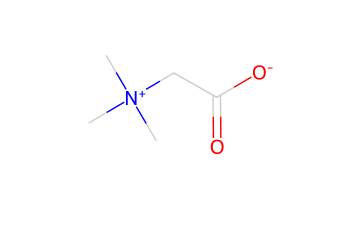
TMG (Trimethylglycine / Betaine)
Plasma homocysteine An amino acid in the blood that rises when vitamin B12, folate or B6 are low. lowering at 1.5 to 6 g/day, replicated The same finding reproduced by a separate research group. A result seen once can be chance or bias; a replicated one is harder to explain away. across independent trials and pooled analyses; 1 g/day did not lower it significantly, and doses of 4 g/day or more raise total and LDL Low-density lipoprotein cholesterol, the cholesterol fraction most closely tied to plaque in the arteries. cholesterol.
Grade C: human trials exist, but they are small, mixed or not yet repeated. This is not a finding that it does not work. How to read a grade →
TMG, also called betaine, comes from beets and grains. At 1.5 to 6 grams a day, it lowers a blood substance called homocysteine, and several studies agree on that. Lower homocysteine has not been shown to prevent heart attacks or strokes. One gram a day did not lower it. At 4 grams a day or more, TMG raised LDL cholesterol, the kind linked to clogged arteries.
A letter describes the human evidence, not the product, the manufacturer, or the ingredient's worth.
See the full evidence record →Plasma homocysteine lower at 1.5 to 6 g/day across independent trials, a surrogate; 1 g/day did not lower it, and 4 g/day or more raises LDL.
Why this gradeGrade C, small or unreplicated trials. The reasoning, and what the grade does not cover.
Grade C. Betaine at 1.5 to 6 g/day lowers plasma homocysteine in replicated randomized trials (Olthof et al., J Nutr, 2003; PMID PubMed ID: the permanent number the US National Library of Medicine gives a published paper. Each one links to that paper's record on PubMed. 14652361; Steenge et al., J Nutr, 2003; PMID 12730412) and pooled analyses (Ashtary-Larky et al., 2022; PMID 33764214). Homocysteine is not an established stand-in for a clinical outcome under the B definition: no trial has shown that lowering it prevents an event, so the letter is C however well the lowering replicates. At 4 g/day or more, total and LDL cholesterol rise.
WHAT THIS GRADE DOES NOT COVERheart attack, stroke or any clinical event; and the claim that TMG offsets methyl-group depletion A fall in a nutrient's level caused by a medication, for example through reduced absorption or increased loss. from NMN or NR, which no human trial has tested.
A grade describes the human evidence for a named use. It is not advice, and it is not a judgment on any individual prescription. How the letters are decided →
Who responds: this record's trial reading reports no subgroup that identifies who responds.
How this letter has changed · latest: October 2026 · Downgraded
Homocysteine lowering by betaine replicates (Olthof et al., J Nutr, 2003; PMID 14652361; Ashtary-Larky et al., 2022; PMID 33764214), but homocysteine is not an established stand-in for a clinical outcome. Applied the written grade definition: the B definition admits a biomarker A measurable sign in the body, such as a blood test value, used to track a condition or the effect of a treatment. only when it is an established stand-in for a clinical outcome, such as HbA1c A blood test that reflects average blood sugar over the previous two to three months., LDL, blood pressure or bone density, the strict reading the editor confirmed in October 2026.PMID 14652361 PMID 33764214
The dose field read 500 to 1,000 mg/day; the trials that lowered homocysteine used 1.5 to 6 g/day, and Alfthan et al. (2004; PMID 15522136) found 1 g/day did not lower it significantly, which the field now states. Lu et al. (2023; PMID 36717385) was presented as a second betaine trial; it tested folic acid, B6 and B12 plus 1 g betaine, so it is relabeled as a combination that cannot grade betaine, with the study products made by a supplement manufacturer that employs one author. Added: Steenge et al. (2003; PMID 12730412) as independent replication; Alfthan 2004; the McRae 2013 (PMID 23997720), Ashtary-Larky 2022 (PMID 33764214) and Zawieja 2021 (PMID 31809615) pools, the latter two documenting higher total and LDL cholesterol at 4 g/day or more; Schwab et al. (2011; PMID 20978525), homocysteine unchanged at 4 g/day for 6 months; Olthof et al. (2006; PMID 16871332), no improvement in flow-mediated dilation despite lower homocysteine. The form_note claim that forms are equally effective, which no trial tested, is removed, and the track field no longer says betaine may lower LDL. B unchanged, now scoped to the studied dose. Applied the written grade definition under the editor's standing instruction of October 2026 (Arnold Sandlow, D.C.).PMID 12730412 PMID 15522136 PMID 16871332 PMID 20978525 PMID 23997720 PMID 31809615 PMID 33764214 PMID 36717385
Every change to a letter on this site is dated and published. The full evidence log →
Commercial disclosure
EBL earns no commission on any supplement it grades. A purchase made through the dispensary link below pays EBL nothing, the practitioner discount goes to you in full. The dispensary is Fullscript, a practitioner dispensary, and many of the professional-grade brands in it are sold mainly through practitioners rather than in health food stores. Grades are assigned by published rubric before any commercial relationship exists and are never influenced by one. Full disclosure.
As studied: 1.5 to 6 g/day lowered fasting homocysteine, dose-dependently (12 to 20 percent at 1.5, 3 and 6 g/day); 1 g/day did not lower it significantly. The 500 to 1,000 mg/day commonly sold is below the range that lowered homocysteine in trials, and 4 g/day or more raised total and LDL cholesterol in pooled trials.
TMG and betaine are the same molecule (betaine anhydrous). No trial compared powder with capsules.
The betaine trial summary gives daily doses (PMID 14652361), and the betaine-with-B-vitamins trial gave four tablets a day (PMID 36717385). Neither states a time of day or whether doses were taken with food.
Checked against the full report for 1 of the 2 cited studies, and the published summary for the rest. What the cited trials did, not a schedule. Every supplement, by trial timing →
Kidney disease, where betaine accumulates. Methyl donors can be activating, which is the basis of the caution in bipolar disorder and schizophrenia.
No prominent drug interaction has been identified. The effect that belongs on this entry is not a drug interaction at all: betaine lowers homocysteine and moderately RAISES total cholesterol and LDL in pooled randomized evidence at 4 g/day or more (PMID 33764214; PMID 31809615), so anyone taking it for a cardiovascular reason is trading one marker against another. Worth knowing alongside lipid-lowering treatment.
Betaine lowers homocysteine and raises total cholesterol. Pooled randomized evidence shows betaine supplementation moderately increases total cholesterol, so the homocysteine benefit is traded against a lipid cost. Zawieja et al. (Journal of Dietary Supplements, 2021; PMID 31809615): systematic review A review that searches for every study on a question using a method set in advance, then assesses them together. and meta-analysis A study that pools the numbers from several trials into one combined estimate. finding betaine supplementation moderately increases total cholesterol. Olthof et al. (PLoS Medicine, 2005; PMID 15916468): four randomized placebo-controlled studies of homocysteine-lowering nutrients on blood lipids in healthy humans.
Plasma homocysteine if raised at baseline, and a lipid panel, because betaine at 4 g/day or more raised total and LDL cholesterol in pooled trials.
Primary evidenceTen papers, each linked to its PubMed record.
Olthof et al. (J Nutr, 2003; PMID 14652361): four parallel groups of 19 healthy adults, placebo An inactive substitute made to look like the real treatment, so participants cannot tell which one they received. or betaine 1.5, 3 or 6 g/day for 6 weeks; fasting homocysteine 12, 15 and 20 percent lower than placebo, with post-methionine rises also blunted. Steenge et al. (J Nutr, 2003; PMID 12730412): 6 g/day for 6 weeks in adults with mildly raised homocysteine, 1.8 micromol/L lower than placebo. Schwab et al. (Am J Clin Nutr, 2002; PMID 12399266): 42 obese adults on a reduced-energy diet, 6 g/day for 12 weeks; homocysteine fell against placebo, and total and LDL cholesterol were higher on betaine. Alfthan et al. (Br J Nutr, 2004; PMID 15522136): dose-response in 34 healthy adults; 1 g/day lowered homocysteine 1.1 percent (not significant), 3 and 6 g/day by 10 and 14 percent. Pooled: McRae (J Chiropr Med, 2013; PMID 23997720), 5 placebo-controlled trials at 4 g/day or more, homocysteine 1.23 micromol/L lower; Ashtary-Larky et al. (Crit Rev Food Sci Nutr, 2022; PMID 33764214), homocysteine 1.30 micromol/L lower, total cholesterol 14 mg/dL and LDL 10 mg/dL higher, the lipid rise at 4 g/day or more; Zawieja et al. (J Diet Suppl, 2021; PMID 31809615), 6 trials, total cholesterol 0.34 mmol/L higher. NULL FINDINGS: Schwab et al. (Eur J Clin Nutr, 2011; PMID 20978525), 63 healthy young adults, 4 g/day for 6 months, homocysteine unchanged; Olthof et al. (PLoS Clin Trials, 2006; PMID 16871332), crossover A trial design in which each participant receives both the treatment and the comparison, one after the other, and serves as their own control. in 39 adults aged 50 to 70, 6 g/day lowered homocysteine 12 percent but did not improve flow-mediated dilation. Combination, not graded: Lu et al. (Eur J Nutr, 2023; PMID 36717385), 100 Chinese adults with hyperhomocysteinemia, folic acid 400 micrograms, B6, B12 plus 1 g betaine for 12 weeks lowered homocysteine 10 percent; the folate alone could account for it, so it cannot support a betaine grade, and the study products were made by a supplement manufacturer that employs one author, a relationship the paper's no-conflict statement does not mention. Neither cited trial studied TMG alongside NMN or NR or measured S-adenosylmethionine. Grade C: homocysteine lowering replicates across independent groups and pooled trials at 1.5 to 6 g/day, but homocysteine is not an established stand-in for a clinical outcome.
Educational use only · Not medical advice · Starting, stopping or changing any supplement or medication is a decision for your physician
These statements have not been evaluated by the Food and Drug Administration. This product is not intended to diagnose, treat, cure, or prevent any disease. The grade on this page describes the strength of published human trial evidence in the populations studied. It is not a recommendation for any individual and is not medical advice. Starting, stopping or changing any supplement or medication is a decision for your physician.
This page carries a letter. EBL takes no commission, referral fee or payment of any kind on anything it grades. No letter has been bought and none is for sale.
How this is enforced
That is not a promise, it is a build condition. Two checks run on every deploy: one refuses to publish if a commission is claimed on anything graded, the other refuses if a page names a commercial relationship that is not declared in the register. If either fails, this page does not go live. You can read how the checks work, and what they do not cover, on the evidence integrity page.
How EBL searched for the trials (1 search)
The search that was run, what it returned, and what was left out and why, so the absence of evidence can be checked as well as its presence.
betaine[tiab] AND homocysteine[tiab] AND (randomized controlled trial[pt] OR meta-analysis[pt]) AND humans[mesh]Grades move when new trials publish. A free monthly email lists every grade EBL moved, with the reason and the trial behind it: the sign-up is on the Evidence Log →