Supplement · graded by use, two uses
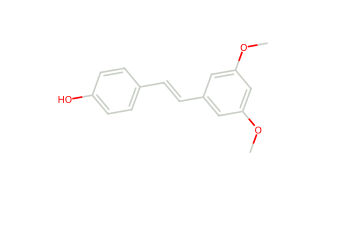
Pterostilbene
LDL Low-density lipoprotein cholesterol, the cholesterol fraction most closely tied to plaque in the arteries. cholesterol in adults enrolled for raised cholesterol.
Grade D, tested: in a human randomized trial, the treated group did worse on the endpoint The outcome a trial measures to decide whether the treatment worked, such as heart attacks, blood pressure or a symptom score. graded. How to read a grade →
Pterostilbene is a cousin of resveratrol, found in blueberries. Only one study has tested it alone in people. Adults with high cholesterol took it for several weeks. Their LDL cholesterol, the kind linked to clogged arteries, went up. Their blood pressure went down a little at the higher dose. The company that sells it paid for the study. So the main result it was tested for got worse.
The D belongs to one of the two uses graded on this record. The other one carries its own letter.
As studied, and the trials
Riche et al. (Evid Based Complement Alternat Med, 2014; PMID PubMed ID: the permanent number the US National Library of Medicine gives a published paper. Each one links to that paper's record on PubMed. 25057276): 80 adults with total cholesterol of 200 mg/dL or more or LDL of 100 mg/dL or more, four arms, 6 to 8 weeks; LDL rose 17.1 mg/dL on pterostilbene alone and did not rise when grape extract was added. In a population enrolled for raised cholesterol the lipid result went the wrong way: D on Route 2 Human randomized trials have been run and did not show benefit on the stated outcome. One of the two routes to the lowest letter on EBL's scale. with the harm badge. Maker-funded, stated beside the letter.
As studied, and the trials
In the same trial (Riche et al., 2014; PMID 25057276) systolic and diastolic blood pressure fell 7.8 and 7.3 mmHg at the higher dose. One positive randomized trial on a surrogate, unreplicated, with blood pressure listed among the stated endpoints but not named as primary: C under the written rule. The same trial raised LDL in the same people, graded on the row above; the headline stays on that harm finding so a reader meets it first. Maker-funded, stated beside the letter.
Read the grade that matches your goal. How EBL grades by use →
A letter describes the human evidence, not the product, the manufacturer, or the ingredient's worth.
See the full evidence record →Funding: The single trial this Grade D rests on was funded by the maker of the product it tested. Funder's role, as reported: Riche 2014 (PMID 25057276): the paper states the maker had no role in the collection or interpretation and analysis of data. The letter is what the trial supports under the grading rules; the funding is stated here so it can be weighed alongside it.
Funding: The single trial this Grade C for Blood pressure in adults with raised cholesterol rests on was funded by the maker of the product it tested. Funder's role, as reported: Riche 2014 (PMID 25057276): the paper states the maker had no role in the collection or interpretation and analysis of data. The letter is what the trial supports under the grading rules; the funding is stated here so it can be weighed alongside it.
This was not skipped. A human randomized trial has tested it and did not find a benefit on the endpoint below. That is a different statement from an untested intervention, which may still turn out to work. A Route 1 No human randomized trial has been run, so the record rests on animal or mechanistic evidence only. One of the two routes to the lowest letter on EBL's scale. Grade D means nobody has looked. A Route 2 Grade D means somebody looked and the answer was no.
Population 80 adults with high cholesterol, 6 to 8 weeks, four arms
Certainty Low to moderate. Single small placebo-controlled trial; LDL moved in the harm direction in people enrolled for raised cholesterol; primary-endpoint status not stated in the abstract.
PMID 25057276 →
LDL cholesterol rose in the one randomized trial of pterostilbene alone, in adults enrolled for raised cholesterol; maker-funded.
Why this gradeGrade D, tested, harm found. The reasoning, and what the grade does not cover.
Grade D, Route 2. In the only randomized trial of pterostilbene alone on a metabolic use (Riche et al., Evid Based Complement Alternat Med, 2014; PMID 25057276; 80 adults enrolled for raised cholesterol), LDL cholesterol rose by 17.1 mg/dL on pterostilbene alone while blood pressure fell at the higher dose. The participants were selected for their lipids, the paper lists lipids first among its endpoints and leads its conclusion with the LDL rise, so the lipid result is read as the trial's central answer; whether it was formally pre-specified as primary is not stated in the abstract. A metabolic intervention that raised LDL in people enrolled for high cholesterol is tested and found wanting. Moved from C in October 2026 by editor adjudication. Blood pressure, which fell in the same trial, is graded on its own row at C, a single unreplicated surrogate result; the headline stays on the harm finding so a reader meets it first.
WHAT THIS GRADE DOES NOT COVERblood pressure beyond that one trial, which has not been tested as a primary endpoint The one outcome a trial names in advance as its main test. Results on other outcomes carry less weight. elsewhere; pterostilbene combined with other agents; and doses above the 250 mg/day the trial used.
A grade describes the human evidence for a named use. It is not advice, and it is not a judgment on any individual prescription. How the letters are decided →
Who responds: this record's trial reading reports no subgroup that identifies who responds.
As studied: dose, form, population and duration for every use
A grade describes the intervention that was tested. Where the product on the shelf differs from it, this says so.
How this letter has changed · latest: October 2026 · Corrected
The review asked whether the D Route 2 should stand on the LDL rise or blood pressure should be graded as its own use. Under the written definitions both hold, so both are now on the record: LDL cholesterol in adults with raised cholesterol, D Route 2, tested and harm found; blood pressure, C, one positive trial (Riche et al., Evid Based Complement Alternat Med, 2014; PMID 25057276). Headline letter unchanged at D. Closes the review opened October. Applied by the written grade definitions, October 2026.PMID 25057276
The one randomized trial (Riche et al., Evid Based Complement Alternat Med, 2014; PMID 25057276) raised LDL 17.1 mg/dL and lowered blood pressure 7.8/7.3 mmHg at the higher dose in the same 80 adults. The written rule grades by use: one positive randomized trial is C, and a tested harm is D Route 2, so each result gets its row. The headline keeps the harm finding, since a record whose only trial raised LDL in people enrolled for high cholesterol should lead with that. Boron's Route 2 (two null marker trials) is confirmed on the same rule without change. Applied the written grade definition under the editor's standing instruction of October 2026 (Arnold Sandlow, D.C.).PMID 25057276
The dose line quoted an 80 percent against under 1 percent bioavailability comparison with resveratrol and the form note a blood-brain barrier advantage; neither has a human study on the record, and both are restated as unsupported. Added as context to the D Route 2 set in October: the safety report from the same trial (Riche et al., J Toxicol, 2013; PMID 23431291), a 12-week safety pilot with no efficacy outcome (Otsuka et al., 2025; PMID 40024751) and a megestrol combination trial in endometrial cancer with a null primary (Senguttuvan et al., 2025; PMID 40227411). Letters unchanged. Applied the written grade definition under the editor's standing instruction of October 2026 (Arnold Sandlow, D.C.).PMID 23431291 PMID 40024751 PMID 40227411
Pterostilbene held a C on its single trial (Riche et al., Evid Based Complement Alternat Med 2014; PMID 25057276), whose pre-specified primary outcome was lipids. LDL cholesterol rose by 17.1 mg/dL; blood pressure fell only as a secondary outcome. The trial was funded by the company that makes the pterostilbene tested. Tested on its primary question and adverse: D on Route 2. Editor adjudication, October 2026.PMID 25057276
Funding corrected. Earlier today this record said PubMed recorded no funding for the one trial cited, Riche 2014 (PMID 25057276); that was true of the indexed entry, but the full text states a grant from the company that makes the pterostilbene tested, which also supplied the pterostilbene and placebo An inactive substitute made to look like the real treatment, so participants cannot tell which one they received. and reports having had no role in data collection or analysis. Now stated beside the letter.PMID 25057276
Every change to a letter on this site is dated and published. The full evidence log →
Commercial disclosure
EBL earns no commission on any supplement it grades. A purchase made through the dispensary link below pays EBL nothing, the practitioner discount goes to you in full. The dispensary is Fullscript, a practitioner dispensary, and many of the professional-grade brands in it are sold mainly through practitioners rather than in health food stores. Grades are assigned by published rubric before any commercial relationship exists and are never influenced by one. Full disclosure.
50 to 250 mg/day in the one metabolic trial; the bioavailability advantage over resveratrol often quoted on labels has no human comparative study behind it on this record.
Methylated analog of resveratrol. Claims that it crosses the blood-brain barrier more effectively rest on animal and laboratory work, with no human support on this record. The trial material was supplied by its maker.
The cited trial gave pterostilbene twice daily (PMID 25057276). Its report does not state a time of day or whether doses were taken with meals.
Checked against the full published report. What the cited trials did, not a schedule. Every supplement, by trial timing →
Raised LDL cholesterol. This is not a theoretical concern: in the one human trial, LDL rose by 17.1 mg/dL on pterostilbene monotherapy at 250 mg/day while blood pressure fell. Anyone taking it for cardiovascular reasons is trading one marker against another.
CYP2C9 inhibition: warfarin and some statins may reach higher levels. Antihypertensives: the same trial showed blood-pressure lowering, so the effect is additive. Lipid-lowering treatment: the LDL rise above works against it.
Pterostilbene raised LDL in its only human trial. In the single human trial, pterostilbene monotherapy at 250 mg/day lowered blood pressure and raised LDL cholesterol by 17.1 mg/dL, so the cardiovascular effect runs in both directions at once. Riche et al. (Evidence-Based Complementary and Alternative Medicine, 2014; PMID 25057276): randomized double-blind placebo-controlled trial of pterostilbene on blood pressure and lipids in adults.
Lipid panel (watch LDL), fasting glucose, cognitive assessments
Primary evidenceFour papers, each linked to its PubMed record.
Riche et al. (Evid Based Complement Alternat Med, 2014; PMID 25057276): randomized, double-blind, placebo-controlled, 80 adults with total cholesterol of 200 mg/dL or more or LDL of 100 mg/dL or more, four arms, 6 to 8 weeks; the stated endpoints were lipids, blood pressure and weight. LDL cholesterol rose by 17.1 mg/dL on pterostilbene alone (P=0.001) and did not rise when grape extract was added; systolic and diastolic blood pressure fell at the higher dose (7.8 and 7.3 mmHg). The authors' conclusion is that pterostilbene increases LDL and reduces blood pressure. Whether lipids were the pre-specified primary endpoint is not stated in the abstract and the registration (NCT01267227) was not read in this pass. Funding: the full text states the trial was supported by a grant through the company that makes the pterostilbene tested, which also supplied the pterostilbene and the placebo, and that the company had no role in the collection or interpretation of the data. Grade D, Route 2: in a population enrolled for raised cholesterol, the lipid result went the wrong way. Companion and later trials: Riche et al. (J Toxicol, 2013; PMID 23431291), the safety report from the same 80-person trial, no hepatic, renal or glucose signals up to 250 mg/day, the same trial and not a replication The same finding reproduced by a separate research group. A result seen once can be chance or bias; a replicated one is harder to explain away.. Otsuka et al. (J Nutr Sci Vitaminol, 2025; PMID 40024751): 12-week placebo-controlled pilot of 10 or 100 mg/day in 30 healthy men; blood microRNA expression and safety only, no clinical efficacy outcome. Senguttuvan et al. (Antioxidants, 2025; PMID 40227411): randomized phase II of pterostilbene with megestrol against megestrol alone before hysterectomy for endometrial cancer, 44 patients; Ki-67 primary null, lipid metabolism unchanged, a different population and a combination. Trials of nicotinamide riboside combined with pterostilbene are a different product and do not grade pterostilbene alone.
Educational use only · Not medical advice · Starting, stopping or changing any supplement or medication is a decision for your physician
These statements have not been evaluated by the Food and Drug Administration. This product is not intended to diagnose, treat, cure, or prevent any disease. The grade on this page describes the strength of published human trial evidence in the populations studied. It is not a recommendation for any individual and is not medical advice. Starting, stopping or changing any supplement or medication is a decision for your physician.
This page carries a letter. EBL takes no commission, referral fee or payment of any kind on anything it grades. No letter has been bought and none is for sale.
How this is enforced
That is not a promise, it is a build condition. Two checks run on every deploy: one refuses to publish if a commission is claimed on anything graded, the other refuses if a page names a commercial relationship that is not declared in the register. If either fails, this page does not go live. You can read how the checks work, and what they do not cover, on the evidence integrity page.
How EBL searched for the trials (1 search)
The search that was run, what it returned, and what was left out and why, so the absence of evidence can be checked as well as its presence.
pterostilbene[tiab] AND randomized controlled trial[pt]Grades move when new trials publish. A free monthly email lists every grade EBL moved, with the reason and the trial behind it: the sign-up is on the Evidence Log →