Supplement · graded by use, two uses
Phosphatidylserine (PS)
Memory and cognition in older adults, bovine-cortex phosphatidylserine (no longer sold).
Grade C: human trials exist, but they are small, mixed or not yet repeated. This is not a finding that it does not work. How to read a grade →
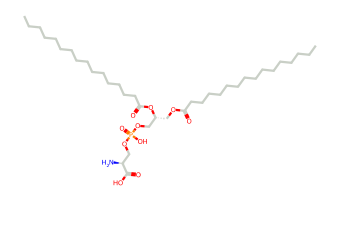
Phosphatidylserine is a fat found in brain cells. Older studies found better memory in older adults with memory complaints, but they used a form made from cow brains. That form is no longer sold because of the risk of mad cow disease. The form sold today comes from soy, and when it was tested, it did not improve memory.
The C belongs to one of the two uses graded on this record. The other one carries its own letter.
As studied, and the trials
Cenacchi et al. (Aging (Milano), 1993; PMID PubMed ID: the permanent number the US National Library of Medicine gives a published paper. Each one links to that paper's record on PubMed. 8323999): 494 patients aged 65 to 93 in 23 Italian units, 300 mg a day for 6 months; behavior and memory scores improved against placebo An inactive substitute made to look like the real treatment, so participants cannot tell which one they received.. Crook et al. (Neurology, 1991; PMID 2027477): 149 adults with age-associated memory impairment, 100 mg three times a day for 12 weeks; learning and memory tests improved against placebo. Two positive trials of a preparation withdrawn from sale after the bovine spongiform encephalopathy era. C rather than B because the rule attaches a B to an obtainable form, and this one is not; the soy form that replaced it is graded on the next row.
As studied, and the trials
Jorissen et al. (Nutr Neurosci, 2001; PMID 11842880): 120 older adults with age-associated memory impairment, 300 or 600 mg a day for 12 weeks; no difference from placebo on the primary delayed-recall measures or any secondary outcome. Kato-Kataoka et al. (J Clin Biochem Nutr, 2010; PMID 21103034): 78 adults aged 50 to 69 with memory complaints, 100 or 300 mg a day for 6 months; every group including placebo improved, and the only gain reported is within a low-baseline subgroup. The soy form was tested twice in the population it is sold to and did not separate from placebo: D on Route 2 Human randomized trials have been run and did not show benefit on the stated outcome. One of the two routes to the lowest letter on EBL's scale.. Aligned with the soy-derived phosphatidylserine protocol, graded D Route 2 in October 2026.
Read the grade that matches your goal. How EBL grades by use →
A letter describes the human evidence, not the product, the manufacturer, or the ingredient's worth.
See the full evidence record →Memory in older adults on bovine-cortex phosphatidylserine, no longer sold. The soy form sold today: tested, no benefit (D).
Why this gradeGrade C, small or unreplicated trials. The reasoning, and what the grade does not cover.
Grade C, stated for the bovine-cortex form, which is no longer sold. Two randomized trials of that preparation were positive, Cenacchi et al. (Aging (Milano), 1993; PMID 8323999; 494 patients) and Crook et al. (Neurology, 1991; PMID 2027477; 149 patients), so the evidence for it is replicated The same finding reproduced by a separate research group. A result seen once can be chance or bias; a replicated one is harder to explain away.; it stays at C rather than B because the written rule attaches a B to a form that can be obtained, and this one cannot. The soy-derived form sold today is graded on its own row: Jorissen et al. (Nutr Neurosci, 2001; PMID 11842880) null on every outcome and Kato-Kataoka et al. (J Clin Biochem Nutr, 2010; PMID 21103034) null between groups, D on Route 2.
WHAT THIS GRADE DOES NOT COVERthe product a reader can buy, which carries the D; phosphatidylserine combined with omega-3 fatty acids (Vakhapova et al., Dement Geriatr Cogn Disord, 2010; PMID 20523044), a combination not graded here; sunflower-derived phosphatidylserine, which has no cognition trial; and any population other than older adults with memory complaints or cognitive decline. The review opened October is closed: the record follows the evidence for each form. Decided October 2026 by editor adjudication.
A grade describes the human evidence for a named use. It is not advice, and it is not a judgment on any individual prescription. How the letters are decided →
Trials report an average. This box says whether any trial on this record looked at who the result applies to, and what it found.
For Memory and cognition in older adults, soy-derived phosphatidylserine (the form sold), Grade D · Subgroup tested, effect differedKato-Kataoka et al. (J Clin Biochem Nutr, 2010; PMID 21103034) found every group, including placebo, improved; the only gain reported is within a subgroup with low baseline scores. A subgroup result shows who the effect appeared in within these trials. It does not change the letter.
As studied: dose, form, population and duration for every use
A grade describes the intervention that was tested. Where the product on the shelf differs from it, this says so.
How this letter has changed · latest: October 2026 · Corrected
The C rested on Cenacchi et al. (Aging (Milano), 1993; PMID 8323999), a trial of bovine-cortex phosphatidylserine, a preparation no longer sold, while the soy-derived form on the shelf had two null trials and a protocol at D Route 2. The search for this decision found a second positive bovine trial, Crook et al. (Neurology, 1991; PMID 2027477; 149 adults), so the bovine evidence is replicated; it stays C because the written B attaches to a form that can be obtained. Decided: the record follows the evidence for each form. The headline C is stated for the bovine-cortex preparation and says it is not sold; the soy-derived form is its own use at D Route 2 on Jorissen et al. (Nutr Neurosci, 2001; PMID 11842880) and Kato-Kataoka et al. (J Clin Biochem Nutr, 2010; PMID 21103034). The review opened October is closed. Decided October 2026 by editor adjudication (Arnold Sandlow, D.C.).PMID 11842880 PMID 2027477 PMID 21103034 PMID 8323999
The soy-derived phosphatidylserine protocol held a C on the strength of Cenacchi et al. (Aging (Milano), 1993; PMID 8323999), a trial of bovine-cortex phosphatidylserine, a different product. The two randomized trials of the soy form in the population it is sold to, Jorissen et al. (Nutr Neurosci, 2001; PMID 11842880; 120 adults, 300 or 600 mg/day, 12 weeks) and Kato-Kataoka et al. (J Clin Biochem Nutr, 2010; PMID 21103034; 78 adults, 100 or 300 mg/day, 6 months), found no between-group difference from placebo. Under the published scale a product tested in its own form and population without benefit is Grade D on Route 2. The letter moved in October 2026 after an editor adjudication of a machine second check and five independent reviews; the search behind the move is recorded on the protocol.PMID 11842880 PMID 21103034 PMID 8323999
Every change to a letter on this site is dated and published. The full evidence log →
Commercial disclosure
EBL earns no commission on any supplement it grades. A purchase made through the dispensary link below pays EBL nothing, the practitioner discount goes to you in full. The dispensary is Fullscript, a practitioner dispensary, and many of the professional-grade brands in it are sold mainly through practitioners rather than in health food stores. Grades are assigned by published rubric before any commercial relationship exists and are never influenced by one. Full disclosure.
100-300 mg/day. Most trials used 200-300 mg/day in divided doses with meals.
Modern phosphatidylserine supplements are usually soy- or sunflower-derived. Many early clinical studies used bovine cortex-derived PS, which is no longer commonly used. Results from the older bovine preparation do not automatically transfer to every current product.
In the cited Japanese trial, three capsules were taken after each meal (PMID 21103034). The 1991 trial gave 100 mg three times a day (PMID 2027477). The summary of the 1993 trial does not state a time (PMID 8323999).
Checked against the full report for 1 of the 3 cited studies, and the published summary for the rest. What the cited trials did, not a schedule. Every supplement, by trial timing →
How to buy this: quality criteria, not a brand
100–300mg/day with meals (trials used 200–300mg).
Soy-derived PS (current standard).
Soy-derived PS with the actual PS milligrams stated.
“PS complex” hiding the real phosphatidylserine content; unspecified source.
The grade and these criteria are set only from human trials. Any purchase link is convenience and does not affect the grade.
Most products are now soy or sunflower-derived rather than bovine, which matters in soy allergy and removed the historical prion concern. Raised bleeding risk at high doses.
Anticoagulants and antiplatelets: mild additive antiplatelet effect at high doses. Cholinergic drugs: possible additive effect. Both are mechanistic cautions rather than measured ones.
The bleeding hits belong to a different phosphatidylserine. This pair is a naming collision, and it is worth stating plainly. Phosphatidylserine is both a supplement and an endogenous membrane phospholipid that is the antigen in antiphospholipid syndrome, so a search pairing it with anticoagulants returns thrombosis and lupus literature about the molecule in the body, not about the capsule. Filtered to studies of phosphatidylserine supplementation in humans, the literature is small and is about exercise recovery, mood, cognition and vascular function. None of it measures platelet function, bleeding time or an anticoagulant. The additive-antiplatelet caution is a reasonable inference from the molecule's role in clotting, and it has never been tested in a person taking the supplement. Basis: pharmacological mechanism, not a human study. Searched PubMed in August 2026: 2 queries, 8 human results.
The trials measured cognitive and memory performance by repeat assessment, and recorded subjective mental fatigue or stress-related symptoms where relevant.
Primary evidenceFour papers, each linked to its PubMed record.
BOVINE-CORTEX FORM, no longer sold: Cenacchi et al. (Aging (Milano), 1993; PMID 8323999): 494 patients aged 65 to 93 with moderate to severe cognitive decline, 300 mg a day for 6 months; behavior and memory scores improved against placebo. Crook et al. (Neurology, 1991; PMID 2027477): 149 adults with age-associated memory impairment, 100 mg three times a day for 12 weeks; learning and memory tests improved against placebo, most in those starting lowest. SOY-DERIVED FORM, the one sold: Jorissen et al. (Nutr Neurosci, 2001; PMID 11842880): 120 older adults with age-associated memory impairment, 300 or 600 mg a day for 12 weeks; no difference from placebo on any outcome. Kato-Kataoka et al. (J Clin Biochem Nutr, 2010; PMID 21103034): 78 adults aged 50 to 69 with memory complaints, 100 or 300 mg a day for 6 months; every group including placebo improved, the only gain within a low-baseline subgroup. The letter follows the form: C for the bovine-cortex preparation the positive trials used, D Route 2 for the soy form on the shelf.
Educational use only · Not medical advice · Starting, stopping or changing any supplement or medication is a decision for your physician
These statements have not been evaluated by the Food and Drug Administration. This product is not intended to diagnose, treat, cure, or prevent any disease. The grade on this page describes the strength of published human trial evidence in the populations studied. It is not a recommendation for any individual and is not medical advice. Starting, stopping or changing any supplement or medication is a decision for your physician.
This page carries a letter. EBL takes no commission, referral fee or payment of any kind on anything it grades. No letter has been bought and none is for sale.
How this is enforced
That is not a promise, it is a build condition. Two checks run on every deploy: one refuses to publish if a commission is claimed on anything graded, the other refuses if a page names a commercial relationship that is not declared in the register. If either fails, this page does not go live. You can read how the checks work, and what they do not cover, on the evidence integrity page.
How EBL searched for the trials (2 searches)
The search that was run, what it returned, and what was left out and why, so the absence of evidence can be checked as well as its presence.
phosphatidylserine[tiab] AND (bovine[tiab] OR cortex[tiab] OR "BC-PS"[tiab]) AND (cognitive[tiab] OR memory[tiab] OR dementia[tiab]) AND (randomized controlled trial[pt] OR clinical trial[pt])phosphatidylserine[tiab] AND (soy[tiab] OR soybean[tiab] OR soy-derived[tiab]) AND (randomized controlled trial[pt] OR randomized[tiab]) AND humans[mesh]Grades move when new trials publish. A free monthly email lists every grade EBL moved, with the reason and the trial behind it: the sign-up is on the Evidence Log →