Supplement
Milk Thistle (Silymarin)
Liver enzymes in fatty liver disease, on plain silymarin at 140 mg to 700 mg three times daily: ALT falls a few units against placebo An inactive substitute made to look like the real treatment, so participants cannot tell which one they received. at very low certainty (Cochrane 2025, PMID PubMed ID: the permanent number the US National Library of Medicine gives a published paper. Each one links to that paper's record on PubMed. 40552569).
Grade C: human trials exist, but they are small, mixed or not yet repeated. This is not a finding that it does not work. How to read a grade →
Milk thistle contains silymarin, sold to protect the liver. In people with fatty liver disease, it lowered a liver blood test by a few units. A careful review judged that finding very uncertain. The two best studies looked at liver tissue directly, and neither met its main goal. No study shows that it helps people live longer or feel better.
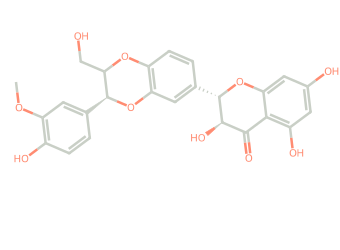
- Dose studied
- Silymarin 140–420 mg/day
- Form graded
- Silymarin (standardized)
- Cited PMIDs
- PMID 38579127 →PMID 29245314 →
A letter describes the human evidence, not the product, the manufacturer, or the ingredient's worth.
See the full evidence record →Liver enzymes in fatty liver disease fall a few units at very low certainty; the biopsy trials were null on their primary endpoints The one outcome a trial names in advance as its main test. Results on other outcomes carry less weight..
Why this gradeGrade C, small or unreplicated trials. The reasoning, and what the grade does not cover.
Grade C on liver enzymes in fatty liver disease. Meta-analyses A study that pools the numbers from several trials into one combined estimate. find silymarin lowers ALT by a few units against placebo, but the 2025 Cochrane review (Wang et al., PMID 40552569) rated that finding very low certainty and found no mortality or quality-of-life data at all. The two best-designed placebo-controlled trials both missed their primary endpoints The outcome a trial measures to decide whether the treatment worked, such as heart attacks, blood pressure or a symptom score.: no histologic benefit at 420 or 700 mg three times daily in the NIH-funded trial (Navarro et al., 2019; PMID 31536511) and the NAFLD activity score endpoint not met in the Malaysian trial (Wah Kheong et al., 2017; PMID 28419855), where fibrosis improved as a secondary outcome. A surrogate caps the letter at B; inconsistent, low-certainty randomized evidence with null primaries in the adequately sized trials is C.
WHAT THIS GRADE DOES NOT COVERliver histology, where the biopsy trials were null; silybin-phosphatidylcholine complexes and combinations with vitamin E, which the Cochrane review found no better than placebo on ALT and which EBL treats as different agents; hepatitis C and alcoholic liver disease, different populations; and any single established dose, since trials ranged from about 140 mg to 2.1 g a day.
A grade describes the human evidence for a named use. It is not advice, and it is not a judgment on any individual prescription. How the letters are decided →
Who responds: this record's trial reading reports no subgroup that identifies who responds.
How this letter has changed · latest: October 2026 · Corrected
The record cited two meta-analyses and no trial. Added: the 2025 Cochrane review (Wang et al., PMID 40552569), which rates the ALT benefit very low certainty and finds silymarin complexes no better than placebo; the NIH-funded phase II trial null on histology at 420 and 700 mg three times daily (Navarro et al., 2019; PMID 31536511); and the Malaysian biopsy trial whose primary endpoint was not met (Wah Kheong et al., 2017; PMID 28419855). Li et al. (2024; PMID 38579127) is relabeled: it pools complexes and combination products with plain silymarin, its histology claim conflicts with the biopsy trials, and its enzyme effect sizes How large a difference the treatment made, as distinct from whether the difference could be detected at all. are implausible as labeled. The best-use line now says which form and dose range were tested and that complexes are different agents. C unchanged. Applied the written grade definition under the editor's standing instruction of October 2026 (Arnold Sandlow, D.C.).PMID 28419855 PMID 31536511 PMID 38579127 PMID 40552569
Every change to a letter on this site is dated and published. The full evidence log →
Commercial disclosure
EBL earns no commission on any supplement it grades. A purchase made through the dispensary link below pays EBL nothing, the practitioner discount goes to you in full. The dispensary is Fullscript, a practitioner dispensary, and many of the professional-grade brands in it are sold mainly through practitioners rather than in health food stores. Grades are assigned by published rubric before any commercial relationship exists and are never influenced by one. Full disclosure.
No dose is published here. This record carries no authored dose, because the cited trials do not converge on a single figure. Each trial cited on this page states the dose it used, and EBL has not turned those into a recommendation.
Standardized extracts were used in the cited trials; product quality varies.
The cited reviews pool trials, most dosing two or three times a day, and do not report a time of day or whether doses were taken with food (PMID 38579127, PMID 29245314, PMID 40552569). The two biopsy trials dosed three times daily (PMID 31536511, PMID 28419855).
Checked against the full report for 1 of the 5 cited studies, and the published summary for the rest. What the cited trials did, not a schedule. Every supplement, by trial timing →
Ragweed, daisy and chrysanthemum allergy, on cross-reactivity. Pregnancy.
Silymarin inhibits several cytochrome P450 enzymes in laboratory work, which generated a long-standing warning about co-medication. When it was measured in people the effect on CYP activity was small and unlikely to be clinically meaningful at usual doses, so the honest statement is that the theoretical concern has largely not survived human testing. Diabetes medication: additive glucose lowering has been reported.
The silymarin CYP warning did not survive human testing. Silymarin inhibits cytochrome P450 enzymes in laboratory work, but when measured in people the effect on CYP activity was small and unlikely to be clinically meaningful at usual doses. Kawaguchi-Suzuki et al. (Drug Metabolism and Disposition, 2014; PMID 25028567): clinical study of the effects of milk thistle on human cytochrome P450 activity. Fuhr et al. (Planta Medica, 2007; PMID 17968815): randomized trial of silymarin on oral nifedipine pharmacokinetics.
ALT, AST and GGT at baseline and every 4 weeks during use, the endpoints the trials measured. A baseline liver enzyme panel before starting. Products standardized to 70 to 80 percent silymarin match the trial preparations; the trials ranged from 140 mg to 700 mg three times daily and no single dose is established.
Primary evidenceFive papers, each linked to its PubMed record.
Wang et al. (Cochrane Database Syst Rev, 2025; PMID 40552569): 17 randomized trials, 2,069 adults with metabolic dysfunction-associated steatotic liver disease; silymarin lowered ALT against placebo at very low certainty because of bias, small trials and heterogeneity How much the results of the pooled trials differ from each other. High heterogeneity makes a combined estimate less reliable., with no benefit against other treatments, no mortality or quality-of-life data, and silymarin complexes with vitamin E or phosphatidylcholine no better than placebo on ALT. Navarro et al. (PLoS One, 2019; PMID 31536511): NIH-funded multicenter phase II trial, 78 patients with biopsy-proven NASH, 420 or 700 mg three times daily for 48 weeks; the histologic primary endpoint was met by 15 to 19 percent on silymarin and 12 percent on placebo (p=0.79), no benefit. Wah Kheong et al. (Clin Gastroenterol Hepatol, 2017; PMID 28419855): 99 patients with biopsy-proven NASH, 700 mg three times daily for 48 weeks; the primary endpoint, a 30 percent fall in NAFLD activity score, was not met (32.7 against 26.0 percent, p=0.467); fibrosis improved as a secondary outcome. Li et al. (Annals of Hepatology, 2024; PMID 38579127): 26 trials pooled, enzymes and lipids lower; it pools silybin complexes and combination products with plain silymarin, its histology claim conflicts with the two placebo-controlled biopsy trials, and its ALT and AST effects are labeled standardized mean differences at values (-12.39, -10.97) that are implausible for that statistic, so its pooled numbers are read with caution. Zhong et al. (Medicine (Baltimore), 2017; PMID 29245314): 8 trials, 587 patients, AST and ALT lower by 6 to 9 units. Grade C: randomized evidence on a surrogate, very low certainty, with the best-designed trials null on their primary endpoints.
Educational use only · Not medical advice · Starting, stopping or changing any supplement or medication is a decision for your physician
These statements have not been evaluated by the Food and Drug Administration. This product is not intended to diagnose, treat, cure, or prevent any disease. The grade on this page describes the strength of published human trial evidence in the populations studied. It is not a recommendation for any individual and is not medical advice. Starting, stopping or changing any supplement or medication is a decision for your physician.
This page carries a letter. EBL takes no commission, referral fee or payment of any kind on anything it grades. No letter has been bought and none is for sale.
How this is enforced
That is not a promise, it is a build condition. Two checks run on every deploy: one refuses to publish if a commission is claimed on anything graded, the other refuses if a page names a commercial relationship that is not declared in the register. If either fails, this page does not go live. You can read how the checks work, and what they do not cover, on the evidence integrity page.
Grades move when new trials publish. A free monthly email lists every grade EBL moved, with the reason and the trial behind it: the sign-up is on the Evidence Log →