Supplement
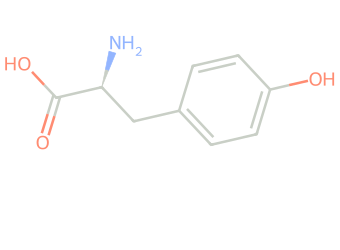
L-Tyrosine
Working memory and reaction measures during acute environmental or operational stress, on small short trials: positive during severe cold exposure and a military combat course, null during exercise in heat, and null on stress markers in the one recent trial.
Grade C: human trials exist, but they are small, mixed or not yet repeated. This is not a finding that it does not work. How to read a grade →
Tyrosine is an amino acid the brain uses to make chemicals linked to alertness. In small, short studies, it helped memory and reaction time during severe cold and a military training course. During exercise in the heat it did not help. In a shooting drill, only one test moved. So the results are small and limited to short bursts of stress.
- Dose studied
- 2,000 mg/day (acute)
- Form graded
- L-tyrosine (free-form)
- Cited PMIDs PubMed ID: the permanent number the US National Library of Medicine gives a published paper. Each one links to that paper's record on PubMed.
- PMID 38975711 →
A letter describes the human evidence, not the product, the manufacturer, or the ingredient's worth.
See the full evidence record →L-Tyrosine for acute stress and cognitive-performance measures, graded on published human trial evidence.
Why this gradeGrade C, small or unreplicated trials. The reasoning, and what the grade does not cover.
Grade C on working memory and reaction measures during acute stress. The evidence is small and short: 19 volunteers in severe cold (Mahoney et al., 2007; PMID 17585971), 21 cadets in combat training (Deijen et al., 1999; PMID 10230711) and 80 young adults in a simulated shooting drill where only one Stroop measure moved and stress markers did not (McAllister et al., 2024; PMID 38975711). Two heat-stress trials were null (Coull et al., 2016; PMID 26285023; Donnan et al., 2025; PMID 39820592). Objective tests, inconsistent results across settings: C.
WHAT THIS GRADE DOES NOT COVERstress markers such as cortisol, alpha-amylase or anxiety scores, which did not change; any daily supplement dose, since the trials gave 2 g or 150 to 300 mg/kg; exercise in heat, where the trials were null; and older adults, in whom higher doses worsened working memory (van de Rest et al., 2017; PMID 29168741).
A grade describes the human evidence for a named use. It is not advice, and it is not a judgment on any individual prescription. How the letters are decided →
Who responds: this record's trial reading reports no subgroup that identifies who responds.
How this letter has changed · latest: October 2026 · Corrected
The record named acute stress as its endpoint The outcome a trial measures to decide whether the treatment worked, such as heart attacks, blood pressure or a symptom score. while the cited trial (McAllister et al., Stress, 2024; PMID 38975711) found no effect on any stress marker and a single positive Stroop count. The endpoint is now working memory and reaction measures under acute stress, which is what the positive trials measured: Mahoney et al. (Physiol Behav, 2007; PMID 17585971) in cold and Deijen et al. (Brain Res Bull, 1999; PMID 10230711) in combat training. Two heat-stress trials were null (Coull et al., 2016; PMID 26285023; Donnan et al., 2025; PMID 39820592), and van de Rest et al. (Nutrients, 2017; PMID 29168741) found working memory declining with dose in adults aged 60 to 75, now in the caution. No dose was stated; the trial doses are, and they are far above a capsule. C unchanged. Applied the written grade definition under the editor's standing instruction of October 2026 (Arnold Sandlow, D.C.).PMID 10230711 PMID 17585971 PMID 26285023 PMID 29168741 PMID 38975711 PMID 39820592
Every change to a letter on this site is dated and published. The full evidence log →
Commercial disclosure
EBL earns no commission on any supplement it grades. A purchase made through the dispensary link below pays EBL nothing, the practitioner discount goes to you in full. The dispensary is Fullscript, a practitioner dispensary, and many of the professional-grade brands in it are sold mainly through practitioners rather than in health food stores. Grades are assigned by published rubric before any commercial relationship exists and are never influenced by one. Full disclosure.
No daily dose is supported. The positive trials gave single 2 g doses (McAllister 2024, PMID 38975711), five 2 g doses a day during a combat course (Deijen 1999, PMID 10230711) or 150 to 300 mg per kilogram before cold exposure (Mahoney 2007, PMID 17585971), roughly 10 to 20 g for an adult. Typical 500 mg capsules were not tested at any of these effects, and in adults aged 60 to 75 higher doses worsened working memory (van de Rest 2017, PMID 29168741).
Standardized extracts/forms were used in the cited trials; product quality varies.
In the cited trial, a single 2,000 mg dose was taken before a stress and cognitive challenge (PMID 38975711). It was not a daily schedule.
Checked against the published summary; the full paper could not be read. What the cited trials did, not a schedule. Every supplement, by trial timing →
Hyperthyroidism and Graves disease: tyrosine is the precursor of thyroid hormone. Melanoma, on the tyrosine-melanin pathway. Pregnancy. Adults aged 60 to 75: in a dose-response crossover A trial design in which each participant receives both the treatment and the comparison, one after the other, and serves as their own control. trial, working memory declined with higher tyrosine doses (van de Rest 2017, PMID 29168741).
MAOIs: tyrosine is a catecholamine precursor and the combination is a hypertensive-crisis concern. Levodopa: they compete for the same intestinal and blood-brain amino acid transporter, so each reduces the other's absorption. Thyroid hormone: additive substrate for hormone synthesis.
The levodopa competition is established for the class this amino acid belongs to. Levodopa is absorbed in the proximal small bowel by a saturable facilitated transport system shared with other large neutral amino acids, and it crosses into the brain on the same carriers. Tyrosine is one of those amino acids. This is settled enough to have changed clinical practice: protein-redistribution diets, shifting protein to the evening to protect the daytime levodopa response, are standard advice in Parkinson's disease and are covered by a systematic review A review that searches for every study on a question using a method set in advance, then assesses them together. of dietary approaches to levodopa therapy. The limit is precise. The competition is demonstrated for dietary protein and for large neutral amino acids as a class, not for a tyrosine capsule taken next to a levodopa dose, which nobody has studied. The caution is well founded and the specific magnitude is unknown. Contin and Martinelli (J Neurol, 2010;257(Suppl 2):S253-61; PMID 21080186): review of levodopa pharmacokinetics, describing the saturable transport shared with large neutral amino acids at the gut and the blood-brain barrier. Boelens Keun et al. (Adv Nutr, 2021;12(6):2265-2287; PMID 34113965): systematic review of dietary approaches to improve efficacy and control side effects of levodopa therapy.
One case, and a retracted review, on the MAOI pair. The MAOI caution rests on a decarboxylation step: tyrosine can be converted to tyramine, and MAOIs are what stop tyramine being broken down, which is the mechanism behind the classic pressor reaction. One published case describes the pairing directly. A 67-year-old woman on transdermal selegiline required parenteral nutrition containing tyrosine, and the report exists because whether that causes tyramine build-up was unknown rather than known. Two things the reader deserves. The dose route in that case is intravenous nutrition, not a capsule. And the one clinical literature review of supplemental tyrosine with phenelzine, which a search on this exact pair surfaces near the top, carries a retraction notice on PubMed and is deliberately not used here. Bharani et al. (Eur J Clin Nutr, 2024;78(3):274-276; PMID 38057413): case report of concomitant monoamine oxidase inhibitor and tyrosine in parenteral nutrition.
The thyroid line is a textbook fact, not an interaction finding. Tyrosine is the backbone from which thyroid hormone is built, which is what the record means by additive substrate. That is biochemistry, not a measured interaction. No human study has given supplemental tyrosine to someone on levothyroxine and measured thyroid function, dose requirement or symptoms. The search returns reviews of drug-induced hypothyroidism and of thyroid physiology, not a single interaction study of the pair. Anyone on thyroid replacement should treat this as unknown rather than as reassurance in either direction. Basis: pharmacological mechanism, not a human study. Searched PubMed in August 2026: 1 query, 31 human results.
The positive trials measured working memory and reaction tasks during an acute stressor; outside such a setting there is no measured outcome on this record. Thyroid function (TSH, T3, T4) at baseline and 12 weeks if used long term, as tyrosine is a thyroid hormone precursor.
Primary evidenceSix papers, each linked to its PubMed record.
McAllister et al. (Stress, 2024; PMID 38975711): 80 young adults randomized to 2,000 mg L-tyrosine, 200 mg L-theanine or placebo An inactive substitute made to look like the real treatment, so participants cannot tell which one they received. before a virtual-reality active-shooter drill and cognitive challenge; neither amino acid changed salivary alpha-amylase, secretory IgA, heart rate or state anxiety, and the only tyrosine result was fewer missed responses on the Stroop task. Mahoney et al. (Physiol Behav, 2007; PMID 17585971): 19 volunteers, double-blind within-subject, 300 mg/kg tyrosine in food bars during two 90-minute cold-water immersions at about 10 degrees Celsius; cold impaired a match-to-sample memory measure and tyrosine restored correct responses; US Army laboratory, indexed as a controlled trial rather than a randomized one. Deijen et al. (Brain Res Bull, 1999; PMID 10230711): 21 cadets during a combat training course, five daily 2 g doses in a protein drink against a carbohydrate drink; memory and tracking performance better on tyrosine, no mood effect; the control was a calorie-matched carbohydrate drink, not a matched placebo. Null: Coull et al. (Med Sci Sports Exerc, 2016; PMID 26285023), 150 mg/kg before a load-carriage protocol in 40 degree heat, 8 participants, no cognitive benefit; Donnan et al. (PLoS One, 2025; PMID 39820592), 150 mg/kg in 8 soccer players during intermittent exercise in 32 degree heat, no effect on decision making, power or affect. Harm signal in older adults: van de Rest et al. (Nutrients, 2017; PMID 29168741), 17 adults aged 60 to 75 given 100, 150 or 200 mg/kg; working memory declined with higher doses, most in those with the largest plasma rise. Grade C: small, short trials on objective tests under acute stress, positive in cold and combat settings, null in heat, with a dose-dependent decline in older adults. A 2017 tyrosine and brain-stimulation paper by another group was retracted and is not cited.
Educational use only · Not medical advice · Starting, stopping or changing any supplement or medication is a decision for your physician
These statements have not been evaluated by the Food and Drug Administration. This product is not intended to diagnose, treat, cure, or prevent any disease. The grade on this page describes the strength of published human trial evidence in the populations studied. It is not a recommendation for any individual and is not medical advice. Starting, stopping or changing any supplement or medication is a decision for your physician.
This page carries a letter. EBL takes no commission, referral fee or payment of any kind on anything it grades. No letter has been bought and none is for sale.
How this is enforced
That is not a promise, it is a build condition. Two checks run on every deploy: one refuses to publish if a commission is claimed on anything graded, the other refuses if a page names a commercial relationship that is not declared in the register. If either fails, this page does not go live. You can read how the checks work, and what they do not cover, on the evidence integrity page.
Grades move when new trials publish. A free monthly email lists every grade EBL moved, with the reason and the trial behind it: the sign-up is on the Evidence Log →