Supplement
Geranylgeraniol (GG)
No human randomized trial of the statin-muscle claim has reported, and no registered trial of that claim was located in this pass.
Grade D, not yet tested: no human randomized trial has been run. This D records missing trials, not a finding that it does not work. How to read a grade →
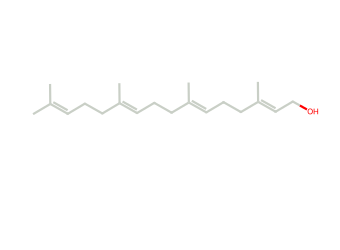
Geranylgeraniol, or GG, is a compound the body makes from the same path that statin drugs block. It is sold to ease muscle aches from statins. The idea makes sense on paper. But no finished study in people has tested whether it relieves those aches. The claim rests on lab and animal work. So it has not been tested in the people it is sold to.
A letter describes the human evidence, not the product, the manufacturer, or the ingredient's worth.
See the full evidence record →Who responds: this record's trial reading reports no subgroup that identifies who responds.
No human randomized trial has tested this at the dose and form graded, so there is nothing for a higher letter to rest on. A Route 1 Grade D records the absence of trials. It is not a finding against the compound, and it is not a finding that the compound is safe, because neither has been established. It may turn out to work once someone tests it. The grade moves when a qualifying human trial reports.
Statin-associated muscle symptoms: a plausible rationale, and no completed randomized trial on its primary endpoint The one outcome a trial names in advance as its main test. Results on other outcomes carry less weight..
How this letter has changed · latest: October 2026 · Corrected
The record said the primary human trial of the statin-muscle claim is ongoing; no registered trial was located in this pass, and the claim is withdrawn rather than left unsourced. Osaki 2026 (PMID PubMed ID: the permanent number the US National Library of Medicine gives a published paper. Each one links to that paper's record on PubMed. 42323079) is now described as a mouse genetic model, not as establishing the human mechanism. Added as context, scoped away from the statin claim: D'Adamo 2026 (PMID 42807157), 150 healthy adults, GG alone null on plasma CoQ10 and questionnaires, first author on the advisory board of a company that sells GG; Jurgelewicz 2026 (PMID 42222203), a fixed-order placebo-then-GG study null on testosterone overall, one author employed by the sponsor. The 'no human trial' language is now scoped to the statin-muscle claim. Letter unchanged.PMID 42323079 PMID 42807157 PMID 42222203
Every change to a letter on this site is dated and published. The full evidence log →
Commercial disclosure
EBL earns no commission on any supplement it grades. Grades are assigned by published rubric before any commercial relationship exists and are never influenced by one. Full disclosure.
150 mg/day (annatto-derived) is a common product amount; the human CoQ10 trial used a label dose and the testosterone study 300 mg/day. No human randomized trial has tested a dose for statin-associated muscle symptoms.
The published human GG studies used an annatto-derived trans-geranylgeraniol preparation. No single commercial brand is established as the studied material.
The cited studies were done in rats, mice and muscle cells (PMID 31491372, PMID 42323079, PMID 29951166). There is no human trial timing on this record.
Checked against the full report for 2 of the 3 cited studies, and the published summary for the rest. What the cited trials did, not a schedule. Every supplement, by trial timing →
How to buy this: quality criteria, not a brand
150mg/day with food (studies use 150–300mg/day in statin users).
Annatto-derived GG (from Bixa orellana seed): the form used in published trials.
Annatto-derived geranylgeraniol, with third-party testing stated.
Unspecified GG source; no clinical testing; no third-party COA.
The grade and these criteria are set only from human trials. Any purchase link is convenience and does not affect the grade.
Pregnancy and breastfeeding, on insufficient data. Hormone-sensitive conditions, since geranylgeraniol sits upstream of steroid synthesis.
Statins are the interaction that matters and the honest answer is that it has not been studied. Statins work by blocking the mevalonate pathway, and geranylgeraniol is one of the products of that pathway. A supplement that restores a product of the pathway a drug is deliberately blocking raises an obvious question about whether it also blunts the drug's intended effect on cholesterol. No human trial has measured that either way. The claim that it relieves statin side effects without reducing statin efficacy is the manufacturer's positioning, not a finding, and it should not be read as a clearance to combine them without telling the prescriber. Bisphosphonates act on the same pathway and raise the same unanswered question.
The obvious question about this one has still not been asked. Geranylgeraniol is a product of the mevalonate pathway that statins deliberately block, so whether supplementing it blunts the drug is the first question anyone would ask. It remains unasked in humans. The human-tagged literature is mevalonate-pathway cell biology and cancer work, plus laboratory studies of geranylgeraniol against bisphosphonate toxicity in cultured human osteoblasts, which is a different question and a different tissue. No trial has given geranylgeraniol to a person on a statin and measured LDL Low-density lipoprotein cholesterol, the cholesterol fraction most closely tied to plaque in the arteries. cholesterol, or given it alongside a bisphosphonate and measured bone outcomes. The record's existing sentence, that the claim of relieving statin side effects without reducing statin efficacy is manufacturer positioning rather than a finding, is exactly right and is now backed by a recorded search. Basis: pharmacological mechanism, not a human study. Searched PubMed in August 2026: 1 query, 101 human results.
There is not yet a validated GG-specific response measure for routine use. Published human GG studies have mainly followed safety laboratories, sex hormones and CoQ10-related measures; muscle-performance trials are still emerging. CK, statin adherence and statin-muscle symptom improvement are not established GG tracking endpoints without a specific supporting trial.
Primary evidenceFive papers, each linked to its PubMed record.
Not tested in humans for the statin-muscle efficacy claim; the earlier statement that a primary human trial is ongoing could not be verified against a registry in this pass and is withdrawn. Mechanistic basis: Osaki et al. (Mol Metab, 2026; PMID 42323079), a MOUSE genetic model in which muscle-specific deletion of HMG-CoA reductase or Rab geranylgeranyl transferase produced myopathy that geranylgeraniol administration reversed; preclinical, and it does not establish the mechanism of statin myopathy in people. Irwin et al. (Transl Res, 2020; PMID 31491372): geranylgeraniol prevented statin-induced skeletal muscle fatigue in ANIMALS. Jaśkiewicz et al. (Oxid Med Cell Longev, 2018; PMID 29951166): geranylgeraniol prevented statin-dependent myotoxicity in C2C12 muscle CELLS. Human trials on other endpoints, context only: D'Adamo et al. (J Nutr Metab, 2026; PMID 42807157): randomized double-blind Neither the participants nor the people assessing them know who received the real treatment until the trial ends. placebo-controlled trial, 150 healthy adults, 8 weeks of label-dose ubiquinone, ubiquinol, GG, ubiquinol plus GG or placebo An inactive substitute made to look like the real treatment, so participants cannot tell which one they received.; GG alone did not raise plasma CoQ10 or change any questionnaire against placebo; the first author sits on the scientific advisory board of a company that sells GG. Jurgelewicz et al. (Integr Med, 2026; PMID 42222203): 34 adults aged 40 to 65, single-group fixed order of 8 weeks placebo then 8 weeks GG 300 mg/day; no change in total or free testosterone overall, with a rise only in a subgroup of 8 men with lower baseline testosterone; one author is employed by the study sponsor, which sells GG; not a randomized parallel trial. Grade D reflects the absence of any human efficacy trial of the statin-muscle claim.
Educational use only · Not medical advice · Starting, stopping or changing any supplement or medication is a decision for your physician
These statements have not been evaluated by the Food and Drug Administration. This product is not intended to diagnose, treat, cure, or prevent any disease. The grade on this page describes the strength of published human trial evidence in the populations studied. It is not a recommendation for any individual and is not medical advice. Starting, stopping or changing any supplement or medication is a decision for your physician.
This page carries a letter. EBL takes no commission, referral fee or payment of any kind on anything it grades. No letter has been bought and none is for sale.
How this is enforced
That is not a promise, it is a build condition. Two checks run on every deploy: one refuses to publish if a commission is claimed on anything graded, the other refuses if a page names a commercial relationship that is not declared in the register. If either fails, this page does not go live. You can read how the checks work, and what they do not cover, on the evidence integrity page.
Grades move when new trials publish. A free monthly email lists every grade EBL moved, with the reason and the trial behind it: the sign-up is on the Evidence Log →