Listed compound, not counted as a supplement
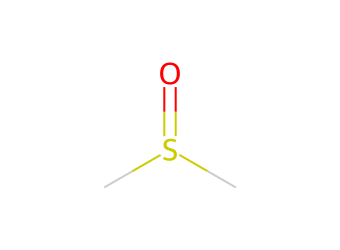
DMSO (Dimethyl Sulfoxide)
Knee osteoarthritis pain, gel applied to the skin.
Grade C: human trials exist, but they are small, mixed or not yet repeated. This is not a finding that it does not work. How to read a grade →
DMSO is a liquid solvent sold as a gel for joint pain, and lately taken by mouth for long life. Rubbed on the skin, it eased knee arthritis pain in one German study. A larger study of 775 people found it no better than a dummy treatment. Studies of shoulder and elbow pain were small. No study has tested DMSO by mouth for aging or long life.
The C belongs to one of the six uses graded on this record. The other five carry their own letters.
As studied, and the trials
The positive trial is the smaller and shorter one. In the larger trial, DMSO was the vehicle for a diclofenac solution and was also given alone as a control arm; alone, it did not beat placebo An inactive substitute made to look like the real treatment, so participants cannot tell which one they received. on pain or function. The systematic review A review that searches for every study on a question using a method set in advance, then assesses them together. found no definitive conclusion could be drawn from the DMSO trials.
As studied, and the trials
One multicenter trial, positive: 44% pain-free at 14 days versus 9% on the gel base. It has not been repeated by another group, and a single unrepeated trial is a C on this site.
As studied, and the trials
The placebo-controlled trial was small and positive. The larger trial compared DMSO with oral N-acetylcysteine rather than with placebo and found them about equal. Both trials came from the same Dutch group, and the Cochrane overview rates the evidence low certainty.
As studied, and the trials
Tested against saline and not better on any measure. The higher concentration added skin toxicity without adding healing.
As studied, and the trials
Tested in the setting where an earlier pilot had suggested benefit, and the benefit did not appear.
As studied, and the trials
No human randomized trial has tested DMSO against aging, healthspan or lifespan, by mouth or any other route. The nearest human data are single-author trials of oral DMSO after cancer surgery reporting longer survival in advanced cancer, never repeated in thirty years. They are cited so a reader can find them, and they do not carry a letter.
Read the grade that matches your goal. How EBL grades by use →
- Dose studied
- 10% to 50%, applied to the skin
- Form graded
- Topical gel or cream
- Evidence behind the C
- PMID 8529985 →PMID 19380203 →PMID 18417375 →
A letter describes the human evidence, not the product, the manufacturer, or the ingredient's worth.
See the full evidence record →DMSO (dimethyl sulfoxide) applied to the skin for knee osteoarthritis pain, graded on human trial evidence. Longevity: Grade D, no human trial.
Why this gradeGrade C, small or unreplicated trials. The reasoning, and what the grade does not cover.
Grade C, and it rests on the use with the most randomized evidence behind it: DMSO gel applied to the skin for knee osteoarthritis pain. One German trial of a 25% gel in 112 patients found less pain than with the gel base alone (Eberhardt et al., 1995; PMID PubMed ID: the permanent number the US National Library of Medicine gives a published paper. Each one links to that paper's record on PubMed. 8529985). The largest trial run, 775 people with knee osteoarthritis over 12 weeks, included the DMSO solution on its own as one of its five arms and found it no better than placebo on pain or function (Simon et al., 2009; PMID 19380203). A systematic review of the DMSO knee trials concluded that no definitive conclusion can be drawn and flagged possible unblinding (PMID 18417375). A positive trial followed by a larger null one is a replication that failed, which is a C on this site. Pain is reported by the person, which would cap the record at B even if the trials agreed.
WHAT THIS GRADE DOES NOT COVERAging, healthspan and lifespan, where no human randomized trial has been run at all, so that use is a D. DMSO taken by mouth, which is how it is now marketed for longevity. A series of 1990s trials from a single author, A.S. Salim, gave oral DMSO after cancer surgery and reported longer survival (PMID 8493453, PMID 1591948). Nobody has repeated them in thirty years, and they are listed here as context, not as evidence that moves a letter. The bladder instillation for interstitial cystitis is a prescription drug, RIMSO-50, and it carries its own grade on its own record.
A grade describes the human evidence for a named use. It is not advice, and it is not a judgment on any individual prescription. How the letters are decided →
Who responds: this record's trial reading reports no subgroup that identifies who responds.
As studied: dose, form, population and duration for every use
A grade describes the intervention that was tested. Where the product on the shelf differs from it, this says so.
Commercial disclosure
EBL earns no commission on any supplement it grades. Grades are assigned by published rubric before any commercial relationship exists and are never influenced by one. Full disclosure.
Applied to the skin in every trial this record grades. Knee osteoarthritis: 25% gel for 3 weeks (PMID 8529985). Acute tendon pain: 10% gel three times a day for 14 days (PMID 8194818). Complex regional pain syndrome: 50% in a fatty cream, five times a day, for 2 months to 17 weeks (PMID 8721469, PMID 12670672). No oral dose has been tested in a randomized trial against any aging outcome, so none can be stated.
The trials used prepared gels and creams at 10% to 50%. A liquid sold at a higher concentration is not what these trials tested. The 70% solution is the one that caused skin toxicity in the scleroderma trial (PMID 3884019). The prescription bladder product, RIMSO-50, is a 50% solution and is graded on its own record.
In the cited trials DMSO was applied to the skin, three to five times a day depending on the trial (PMID 8194818, PMID 12670672). No trial tied it to a time of day.
Checked against the published summaries; the full papers could not be read. What the cited trials did, not a schedule. Every supplement, by trial timing →
Broken or ulcerated skin at high concentration: in the scleroderma finger-ulcer trial, over a quarter of patients on 70% DMSO were withdrawn for significant skin toxicity (PMID 3884019). Pregnancy and breastfeeding, where it has not been studied. The effect people notice first is a garlic-like taste and breath, with skin odor that the prescription label for the bladder product says can last up to 72 hours. A systematic review of 109 studies found gastrointestinal and skin reactions the most common, mostly transient, and more frequent at higher doses (PMID 31489176).
Sulindac: in a randomized crossover study in 8 healthy men, oral DMSO taken an hour before sulindac lowered the drug's active metabolite by about 30% (PMID 6854139). Anything else on the skin: DMSO is used in prescription gels precisely because it carries other substances through the skin, as it does for diclofenac in the knee trials (PMID 15477437). What is on the skin when it is applied goes in with it.
DMSO lowered the active form of sulindac in a small human study. Sulindac is converted in the body to an active sulfide. In a randomized crossover study in 8 healthy men, oral DMSO taken an hour before sulindac lowered the active metabolite by about 30% on average, with a range of 7% to 56%. The authors suggest DMSO may reduce sulindac's effect. The study measured blood levels, not pain relief. Swanson et al. (Journal of Laboratory and Clinical Medicine, 1983; PMID 6854139): randomized crossover pharmacokinetic study, 8 healthy men, 400 mg sulindac with and without 30 mL of 70% DMSO by mouth.
DMSO carries other substances through the skin. DMSO is used in prescription topical products as an absorption enhancer, the role it plays in the diclofenac solution tested for knee osteoarthritis. The same property means whatever else is on the skin when DMSO is applied is carried in with it. Roth and Shainhouse (Archives of Internal Medicine, 2004; PMID 15477437): topical diclofenac solution containing the absorption enhancer dimethyl sulfoxide, randomized against a vehicle control.
The trials measured pain on a scale and, in the tendon trial, joint mobility. There is no blood marker that reports whether DMSO is working.
Primary evidence14 papers, each linked to its PubMed record.
Eberhardt et al. (Fortschritte der Medizin, 1995; PMID 8529985): 112 patients with active knee osteoarthritis, 25% DMSO gel versus gel base for 3 weeks, less pain on loading, at rest and on pressure. Simon et al. (Pain, 2009; PMID 19380203): 775 patients with knee osteoarthritis, five arms over 12 weeks; the DMSO vehicle arm did not differ from placebo. Brien et al. (Osteoarthritis and Cartilage, 2008; PMID 18417375): systematic review of four DMSO trials in 681 patients, no definitive conclusion, poor methodology. Kneer et al. (Fortschritte der Medizin, 1994; PMID 8194818): 157 patients with acute shoulder or elbow tendon pain, 10% gel versus gel base for 14 days, 44% pain-free versus 9%. Zuurmond et al. (Acta Anaesthesiologica Scandinavica, 1996; PMID 8721469): 32 patients with acute reflex sympathetic dystrophy, 50% DMSO cream versus cream base, better disease scores. Perez et al. (Pain, 2003; PMID 12670672): 146 patients with complex regional pain syndrome type I, DMSO cream versus oral N-acetylcysteine, no overall difference. Ferraro et al. (Cochrane Database of Systematic Reviews, 2023; PMID 37306570): low-certainty evidence for DMSO in complex regional pain syndrome. Williams et al. (Arthritis and Rheumatism, 1985; PMID 3884019): 84 patients with systemic sclerosis finger ulcers, 2% and 70% DMSO versus saline, no difference. Duimel-Peeters et al. (International Journal of Nursing Studies, 2007; PMID 17553503): massage with DMSO cream did not prevent pressure ulcers better than position changes alone. Kollerup Madsen et al. (F1000Research, 2018; PMID 31489176): systematic review of adverse reactions across 109 studies. Swanson et al. (Journal of Laboratory and Clinical Medicine, 1983; PMID 6854139): DMSO lowered the active metabolite of sulindac. Roth and Shainhouse (Archives of Internal Medicine, 2004; PMID 15477437): DMSO as the absorption enhancer in a topical diclofenac solution. CONTEXT ONLY, NOT GRADED: Salim (Tumor Biology, 1993; PMID 8493453) and Salim (Chemotherapy, 1992; PMID 1591948), single-author randomized trials of oral DMSO after cancer surgery reporting longer survival, never independently repeated.
Educational use only · Not medical advice · Starting, stopping or changing any supplement or medication is a decision for your physician
These statements have not been evaluated by the Food and Drug Administration. This product is not intended to diagnose, treat, cure, or prevent any disease. The grade on this page describes the strength of published human trial evidence in the populations studied. It is not a recommendation for any individual and is not medical advice. Starting, stopping or changing any supplement or medication is a decision for your physician.
This page carries a letter. EBL takes no commission, referral fee or payment of any kind on anything it grades. No letter has been bought and none is for sale.
How this is enforced
That is not a promise, it is a build condition. Two checks run on every deploy: one refuses to publish if a commission is claimed on anything graded, the other refuses if a page names a commercial relationship that is not declared in the register. If either fails, this page does not go live. You can read how the checks work, and what they do not cover, on the evidence integrity page.
Grades move when new trials publish. A free monthly email lists every grade EBL moved, with the reason and the trial behind it: the sign-up is on the Evidence Log →