Supplement · graded by use, four uses
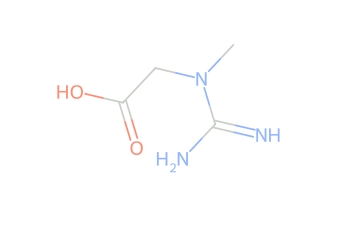
Creatine Monohydrate
Muscle strength with resistance training in older adults.
Creatine is a powder that helps muscles make quick energy. In older adults who lift weights, people taking creatine got stronger than people taking a dummy powder, and separate research teams found the same thing. That strength result is the main one. Studies on memory and mood are fewer and less certain, and creatine did not help bone strength in older women. It can raise a common kidney blood test number even when the kidneys are working normally.
The A belongs to one of the four uses graded on this record. The other three carry their own letters.
As studied, and the trials
One-repetition maximum is an instrument-recorded functional endpoint The outcome a trial measures to decide whether the treatment worked, such as heart attacks, blood pressure or a symptom score., which is the second route to Grade A on this site. Two mixed-sex meta-analyses in older adults, which share an author, and a 2026 meta-analysis from a separate group confined to postmenopausal women agree on direction, and the women-specific pooled figure is a leg-press 1RM gain of 7.5 kg (95 percent CI 2.2 to 12.8, I-squared 0 percent). The size is modest and one caveat belongs on the record rather than in a footnote: the two largest and longest individual trials, at 237 and 200 participants over 2 years, found no effect on their own 1RM measures, and the pooled leg-press result rests on 3 trials and 111 participants. DXA lean mass is a surrogate and caps at B by rule; it is not what this letter rests on. Read in October 2026 after an outside audit: Kazeminasab et al. (Nutrients, 2025; PMID PubMed ID: the permanent number the US National Library of Medicine gives a published paper. Each one links to that paper's record on PubMed. 40944139), 69 trials across all ages, found the strength gain significant in younger adults and not significant in the older-adult subgroup; Davies et al. (JPEN J Parenter Enteral Nutr, 2024; PMID 38417175), 33 trials in older adults and adults with chronic disease, found upper-body and handgrip strength higher on creatine. A non-significant subgroup in an all-ages pooling is not a failed replication The same finding reproduced by a separate research group. A result seen once can be chance or bias; a replicated one is harder to explain away., and independent groups still agree on direction, so the letter holds at A with the caveat stated.
As studied, and the trials
The positive result people cite is the smallest and shortest trial: 12 months, 33 analyzed, attenuated femoral neck loss (Chilibeck et al., Medicine and Science in Sports and Exercise, 2015; PMID 25386713). It did not replicate. Two 2-year trials at 200 and 237 participants found nothing on density at any site, and the 2026 pooled review (Naddafha et al., Journal of the International Society of Sports Nutrition, 2026; PMID 42141930) reports bone density unchanged. One qualification belongs here and it is not a rescue: the 2023 trial did find maintained section modulus and buckling ratio at the femoral neck, which are geometry rather than density. This grade is about density, which is what the claim is about.
As studied, and the trials
Overall SMD 0.29 (95 percent CI 0.04 to 0.53) with I-squared of 66 percent. The effect sits almost entirely in adults aged 66 to 76 (SMD 0.88) and is absent in those aged 11 to 31 (SMD 0.03, -0.14 to 0.20). C rather than higher because the signal is not consistent across populations, which is mixed trial data regardless of how the endpoint is measured. One point matters for how this use is marketed: the review reports that sex did NOT influence the findings, so there is no women-specific cognitive effect here to claim.
As studied, and the trials
A single positive trial with no independent replication, which is the definition of C on this site. The 2026 systematic review A review that searches for every study on a question using a method set in advance, then assesses them together. of creatine across mental disorders found five randomized trials in total (238 participants), of which this one and a psychotherapy-augmentation trial were positive, while trials in female adolescents and in bipolar depression found no difference from placebo. Two of 17 participants in one trial experienced hypomania or mania. The endpoint is a depression rating scale, which is self-report and caps at B in any case.
Read the grade that matches your goal. How EBL grades by use →
- Dose studied
- 5 g/day or more, with resistance training
- Form graded
- Creatine monohydrate
- Evidence behind the A
- McMaster University · PMID 12560406 →University of Saskatchewan · PMID 11740307 →
A letter describes the human evidence, not the product, the manufacturer, or the ingredient's worth.
See the full evidence record →Measured strength with resistance training in older adults. Lean mass is a surrogate and does not carry the A. Memory C, bone density D.
Grade scope · The Grade A applies to strength measured with an instrument, meaning one-repetition maximum or a dynamometer, when creatine monohydrate is taken alongside resistance training by adults over 65. It rests on two independent randomized trials: McMaster University (Brose 2003, PMID 12560406) and the University of Saskatchewan (Chrusch 2001, PMID 11740307). Both are small, and the two largest trials, run for 2 years, found no strength effect on their own. Training is part of what was tested: at 3 g per day or less without training, trials were null. Lean mass is a surrogate and caps at Grade B, so it does not carry this letter. Bone density D, memory C and depression C carry their own letters below.
Why this gradeThe reasoning, and what the grade does not cover.
Grade A by the replicated instrument-measured function route: one-repetition maximum is a reading off a bar, not a questionnaire, and independent groups agree: randomized trials at McMaster University (Brose et al., 2003; PMID 12560406) and the University of Saskatchewan (Chrusch et al., 2001; PMID 11740307) each found greater strength gains with creatine than with placebo during resistance training in adults over 65, and a 2026 pooled analysis from a separate group (PMID 42141930) agrees. The two earlier pooled analyses on this record share an author, so they are not counted as independent of each other.
WHAT THIS GRADE DOES NOT COVERthe A belongs to ONE of the four things creatine is sold for, and the other three carry their own letters on this same record. It attaches to strength in older adults taking at least 5 g per day WHILE resistance training. Trials at 3 g per day or less, without training, were null, so the exercise is not optional context, it is part of what was tested. Bone mineral density was tested directly, in two trials running two years each, and failed; that use is a D. Memory and depression sit at C. Nothing here grades creatine for lifespan, and no trial has asked.
Shared endpoint: Strength measured by one-repetition maximum or dynamometer, creatine plus resistance training versus placebo plus the same training, adults over 65
- McMaster University, Canada (Tarnopolsky): Greater gain in isometric knee-extension strength than placebo, 28 adults over 65, 14 weeks. PMID 12560406 · Funding: academic
- University of Saskatchewan, Canada (Chilibeck): Greater leg-press and knee-extension 1RM gain than placebo, men of mean age 70, 12 weeks. PMID 11740307 · Funding: academic
What the replication does not cover: The two pooled analyses cited on this record (PMIDs 29138605 and 34199420) share an author (Candow), so they are not independent of each other. The 2026 postmenopausal meta-analysis (PMID 42141930) is from a separate group. Both named trials are small.
A grade describes the human evidence for a named use. It is not advice, and it is not a judgment on any individual prescription. How the letters are decided →
Trials report an average. This box says whether any trial on this record looked at who the result applies to, and what it found.
For Muscle strength with resistance training in older adults, Grade A · Subgroup tested, effect differedKazeminasab et al. (Nutrients, 2025; PMID 40944139), 69 trials across all ages, found the strength gain significant in younger adults and not significant in the older-adult subgroup. A subgroup that is not significant inside an all-ages pooling is not a failed replication; the grade reading on this page explains why the letter holds. A subgroup result shows who the effect appeared in within these trials. It does not change the letter.
As studied: dose, form, population and duration for every use
The effect in the trials is conditional on the training, not on the powder. Creatine is marketed as a standalone intervention; the pooled benefit appeared where 5 g per day or more was given ALONGSIDE supervised resistance training, and trials that gave it without resistance training found no measurable effect.
This is an adjunct to antidepressant treatment in diagnosed major depressive disorder. It is routinely repeated as though creatine improves mood in women generally. No trial has tested that; the participants here were in treatment for a diagnosed illness.
A grade describes the intervention that was tested. Where the product on the shelf differs from it, this says so.
How this letter has changed · latest: October 2026 · Corrected
An outside audit of October 2026 read the 2025 pooled analysis of 69 trials (Kazeminasab et al.; PMID 40944139) as removing the A, because its older-adult subgroup was not significant. That subgroup sits inside an all-ages pooling and is not a failed replication; a pooled analysis confined to older adults and adults with chronic disease (Davies et al., 2024; PMID 38417175; 33 trials) found upper-body and handgrip strength higher on creatine, and the independent trials behind the A are unchanged. The letter holds at A, and the subgroup is now stated on the record beside the two null long trials already there.PMID 40944139 PMID 38417175
The record cited Candow 2015 (PMID 25993883) for creatine plus training on cognition; that trial measured lean mass and strength only and is now labeled as such. Avgerinos 2018 (PMID 29704637) is a systematic review of six trials without pooling, not a trial, and is relabeled. Prokopidis 2023 (PMID 35984306) now carries its own declaration, an author on the advisory board of a creatine manufacturer and another who advised a creatine seller, and the letter by Eckert and Pascher 2023 (PMID 36644917) alleging double counting, with the authors' reply (PMID 36644912). Added at the record's own dose: Sandkühler 2023 (PMID 37968687), the largest preregistered trial, null on both primary tests with side effects more frequent on creatine (RR 4.25), now a safety note; Alves 2013 (PMID 24098469), 24 weeks in older women, null. Rawson 2008 (PMID 18579168) is null in young adults. McMorris 2007 (PMID 17828627), the older-adult positive trial, used 20 g/day for one week, so the description no longer implies the older-adult effect was shown at 3 to 5 g. Xu 2024 (PMID 39070254) is added as the later meta-analysis, pooling patients with healthy adults. Letter unchanged.PMID 25993883 PMID 29704637 PMID 35984306 PMID 36644917 PMID 36644912 PMID 37968687 PMID 24098469 PMID 18579168 PMID 17828627 PMID 39070254
The cognitive protocol carried a Grade A resting on Prokopidis 2023 (PMID 35984306). Rereading the meta-analysis against the letter: the pooled memory effect is SMD 0.29 (95 percent CI 0.04 to 0.53) with I-squared of 66 percent, concentrated in adults aged 66 to 76 (SMD 0.88) and absent in adults aged 11 to 31 (SMD 0.03, -0.14 to 0.20). A signal that reverses to nothing across half the age range is mixed trial data. Regraded C. This was found while splitting the creatine supplement record by use, which had carried one letter across muscle strength, cognition and brain energy reserve. Creatine's Grade A is scoped to measured strength, where it rests on instrument-recorded one-repetition maximum in two mixed-sex meta-analyses, and is unchanged. The bone density use is newly graded D by Route 2 Human randomized trials have been run and did not show benefit on the stated outcome. One of the two routes to the lowest letter on EBL's scale. on two 2-year randomized trials that found no effect.PMID 35984306
Every change to a letter on this site is dated and published. The full evidence log →
Commercial disclosure
EBL earns no commission on any supplement it grades. A purchase made through the dispensary link below pays EBL nothing, the practitioner discount goes to you in full. The dispensary is Fullscript, a practitioner dispensary, and many of the professional-grade brands in it are sold mainly through practitioners rather than in health food stores. Grades are assigned by published rubric before any commercial relationship exists and are never influenced by one. Full disclosure.
5 g/day or more alongside resistance training in the trials the Grade A rests on; trials at 3 g/day or less without resistance training were null. No loading phase was used in those trials. The cognition trials pooled doses from about 2.2 to 20 g/day.
Creatine monohydrate is the only form with 500+ trials. No evidence that HCl, buffered, or ethyl ester forms are superior.
In the trials pooled for strength in older adults, creatine was taken within 60 minutes after exercise (PMID 34199420). In the 2-year bone trial, half the dose was taken just after training and half with a meal, and on rest days it was split across meals (PMID 37144634). The depression trial report gives 3 g a day for the first week and 5 g a day after that, without a time (PMID 22864465).
Checked against the full published reports. What the cited trials did, not a schedule. Every supplement, by trial timing →
How to buy this: quality criteria, not a brand
3–5g/day (creatine monohydrate). No loading phase needed for longevity.
Creatine monohydrate, the only form with 500+ trials. HCl, buffered, and ethyl-ester forms are not proven superior.
Any USP or NSF third-party seal.
“Advanced” forms priced higher with no outcome data; proprietary blends; no third-party testing.
The grade and these criteria are set only from human trials. Any purchase link is convenience and does not affect the grade.
Pre-existing kidney disease, as a matter of monitoring rather than of established harm. Creatine raises serum creatinine because creatinine is its breakdown product, so a routine blood panel can read as declining kidney function when filtration is unchanged. Anyone on creatine should say so before a renal panel is interpreted. Renal indices were unchanged in the pooled postmenopausal trials. In the psychiatric literature, where creatine is used as an adjunct in mood disorders, a systematic review recorded hypomania or mania in 2 of 17 participants in one trial, which is a signal that belongs to that use and not to the muscle one.
No significant drug interaction has been documented. Caffeine has been reported to blunt some of creatine's performance effect, which is a co-supplement question rather than a safety one.
Creatine raises serum creatinine without impairing filtration. Creatinine is creatine's breakdown product, so supplementation raises the marker used to estimate kidney function without evidence of impaired filtration. A routine panel can therefore read as declining renal function when nothing has changed. Longobardi et al. (Nutrients, 2023; PMID 36986197): narrative review of the evidence on creatine supplementation and kidney failure. Lugaresi et al. (Journal of the International Society of Sports Nutrition, 2013; PMID 23680457): long-term creatine supplementation and kidney function in resistance-trained individuals on a high-protein diet.
Grip strength, lean mass (DEXA if available), cognitive assessment, creatinine (distinguishing from true GFR decline)
Primary evidence13 papers, each linked to its PubMed record.
Graded by use rather than as one letter, because the four things creatine is marketed for do not share an evidence base. Strength holds Grade A by the functional route, on two independent randomized trials that measured strength with an instrument: Brose et al. at McMaster University (J Gerontol A Biol Sci Med Sci, 2003; PMID 12560406) found a greater gain in isometric knee-extension strength than placebo in 28 adults over 65 across 14 weeks of resistance training, and Chrusch et al. at the University of Saskatchewan (Med Sci Sports Exerc, 2001; PMID 11740307) found greater leg-press and knee-extension one-repetition maximum gains than placebo in men of mean age 70 across 12 weeks of training. Both trials are small. Two pooled analyses agree on direction, Forbes et al. (Nutrients, 2021; PMID 34199420) and Chilibeck et al. (Open Access J Sports Med, 2017; PMID 29138605), but they share an author (Candow), so they are not a second independent line of evidence. Naddafha et al. (J Int Soc Sports Nutr, 2026; PMID 42141930), from a separate group, pooled seven randomized trials in 608 postmenopausal women and adds the dose condition: benefit appeared at 5 g per day or more WITH resistance training, and trials at 3 g per day or less without it were null. The limit belongs beside the letter: the two largest and longest trials, at 237 and 200 participants over 2 years, found no effect on their own strength measures, and the pooled leg-press figure rests on 3 trials and 111 participants. Candow et al. (Appl Physiol Nutr Metab, 2015; PMID 25993883) is a single randomized trial in healthy older adults in the same strength population. Bone was tested directly and at length and failed: Chilibeck et al. (Med Sci Sports Exerc, 2023; PMID 37144634) randomized 237 women for 2 years and Sales et al. (J Gerontol A Biol Sci Med Sci, 2020; PMID 31257405) randomized 200 for 2 years, both null on bone mineral density, against one 12-month trial of 33 analyzed participants that was positive (PMID 25386713). Prokopidis et al. (Nutr Rev, 2023; PMID 35984306) found improved memory overall (SMD 0.29) with substantial heterogeneity How much the results of the pooled trials differ from each other. High heterogeneity makes a combined estimate less reliable. and a null result in younger adults. Lyoo et al. (Am J Psychiatry, 2012; PMID 22864465) is a single unreplicated trial in women with major depressive disorder taking an SSRI. Grade A is scoped to strength; the other three uses carry their own letters.
Educational use only · Not medical advice · Starting, stopping or changing any supplement or medication is a decision for your physician
These statements have not been evaluated by the Food and Drug Administration. This product is not intended to diagnose, treat, cure, or prevent any disease. The grade on this page describes the strength of published human trial evidence in the populations studied. It is not a recommendation for any individual and is not medical advice. Starting, stopping or changing any supplement or medication is a decision for your physician.
This page carries a letter. EBL takes no commission, referral fee or payment of any kind on anything it grades. No letter has been bought and none is for sale.
How this is enforced
That is not a promise, it is a build condition. Two checks run on every deploy: one refuses to publish if a commission is claimed on anything graded, the other refuses if a page names a commercial relationship that is not declared in the register. If either fails, this page does not go live. You can read how the checks work, and what they do not cover, on the evidence integrity page.
How EBL searched for the trials (1 search)
The search that was run, what it returned, and what was left out and why, so the absence of evidence can be checked as well as its presence.
creatine[tiab] AND (strength[tiab] OR "one-repetition"[tiab] OR 1RM[tiab]) AND (older[tiab] OR elderly[tiab] OR aged[tiab] OR "older adults"[tiab] OR postmenopausal[tiab]) AND (meta-analysis[pt] OR randomized controlled trial[pt])Grades move when new trials publish. A free monthly email lists every grade EBL moved, with the reason and the trial behind it: the sign-up is on the Evidence Log →