Supplement · graded by use, two uses
L-Citrulline
Blood pressure in adults.
Grade C: human trials exist, but they are small, mixed or not yet repeated. This is not a finding that it does not work. How to read a grade →
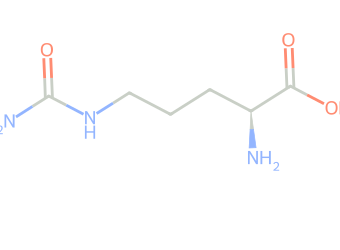
Citrulline is an amino acid found in watermelon. The body turns it into a gas that relaxes blood vessels. Two reviews of small studies looked at blood pressure. One found the top number about 4 points lower, though the result was borderline. The other found no change. As a sports pill, plain citrulline did not improve endurance.
The C belongs to one of the two uses graded on this record. The other one carries its own letter.
As studied, and the trials
Pooled analyses disagree. Barkhidarian et al. (Avicenna J Phytomed, 2019; PMID PubMed ID: the permanent number the US National Library of Medicine gives a published paper. Each one links to that paper's record on PubMed. 30788274): small trials, 3 to 9 g/day; systolic pressure 4.10 mmHg lower (95% CI -7.94 to -0.26), diastolic not significant overall and lower only at 6 g/day or more. Mirenayat et al. (Curr Hypertens Rep, 2018; PMID 30284051): five trials; no effect on brachial systolic (0.28 mmHg) or diastolic pressure, or on aortic pressure. One borderline positive pooling and one null pooling of small trials: C.
As studied, and the trials
Viribay et al. (Nutrients, 2022; PMID 36079738): meta-analysis A study that pools the numbers from several trials into one combined estimate. of 10 trials; no effect on aerobic performance, perceived exertion, VO2 kinetics or lactate. Harnden et al. (J Int Soc Sports Nutr, 2023; PMID 37155582): meta-analysis of 9 trials in young healthy adults; no effect on time to exhaustion or time to completion. Two pooled nulls: D on Route 2 Human randomized trials have been run and did not show benefit on the stated outcome. One of the two routes to the lowest letter on EBL's scale.. The small strength and power effects in Trexler et al. (Sports Med, 2019; PMID 30895562) and Wang et al. (Nutrients, 2026; PMID 42356270) rest largely or entirely on citrulline malate, a different form, and do not grade free L-citrulline.
Read the grade that matches your goal. How EBL grades by use →
- Dose studied
- 3–9 g/day (commonly 6 g/day)
- Form graded
- L-citrulline (free-form / malate)
- Evidence behind the C
- PMID 30788274 →PMID 30284051 →
A letter describes the human evidence, not the product, the manufacturer, or the ingredient's worth.
See the full evidence record →L-Citrulline for blood pressure, where two pooled analyses of small randomized trials disagree.
Why this gradeGrade C, small or unreplicated trials. The reasoning, and what the grade does not cover.
Grade C, the record's best use: blood pressure, where two pooled analyses of small randomized trials disagree, Barkhidarian et al. (Avicenna J Phytomed, 2019; PMID 30788274) finding systolic pressure 4.1 mmHg lower with a confidence interval The range the true effect probably falls in. A wide interval means the estimate is uncertain. that nearly touches zero and Mirenayat et al. (Curr Hypertens Rep, 2018; PMID 30284051) finding no effect on brachial or aortic pressure. A borderline positive pooling beside a null one is mixed randomized evidence on a surrogate: C. THE PERFORMANCE USE CARRIES D ON ROUTE 2, because two pooled analyses of free L-citrulline found no effect on aerobic or endurance performance (Viribay et al., 2022; PMID 36079738; Harnden et al., 2023; PMID 37155582). The small strength and power effects reported in pooled analyses that mix in citrulline malate (Trexler et al., 2019; PMID 30895562; Wang et al., 2026; PMID 42356270) belong to a different form. The record was divided into two uses in October 2026 by the written rule.
WHAT THIS GRADE DOES NOT COVERcitrulline malate, a different form with its own literature; blood flow during exercise, where one crossover A trial design in which each participant receives both the treatment and the comparison, one after the other, and serves as their own control. study (Gonzales et al., 2017; PMID 28940638) found a sex-specific signal that did not survive adjustment; and erectile function or any clinical outcome, where no trial on this record applies.
A grade describes the human evidence for a named use. It is not advice, and it is not a judgment on any individual prescription. How the letters are decided →
Who responds: this record's trial reading reports no subgroup that identifies who responds.
As studied: dose, form, population and duration for every use
A grade describes the intervention that was tested. Where the product on the shelf differs from it, this says so.
How this letter has changed · latest: October 2026 · Corrected
The headline C covered a borderline blood-pressure result and a performance claim the pooled trials do not support. Graded by use: blood pressure rests on two pooled analyses that disagree (Barkhidarian et al., 2019; PMID 30788274; Mirenayat et al., 2018; PMID 30284051), mixed, C; aerobic and endurance performance of free L-citrulline rests on two pooled nulls (Viribay et al., 2022; PMID 36079738; Harnden et al., 2023; PMID 37155582), D on Route 2, with the citrulline malate strength findings (Trexler et al., 2019; PMID 30895562; Wang et al., 2026; PMID 42356270) stated as a different form. Headline unchanged at C. Applied the written grade definition under the editor's standing instruction of October 2026 (Arnold Sandlow, D.C.).PMID 30284051 PMID 30788274 PMID 30895562 PMID 36079738 PMID 37155582 PMID 42356270
The ref said Gonzales 2017 (PMID 28940638) showed exercise-performance effects; it measured femoral blood flow during calf exercise in 25 older adults, with a benefit only in men that lost significance after adjustment, and is relabeled as a vascular surrogate study. Mirenayat 2018 (PMID 30284051), null on brachial and aortic blood pressure, is added beside Barkhidarian 2019 (PMID 30788274), whose diastolic effect appeared only at 6 g/day or more and whose systolic interval was borderline. Viribay 2022 (PMID 36079738) and Harnden 2023 (PMID 37155582), null on aerobic and endurance performance, are added; Trexler 2019 (PMID 30895562) and Wang 2026 (PMID 42356270) show the small strength effects rest largely on citrulline malate, now stated as a different form. Letter unchanged; a split into blood pressure and performance rows is on the decision sheet.PMID 28940638 PMID 30284051 PMID 30788274 PMID 36079738 PMID 37155582 PMID 30895562 PMID 42356270
Every change to a letter on this site is dated and published. The full evidence log →
Commercial disclosure
EBL earns no commission on any supplement it grades. A purchase made through the dispensary link below pays EBL nothing, the practitioner discount goes to you in full. The dispensary is Fullscript, a practitioner dispensary, and many of the professional-grade brands in it are sold mainly through practitioners rather than in health food stores. Grades are assigned by published rubric before any commercial relationship exists and are never influenced by one. Full disclosure.
3 to 9 g/day in the blood pressure trials, with the diastolic effect seen only at 6 g/day or more. Strength and repetition studies gave 6 to 8 g of citrulline malate 40 to 60 minutes before exercise, a different form and dose.
L-citrulline and citrulline malate are different products. The blood pressure analyses pooled L-citrulline; the strength and repetition analyses are mostly or wholly citrulline malate, and their results do not transfer to free L-citrulline.
The blood flow study gave 6 g/day for 14 days without a stated time (PMID 28940638); the blood pressure pool does not report timing (PMID 30788274); the citrulline malate performance studies gave 6 to 8 g 40 to 60 minutes before exercise (PMID 30895562).
Checked against the full report for 1 of the 3 cited studies, and the published summary for the rest. What the cited trials did, not a schedule. Every supplement, by trial timing →
Anyone whose blood pressure is already being driven low by treatment.
Nitrates and PDE5 inhibitors such as sildenafil: citrulline raises arginine and therefore nitric oxide, so the effect on blood pressure is additive and the failure mode is hypotension. Antihypertensives, the same way.
The blood-pressure half is pooled; the drug half is not. Citrulline raises arginine and therefore nitric oxide, and the blood-pressure consequence has been pooled: a systematic review A review that searches for every study on a question using a method set in advance, then assesses them together. and meta-analysis of clinical trials of L-citrulline supplementation on aortic and brachial blood pressure. That establishes the effect exists in people. It does not establish additivity with a nitrate drug or a PDE5 inhibitor, which is where the hypotension failure mode would come from, because none of the pooled trials was run in people taking either. Mirenayat et al. (Curr Hypertens Rep, 2018;20(11):98; PMID 30284051): systematic review and meta-analysis of clinical trials of L-citrulline supplementation on blood pressure.
The word nitrate is doing two jobs, and the count knows only one. Pairing citrulline with nitrates looks like a well-populated literature and is not. Nearly all of it is dietary nitrate, meaning beetroot juice and exercise performance, not nitrate drugs such as glyceryl trinitrate or isosorbide. The same query surfaces reviews of nitric-oxide precursors for strength performance. No trial has given citrulline to a person taking a nitrate medication or a PDE5 inhibitor and measured blood pressure. The caution is sound pharmacology and it is unmeasured, and the size of the search result should not be mistaken for evidence. Basis: pharmacological mechanism, not a human study. Searched PubMed in August 2026: 1 query, 177 human results.
Systolic and diastolic blood pressure at baseline and 8 weeks for cardiovascular applications. For exercise performance, measure peak power output or time-to-exhaustion at baseline and 4 weeks. Blood pressure response is the most practical clinical endpoint The outcome a trial measures to decide whether the treatment worked, such as heart attacks, blood pressure or a symptom score. given the nitric oxide mechanism.
Primary evidenceSeven papers, each linked to its PubMed record.
Blood pressure: Barkhidarian et al. (Avicenna J Phytomed, 2019; PMID 30788274): meta-analysis of small trials (12 to 34 subjects each), 3 to 9 g/day for 1 to 17 weeks; systolic pressure 4.10 mmHg lower (95% CI -7.94 to -0.26), diastolic not significant overall (-2.08, -4.32 to 0.16) and lower only at 6 g/day or more. Mirenayat et al. (Curr Hypertens Rep, 2018; PMID 30284051): meta-analysis of five trials; no effect on brachial systolic (0.28 mmHg) or diastolic pressure, or on aortic pressure. Gonzales et al. (Exp Physiol, 2017; PMID 28940638): randomized crossover, 25 older adults, 6 g/day for 14 days; femoral blood flow during calf exercise 11 percent higher in men only, not significant after adjusting for baseline diastolic pressure, and no change in women; a vascular surrogate study, not a performance trial. Performance: Viribay et al. (Nutrients, 2022; PMID 36079738): meta-analysis of 10 trials; no effect on aerobic performance, perceived exertion, VO2 kinetics or lactate. Harnden et al. (J Int Soc Sports Nutr, 2023; PMID 37155582): meta-analysis of 9 trials in young healthy adults; no effect on time to exhaustion or time to completion. Trexler et al. (Sports Med, 2019; PMID 30895562): meta-analysis of 12 trials, 198 participants; small benefit on strength and power (SMD 0.20), mixing citrulline and citrulline malate. Wang et al. (Nutrients, 2026; PMID 42356270): three-level meta-analysis of 30 trials of citrulline malate; small overall performance effect (g 0.16), GRADE low to very low; a different form. Grade C: small and inconsistent blood pressure effects on a surrogate; performance not supported for free L-citrulline.
Educational use only · Not medical advice · Starting, stopping or changing any supplement or medication is a decision for your physician
These statements have not been evaluated by the Food and Drug Administration. This product is not intended to diagnose, treat, cure, or prevent any disease. The grade on this page describes the strength of published human trial evidence in the populations studied. It is not a recommendation for any individual and is not medical advice. Starting, stopping or changing any supplement or medication is a decision for your physician.
This page carries a letter. EBL takes no commission, referral fee or payment of any kind on anything it grades. No letter has been bought and none is for sale.
How this is enforced
That is not a promise, it is a build condition. Two checks run on every deploy: one refuses to publish if a commission is claimed on anything graded, the other refuses if a page names a commercial relationship that is not declared in the register. If either fails, this page does not go live. You can read how the checks work, and what they do not cover, on the evidence integrity page.
How EBL searched for the trials (1 search)
The search that was run, what it returned, and what was left out and why, so the absence of evidence can be checked as well as its presence.
citrulline[tiab] AND (randomized controlled trial[pt] OR meta-analysis[pt]) AND humans[mesh]Grades move when new trials publish. A free monthly email lists every grade EBL moved, with the reason and the trial behind it: the sign-up is on the Evidence Log →