Supplement
Citicoline (CDP-Choline)
Memory and behavior in chronic cerebral disorders of the elderly, which is the population the cited meta-analysis A study that pools the numbers from several trials into one combined estimate. studied.
Grade C: human trials exist, but they are small, mixed or not yet repeated. This is not a finding that it does not work. How to read a grade →
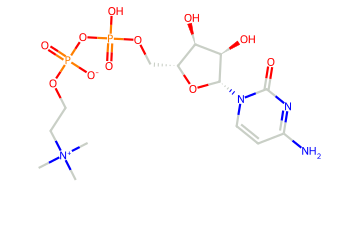
Citicoline is a form of choline, a nutrient the brain uses. A review of 14 short studies in older people with long-term brain problems found some gains in memory and behavior. It found no gain in attention. The studies mixed many kinds of patients and doses, and the lead reviewer had worked on some of them. A newer review was positive but judged its own studies to be weak.
A letter describes the human evidence, not the product, the manufacturer, or the ingredient's worth.
See the full evidence record →Memory and behavior in chronic cerebral disorders of the elderly, the population of the cited meta-analysis; no benefit on attention.
Why this gradeGrade C, small or unreplicated trials. The reasoning, and what the grade does not cover.
Grade C. The B rested on a 2005 Cochrane review of 14 short trials in mixed populations, doses and routes, which found some benefit on memory and behavior and none on attention, and whose principal reviewer had been an investigator in some of the included trials. A 2023 meta-analysis is positive but rates its studies poor with bias favoring the intervention. The only 12-month double-blind Neither the participants nor the people assessing them know who received the real treatment until the trial ends. trial was null, and the European Food Safety Authority concluded in 2024 that a memory benefit is not established. Moved from B in October 2026 by editor adjudication.
WHAT THIS GRADE DOES NOT COVERciticoline given by injection after stroke, a different route and use; and healthy younger adults, where short trials of attention are not graded here.
A grade describes the human evidence for a named use. It is not advice, and it is not a judgment on any individual prescription. How the letters are decided →
Who responds: this record's trial reading reports no subgroup that identifies who responds.
How this letter has changed · latest: October 2026 · Corrected
The dose line said most trials used 250 to 500 mg; the trials cited used 1,000 mg/day (Cohen 2003, PMID PubMed ID: the permanent number the US National Library of Medicine gives a published paper. Each one links to that paper's record on PubMed. 12865605; the IDEALE study, Cotroneo 2013, PMID 23403474), 1,000 then 2,000 mg/day (Spiers 1996, PMID 8624220) or 500 mg/day, and the Cochrane review, Fioravanti and Yanagi 2005 (PMID 15846601), reports heterogeneous doses and routes; corrected. The Cochrane review's declared conflict, that its principal reviewer was an investigator in some included trials, and its finding of no benefit on attention are now stated. IDEALE, an open study with a non-randomized control group, is linked as context rather than listed as evidence, and the 'observational Research that watches what people already do rather than assigning a treatment. It can show that two things travel together, not that one causes the other.' flag that described it is gone. Added: Bonvicini 2023 (PMID 36678257), a positive meta-analysis whose authors rate the studies poor, and Spiers 1996 (PMID 8624220), where the memory benefit appeared only in a subgroup picked after analysis. Letter unchanged.PMID 12865605 PMID 23403474 PMID 8624220 PMID 15846601 PMID 36678257 PMID 8624220
Citicoline held a B on a 2005 Cochrane review of 14 short, heterogeneous trials (Fioravanti and Yanagi, Cochrane Database Syst Rev 2005; PMID 15846601). The only 12-month double-blind trial was null (Cohen et al., Cerebrovasc Dis 2003; PMID 12865605), and the European Food Safety Authority found a memory benefit not established (EFSA J 2024; PMID 38966137). Mixed: C. The Cochrane authors are now named correctly as Fioravanti and Yanagi. Editor adjudication, October 2026.PMID 15846601 PMID 12865605 PMID 38966137
Every change to a letter on this site is dated and published. The full evidence log →
Commercial disclosure
EBL earns no commission on any supplement it grades. A purchase made through the dispensary link below pays EBL nothing, the practitioner discount goes to you in full. The dispensary is Fullscript, a practitioner dispensary, and many of the professional-grade brands in it are sold mainly through practitioners rather than in health food stores. Grades are assigned by published rubric before any commercial relationship exists and are never influenced by one. Full disclosure.
500 to 2,000 mg/day in the trials cited here. The 12-month vascular dementia trial and the IDEALE study used 1,000 mg/day; the memory study in healthy older adults used 1,000 mg/day, then 2,000 mg/day in its crossover A trial design in which each participant receives both the treatment and the comparison, one after the other, and serves as their own control. phase; the healthy-older-adult trial linked on this page used 500 mg/day. The Cochrane review reports that its 14 trials differed in dose and in route of administration.
Citicoline (CDP-choline) is distinct from alpha-GPC and choline bitartrate and supplies choline plus cytidine, which is converted in the body to uridine. Several trials used one proprietary citicoline, but a product name alone is not evidence of a better clinical effect.
The cited trials gave citicoline as 500 mg twice a day (PMID 12865605) or 1,000 mg/day (PMID 8624220); their summaries do not state a time of day or whether doses were taken with food. The cited review does not report when doses were taken (PMID 15846601).
Checked against the published summaries; the full papers could not be read. What the cited trials did, not a schedule. Every supplement, by trial timing →
How to buy this: quality criteria, not a brand
250–500mg/day.
Citicoline (CDP-choline), the form used in the controlled trials.
Citicoline or CDP-choline named on the label, with any USP or NSF third-party seal.
Confusing it with alpha-GPC or choline bitartrate.
The grade and these criteria are set only from human trials. Any purchase link is convenience and does not affect the grade.
No prominent contraindication at studied doses. Doses of 1,000 mg and above can cause headache, insomnia and agitation.
Cholinomimetic drugs including donepezil and rivastigmine: additive cholinergic effect. Anticholinergic medication: opposed. Levodopa: citicoline has been used alongside it and may alter the required dose, which is a prescriber's consideration. Citicoline is a choline source and feeds the same TMAO pathway as dietary choline.
Mechanism-based, no human interaction study located. The drug interactions described for Citicoline (CDP-Choline) are mechanism-based. A PubMed search for human interaction, pharmacokinetic or co-administration studies pairing it with levodopa, rivastigmine returned no results in August 2026. The caution stands on pharmacology, not on a trial, and is labeled as such. Basis: pharmacological mechanism, not a human study. Searched PubMed in August 2026: 2 queries, 0 human results.
The trials measured cognition by repeat assessment of attention, working memory and memory using one consistent method, alongside subjective cognitive function.
Primary evidenceEight papers, each linked to its PubMed record.
Fioravanti and Yanagi (Cochrane Database Syst Rev, 2005; PMID 15846601): meta-analysis of 14 trials of CDP-choline for cognitive and behavioral disturbance in chronic cerebral disorders of the elderly, reporting benefit on memory and behavior and no evidence of benefit on attention; the trials were heterogeneous in dose, route of administration, inclusion criteria and outcome measures, and seven of them lasted 20 to 30 days. The review declares that its principal reviewer was an investigator in some of the included studies. The grade rests on this review. Bonvicini et al. (Nutrients, 2023; PMID 36678257): later meta-analysis of six studies in mild cognitive impairment, Alzheimer's disease or post-stroke dementia, positive in every analysis, with the authors rating the overall quality of the studies poor and the risk of bias in favor of the intervention significant. Spiers et al. (Arch Neurol, 1996; PMID 8624220): NIH-funded randomized trial in 95 healthy volunteers aged 50 to 85 at 1,000 mg/day for 3 months; verbal memory improved only in a subgroup identified after the data were analyzed as having relatively inefficient memories, and a crossover at 2,000 mg/day in 32 of those subjects improved immediate and delayed recall. Cotroneo et al. (Clin Interv Aging, 2013; PMID 23403474) is the IDEALE study in mild vascular cognitive impairment at 500 mg twice daily; it is an open multicenter study with a non-randomized control group, and is context rather than evidence. A 2016 review by Secades (Rev Neurol; PMID 28417449) is linked on this page for readers who go looking for it, and is not counted toward the grade: it was authored from the company that manufactures citicoline. Nakazaki et al. (J Nutr, 2021; PMID 33978188) is linked on the same terms and is also not counted. It is the randomized trial most often cited for citicoline in healthy older adults with age-associated memory impairment, and two things in its own record keep it off the grade: the improvements it reports for episodic and composite memory are labeled secondary outcomes in the abstract, with no primary endpoint The one outcome a trial names in advance as its main test. Results on other outcomes carry less weight. reported as met, and its first author's listed affiliation is the company that manufactures the citicoline ingredient supplied to supplement makers. That is two independent manufacturer-affiliated papers behind the use this compound is most sold for, which is why both are shown rather than omitted. Against: Cohen et al. (Cerebrovasc Dis, 2003; PMID 12865605), the only 12-month double-blind trial (30 patients with vascular dementia, 500 mg twice daily), found no difference from placebo An inactive substitute made to look like the real treatment, so participants cannot tell which one they received. on cognition or MRI, and EFSA Panel on Nutrition (EFSA J, 2024; PMID 38966137) concluded a cause-and-effect relation with memory in older adults was not established.
Educational use only · Not medical advice · Starting, stopping or changing any supplement or medication is a decision for your physician
These statements have not been evaluated by the Food and Drug Administration. This product is not intended to diagnose, treat, cure, or prevent any disease. The grade on this page describes the strength of published human trial evidence in the populations studied. It is not a recommendation for any individual and is not medical advice. Starting, stopping or changing any supplement or medication is a decision for your physician.
This page carries a letter. EBL takes no commission, referral fee or payment of any kind on anything it grades. No letter has been bought and none is for sale.
How this is enforced
That is not a promise, it is a build condition. Two checks run on every deploy: one refuses to publish if a commission is claimed on anything graded, the other refuses if a page names a commercial relationship that is not declared in the register. If either fails, this page does not go live. You can read how the checks work, and what they do not cover, on the evidence integrity page.
How EBL searched for the trials (1 search)
The search that was run, what it returned, and what was left out and why, so the absence of evidence can be checked as well as its presence.
(citicoline[tiab] OR "CDP-choline"[tiab]) AND (memory[tiab] OR cognit*[tiab]) AND (randomized controlled trial[pt] OR meta-analysis[pt])Grades move when new trials publish. A free monthly email lists every grade EBL moved, with the reason and the trial behind it: the sign-up is on the Evidence Log →