Supplement
Beta-Carotene (supplemental)
Tested at scale for cancer prevention in six large trials.
Grade D, tested: in a human randomized trial, the treated group did worse on the endpoint The outcome a trial measures to decide whether the treatment worked, such as heart attacks, blood pressure or a symptom score. graded. How to read a grade →
Beta-carotene is an orange pigment the body turns into vitamin A. Large studies tested pills to prevent cancer. In male smokers, beta-carotene pills raised lung cancer by about 18 percent, and more of them died. In another large study of smokers, beta-carotene taken with vitamin A also raised lung cancer and deaths. These pills did not just fail to help. In smokers, they caused harm.
A letter describes the human evidence, not the product, the manufacturer, or the ingredient's worth.
See the full evidence record →Tested at scale for cancer prevention. Lung cancer incidence rose in smokers. This is a harm finding, not an absence of benefit.
Why this gradeGrade D, tested, harm found. The reasoning, and what the grade does not cover.
Grade D on Route 2 Human randomized trials have been run and did not show benefit on the stated outcome. One of the two routes to the lowest letter on EBL's scale.: tested, harm found. This is the strongest evidence on the site that a supplement made people worse. ATBC, in 29,133 male smokers, found beta-carotene alone raised lung cancer incidence 18 percent and total mortality 8 percent. CARET, in smokers and asbestos-exposed workers, tested beta-carotene WITH retinyl palmitate (vitamin A) and was stopped early with lung cancer up 28 percent and death up 17 percent; after supplementation ended the excess continued as a nonsignificant trend. Outside heavy smokers the two largest trials, 22,071 male physicians (39 percent former smokers) and 39,876 women, found no benefit and no harm, which is still Route 2: tested, no benefit. Pooled across trials, lung and stomach cancer rose at 20 to 30 mg/day in smokers and asbestos workers, and the US Preventive Services Task Force review found cardiovascular mortality higher as well.
WHAT THIS GRADE DOES NOT COVERbeta-carotene obtained from food, where the compound arrives with the rest of the plant matrix at a fraction of the trial doses; and any claim that the harm is a property of the dose rather than of supplementation, since the trials do not separate the two and a 2022 meta-regression found no dose relationship.
A grade describes the human evidence for a named use. It is not advice, and it is not a judgment on any individual prescription. How the letters are decided →
Who responds: this record's trial reading reports no subgroup that identifies who responds.
How this letter has changed · latest: October 2026 · Corrected
The record attributed the CARET harm to 'supplemental beta-carotene' without saying the trial gave beta-carotene with retinyl palmitate, cited the post-intervention follow-up, Goodman 2004 (PMID PubMed ID: the permanent number the US National Library of Medicine gives a published paper. Each one links to that paper's record on PubMed. 15572756), as the primary result and said the excess 'persisted' when it continued as a nonsignificant trend; the primary result, Omenn 1996 (PMID 8602180), is now cited and the follow-up described exactly. The record also said no trial had enrolled anyone who stopped smoking long ago; the Physicians' Health Study, Hennekens 1996 (PMID 8602179), 39 percent former smokers, and the Women's Health Study, Lee 1999 (PMID 10601381), were null and are now cited. The mortality harms in ATBC and CARET, and the pooled lung, stomach and cardiovascular findings of Druesne-Pecollo 2010 (PMID 19876916), Zhang 2023 (PMID 36715090) and O'Connor 2022 (PMID 35727272), are stated. The closing inference that harm is a property of the supplement rather than the dose is withdrawn. Letter unchanged.PMID 15572756 PMID 8602180 PMID 8602179 PMID 10601381 PMID 19876916 PMID 36715090 PMID 35727272
Every change to a letter on this site is dated and published. The full evidence log →
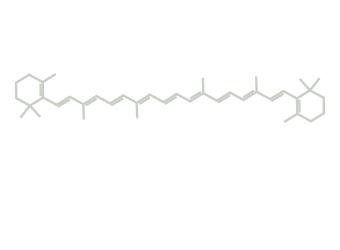
- Dose tested
- 20–30 mg/day
- Form
- Synthetic all-trans beta-carotene
This was not skipped. It was tested in humans, at scale, and the trial did not find a benefit on the endpoint below. That is different from an untested intervention, which may still turn out to work. A Route 1 No human randomized trial has been run, so the record rests on animal or mechanistic evidence only. One of the two routes to the lowest letter on EBL's scale. Grade D means nobody has looked. A Route 2 Grade D means somebody looked and the answer was no.
ATBC (NEJM 1994; PMID 8127329) randomized 29,133 male smokers aged 50-69 to alpha-tocopherol, beta-carotene, both, or placebo An inactive substitute made to look like the real treatment, so participants cannot tell which one they received.. No reduction in lung cancer. Unexpectedly, a HIGHER incidence of lung cancer in the beta-carotene arm. CARET (JNCI 2004; PMID 15572756) randomized smokers and asbestos-exposed workers to beta-carotene plus retinyl palmitate and was stopped early; the adverse effects on lung cancer incidence and all-cause mortality persisted after supplementation stopped. Two large randomized trials, same direction, same population. Carotenoids from whole food are a different exposure and are not what these trials tested.
The cited trials gave beta-carotene daily (PMID 8127329, PMID 15572756). Their summaries do not state a time of day or whether it was taken with food.
Checked against the published summaries; the full papers could not be read. What the cited trials did, not a schedule. Every supplement, by trial timing →
No validated human outcome to track. In people who smoke or have smoked, supplementation raised lung cancer risk in the trials.
There is no dose section on this page. EBL publishes a dose for an intervention at the dose the trials studied. These trials studied it and it did not work, so there is no dose to publish. There is no dispensary link for the same reason.
Evidence notes: randomized trial, meta-analysis A study that pools the numbers from several trials into one combined estimate.
Last reviewed: July 2026
Current smokers, people who stopped smoking recently, and anyone with occupational asbestos exposure. Two large randomized trials found that supplemental beta-carotene increased lung cancer incidence in exactly those groups. WHO THE TRIALS ENROLLED: ATBC (PMID 8127329) enrolled 29,133 men aged 50 to 69 who were smoking at entry. CARET (PMID 15572756) enrolled people with at least 20 pack-years who were smoking or had quit within the previous 6 years, and asbestos-exposed men who were smoking or had quit within 15 years. Nobody in either trial had stopped smoking decades earlier, so what this record states reaches 15 years past quitting and no further.
No prominent drug interaction; the risk here is the population, not a co-administered medicine. Beta-carotene from food has never carried the signal that the isolated supplement does.
Supplemental beta-carotene and lung cancer in smokers. Two large randomized trials found higher lung cancer incidence in smokers and asbestos-exposed workers given supplemental beta-carotene. ATBC Study Group (New England Journal of Medicine, 1994; PMID 8127329): randomized trial in male smokers; lung cancer incidence was higher in the beta-carotene arm. Goodman et al. (Journal of the National Cancer Institute, 2004; PMID 15572756): CARET, six-year follow-up after the intervention was stopped. Zhang et al. (Nutrition Reviews, 2023; PMID 36715090): meta-analysis of randomized trials of beta-carotene supplementation and cancer risk.
Educational use only · Not medical advice · EBL grades published human evidence and does not recommend treatment. Stopping a prescription is a decision for your physician. · Privacy · Disclosure · Terms · Accessibility
Evidence Based Longevity, Inc. is owner-operated and edited by Arnold Sandlow, D.C., a California-licensed chiropractor. Evidence Based Longevity publishes in English only · Machine translations are not produced or reviewed by EBL for accuracy
© Evidence Based Longevity, Inc.. All rights reserved
Primary evidenceEight papers, each linked to its PubMed record.
Harm: Alpha-Tocopherol Beta-Carotene Cancer Prevention Study Group (N Engl J Med, 1994; PMID 8127329): 29,133 male smokers, beta-carotene 20 mg/day alone for 5 to 8 years, lung cancer incidence 18 percent higher (95% CI 3 to 36) and total mortality 8 percent higher. CARET, Omenn et al. (N Engl J Med, 1996; PMID 8602180): 18,314 smokers, former smokers and asbestos workers, beta-carotene 30 mg/day PLUS retinyl palmitate 25,000 IU/day, a combination; lung cancer relative risk The risk in one group expressed as a share of the risk in another. It can make a small absolute difference look large. 1.28 and death from any cause 1.17; stopped 21 months early. Goodman et al. (J Natl Cancer Inst, 2004; PMID 15572756): CARET post-intervention follow-up to 2001; the excess continued as a nonsignificant trend (lung cancer 1.12, 95% CI 0.97 to 1.31; death 1.08, 0.99 to 1.17). Null outside heavy smokers: Physicians' Health Study, Hennekens et al. (N Engl J Med, 1996; PMID 8602179), 22,071 men, 11 percent current and 39 percent former smokers, 50 mg on alternate days for 12 years, no difference in cancer, cardiovascular disease or mortality; Women's Health Study, Lee et al. (J Natl Cancer Inst, 1999; PMID 10601381), 39,876 women, no difference in cancer or cardiovascular disease. Pooled: Druesne-Pecollo et al. (Int J Cancer, 2010; PMID 19876916), 9 trials, no effect on cancer overall, lung (RR 1.16) and stomach (RR 1.34) cancer increased at 20 to 30 mg/day in smokers and asbestos workers; Zhang et al. (Nutr Rev, 2023; PMID 36715090), 8 trials, lung cancer RR 1.19, no effect on other sites; O'Connor et al. (JAMA, 2022; PMID 35727272), the USPSTF evidence review, beta-carotene with or without vitamin A raised lung cancer (OR 1.20) and cardiovascular mortality (OR 1.10). D Route 2: tested, harm found in smokers and asbestos workers, no benefit in anyone.
This page carries a letter. EBL takes no commission, referral fee or payment of any kind on anything it grades. No letter has been bought and none is for sale.
How this is enforced
That is not a promise, it is a build condition. Two checks run on every deploy: one refuses to publish if a commission is claimed on anything graded, the other refuses if a page names a commercial relationship that is not declared in the register. If either fails, this page does not go live. You can read how the checks work, and what they do not cover, on the evidence integrity page.
These statements have not been evaluated by the Food and Drug Administration. This product is not intended to diagnose, treat, cure, or prevent any disease. The grade on this page describes the strength of published human trial evidence in the populations studied. It is not a recommendation for any individual and is not medical advice. Starting, stopping or changing any supplement or medication is a decision for your physician.
How EBL searched for the trials (1 search)
The search that was run, what it returned, and what was left out and why, so the absence of evidence can be checked as well as its presence.
beta-carotene[tiab] AND supplement*[tiab] AND (cancer[tiab] OR mortality[tiab]) AND (randomized controlled trial[pt] OR meta-analysis[pt]) AND humans[mesh]Grades move when new trials publish. A free monthly email lists every grade EBL moved, with the reason and the trial behind it: the sign-up is on the Evidence Log →