Supplement
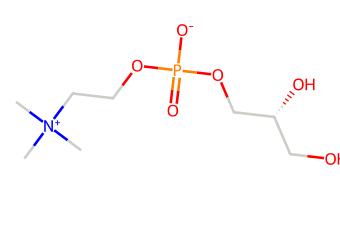
Alpha-GPC (L-Alpha-Glycerylphosphorylcholine)
Cognitive scores in diagnosed mild cognitive impairment, Alzheimer's disease or diabetes with cognitive decline; no trial in healthy older adults.
Grade C: human trials exist, but they are small, mixed or not yet repeated. This is not a finding that it does not work. How to read a grade →
Alpha-GPC is a source of choline, a nutrient the brain uses. In people already diagnosed with memory loss, Alzheimer's disease, or diabetes with declining thinking, some studies found better scores on memory tests. No study has tested it in healthy older adults. Its use for sports rests on three small studies that did not agree and were tied to its maker.
A letter describes the human evidence, not the product, the manufacturer, or the ingredient's worth.
See the full evidence record →Who responds: this record's trial reading reports no subgroup that identifies who responds.
Cognitive scores in diagnosed mild cognitive impairment, Alzheimer's disease or diabetes with cognitive decline; no trial in healthy adults.
How this letter has changed · latest: October 2026 · Corrected
The best-use line implied a healthy-aging result that no trial has produced, and an athletic power claim no cited paper supported; both are rewritten to the diagnosed populations and doses the trials used. The dose line said 300 to 600 mg/day; the Alzheimer's and diabetes trials used 1,200 mg/day. Added: Jeon 2024 (PMID PubMed ID: the permanent number the US National Library of Medicine gives a published paper. Each one links to that paper's record on PubMed. 39300341), Sohn 2025 (PMID 39703111), Marcus 2017 (PMID 29042830) with its finding that TSH fell at 500 mg/day, and Kerksick 2024 (PMID 39683633), null on performance. Sagaro 2023 (PMID 36683513) is described as a meta-analysis A study that pools the numbers from several trials into one combined estimate. mostly of alpha-GPC added to donepezil. Letter unchanged.PMID 39300341 PMID 39703111 PMID 29042830 PMID 39683633 PMID 36683513
Funding stated in the evidence. The one randomized trial behind the letter, De Jesus Moreno Moreno 2003 (PMID 12637119), names no funder in its indexed record; the systematic review A review that searches for every study on a question using a method set in advance, then assesses them together. Sagaro 2023 (PMID 36683513) and the stroke cohort Lee 2021 (PMID 34817582) were publicly funded. The October review found that alpha-GPC trials which do state a funder were paid for by alpha-GPC makers. Letter unchanged.PMID 12637119 PMID 36683513 PMID 34817582
Every change to a letter on this site is dated and published. The full evidence log →
Commercial disclosure
EBL earns no commission on any supplement it grades. A purchase made through the dispensary link below pays EBL nothing, the practitioner discount goes to you in full. The dispensary is Fullscript, a practitioner dispensary, and many of the professional-grade brands in it are sold mainly through practitioners rather than in health food stores. Grades are assigned by published rubric before any commercial relationship exists and are never influenced by one. Full disclosure.
Grade C reflects limited, mixed, or single-trial human data not yet independently replicated The same finding reproduced by a separate research group. A result seen once can be chance or bias; a replicated one is harder to explain away.. The biological rationale may be strong. The human evidence does not currently meet the bar for Grade B. EBL re-grades when new RCT Randomized controlled trial: people are assigned to the treatment or a comparison by chance, so the groups differ only in what they received. It is the design that can show cause and effect. evidence is published.
1,200 mg/day (400 mg three times daily) in the Alzheimer's and diabetes trials; 600 mg/day in the one 12-week trial in mild cognitive impairment. The 300 mg twice daily figure matches only that trial.
Many alpha-GPC products are supplied as a percentage of alpha-GPC on a carrier, so verify the actual alpha-GPC amount rather than the total powder weight. Alpha-GPC is hygroscopic and absorbs moisture once opened. It is distinct from citicoline and choline bitartrate.
The cited Alzheimer's trial gave 400 mg capsules three times a day (PMID 12637119). Its summary does not state a time of day or whether doses were taken with meals.
Checked against the published summary; the full paper could not be read. What the cited trials did, not a schedule. Every supplement, by trial timing →
The signal worth naming is observational Research that watches what people already do rather than assigning a treatment. It can show that two things travel together, not that one causes the other. and unresolved: higher total choline intake, including from alpha-GPC, has been associated with increased stroke risk in cohort data. Association is not causation and no trial has tested it, but it is the reason this is not a free-of-charge nootropic.
Cholinergic drugs including donepezil and rivastigmine: additive. Anticholinergic medication: opposed. Alpha-GPC is a choline source and feeds the same gut-bacterial TMAO pathway as dietary choline.
Mechanism-based, no human interaction study located. The drug interactions described for Alpha-GPC (L-Alpha-Glycerylphosphorylcholine) are mechanism-based. A PubMed search for human interaction, pharmacokinetic or co-administration studies pairing it with rivastigmine returned no results in August 2026. The caution stands on pharmacology, not on a trial, and is labeled as such. Basis: pharmacological mechanism, not a human study. Searched PubMed in August 2026: 1 query, 0 human results.
Cognitive function assessments, attention performance. No standard blood biomarker A measurable sign in the body, such as a blood test value, used to track a condition or the effect of a treatment..
Primary evidenceSeven papers, each linked to its PubMed record.
De Jesus Moreno Moreno (Clin Ther, 2003; PMID 12637119): randomized placebo-controlled trial in mild to moderate Alzheimer's disease, 400 mg three times daily (1,200 mg/day) for 180 days, cognitive scores improved; the indexed record states no funder and the full report was not read in this pass. Jeon et al. (BMC Geriatr, 2024; PMID 39300341): 100 adults with amnestic mild cognitive impairment, 600 mg/day for 12 weeks, ADAS-cog improved 2.34 points versus placebo An inactive substitute made to look like the real treatment, so participants cannot tell which one they received.; the only trial at this record's stated dose; a branded capsule, funder not stated in the indexed record. Sohn et al. (Diabetes Obes Metab, 2025; PMID 39703111): 36 adults with type 2 diabetes and mild cognitive decline, 1,200 mg/day; MMSE difference borderline at 6 months (P = 0.059), significant at 12 months; funded by Daewoong Pharmaceutical, which sells the drug form. Sagaro et al. (J Alzheimers Dis, 2023; PMID 36683513): meta-analysis, university-funded, whose pooled positive results are mainly for alpha-GPC added to donepezil in neurological disease; a combination with a prescription drug does not grade alpha-GPC alone. Sports: Marcus et al. (J Int Soc Sports Nutr, 2017; PMID 29042830), 48 young men, 7 days: no difference in isometric strength or vigilance, a jump-power gain only at 250 mg, not 500 mg, and serum TSH significantly lowered at 500 mg/day; funder not stated in the indexed record. Kerksick et al. (Nutrients, 2024; PMID 39683633), 20 trained men, single doses of 315 and 630 mg: no physical performance benefit, a Stroop gain only; funded by the maker of the alpha-GPC tested, whose paid advisor is the author. Lee et al. (JAMA Netw Open, 2021; PMID 34817582): national cohort associating alpha-GPC prescriptions with higher stroke risk over 10 years, publicly funded; a safety signal that cannot carry the grade either way. Grade C: positive randomized trials in diagnosed clinical populations, none in healthy aging. Funding: the trials that state a funder were paid for by companies that sell alpha-GPC.
Educational use only · Not medical advice · Starting, stopping or changing any supplement or medication is a decision for your physician
These statements have not been evaluated by the Food and Drug Administration. This product is not intended to diagnose, treat, cure, or prevent any disease. The grade on this page describes the strength of published human trial evidence in the populations studied. It is not a recommendation for any individual and is not medical advice. Starting, stopping or changing any supplement or medication is a decision for your physician.
This page carries a letter. EBL takes no commission, referral fee or payment of any kind on anything it grades. No letter has been bought and none is for sale.
How this is enforced
That is not a promise, it is a build condition. Two checks run on every deploy: one refuses to publish if a commission is claimed on anything graded, the other refuses if a page names a commercial relationship that is not declared in the register. If either fails, this page does not go live. You can read how the checks work, and what they do not cover, on the evidence integrity page.
How EBL searched for the trials (1 search)
The search that was run, what it returned, and what was left out and why, so the absence of evidence can be checked as well as its presence.
(alpha-GPC[tiab] OR glycerylphosphorylcholine[tiab] OR choline alfoscerate[tiab] OR choline alphoscerate[tiab]) AND (randomized controlled trial[pt] OR meta-analysis[pt]) AND humans[mesh]Grades move when new trials publish. A free monthly email lists every grade EBL moved, with the reason and the trial behind it: the sign-up is on the Evidence Log →