Supplement
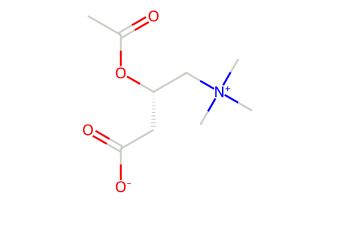
Acetyl-L-Carnitine (ALCAR)
Mild cognitive impairment and mild Alzheimer's disease (older pooled trials positive, the two largest trials null); diabetic peripheral neuropathy pain at 2 to 3 g/day (mostly maker-funded trials, very low certainty).
Grade C: human trials exist, but they are small, mixed or not yet repeated. This is not a finding that it does not work. How to read a grade →
Acetyl-L-carnitine is a form of a nutrient that helps cells make energy. Older studies hinted at help for mild memory loss, but the two largest studies found no benefit. For nerve pain in diabetes, studies using 2 to 3 grams a day reported less pain, but most were paid for by its maker. At lower doses, a careful review found no pain relief.
A letter describes the human evidence, not the product, the manufacturer, or the ingredient's worth.
See the full evidence record →Cognition in mild cognitive impairment and mild Alzheimer's disease, where the two largest trials were null; diabetic neuropathy pain.
Why this gradeGrade C, small or unreplicated trials. The reasoning, and what the grade does not cover.
Grade C. For cognition, the largest trials were null and the Cochrane review found no benefit on objective cognitive measures. For diabetic neuropathy, the Cochrane review rated the evidence very low certainty and found no pain benefit at 1,500 mg/day or less; the positive trials used 2 to 3 g/day. A 409-patient trial found acetyl-L-carnitine worsened chemotherapy-induced neuropathy, a harm signal that matters because this record names peripheral neuropathy. Moved from B in October 2026 by editor adjudication.
WHAT THIS GRADE DOES NOT COVERacetyl-L-carnitine for male fertility or fatigue, which are not graded here; L-carnitine, a different molecule; and doses above 1,500 mg/day for neuropathy, where small positive trials exist without independent replication The same finding reproduced by a separate research group. A result seen once can be chance or bias; a replicated one is harder to explain away..
A grade describes the human evidence for a named use. It is not advice, and it is not a judgment on any individual prescription. How the letters are decided →
Who responds: this record's trial reading reports no subgroup that identifies who responds.
How this letter has changed · latest: October 2026 · Corrected
An outside audit of October 2026 found papers on other uses among the citations behind three single letters: neuropathy papers under ALCAR's cognition letter (PMIDs PubMed ID: the permanent number the US National Library of Medicine gives a published paper. Each one links to that paper's record on PubMed. 23733756, 25751285, 29361042, 31201734; the Sima trial stays, because the record's dosing-time line rests on it), glucose, blood-pressure and safety papers under EGCG's LDL Low-density lipoprotein cholesterol, the cholesterol fraction most closely tied to plaque in the arteries. letter (PMIDs 23426037, 25176280, 26051348), and immune and respiratory-symptom analyses under colostrum's permeability letter (PMIDs 27462401, 32276466). They stay on each page, described in the record's text, and no longer count as evidence for the letter.
The dose line said 500 to 1,500 mg/day, below every dose that reported benefit (2 to 3 g/day) and within the range the Cochrane review Rolim 2019 (PMID 31201734) found ineffective; corrected. The best-use line claimed 'cognitive aging' and 'aging-related neuropathy', neither of which any trial tested; it now names mild cognitive impairment, mild Alzheimer's disease and diabetic neuropathy, and drops the mechanism. Thal 2000 (PMID 10994000), the second large null Alzheimer's trial, and Hershman 2018 (PMID 29361042), showing the chemotherapy neuropathy harm persisting at two years, are added. Li 2015 (PMID 25751285) is now described as a pooled analysis of neuropathic pain, not cognition, and Pennisi 2020 (PMID 32408706) as a narrative review. Letter unchanged.PMID 31201734 PMID 10994000 PMID 29361042 PMID 25751285 PMID 32408706
ALCAR held a B on two meta-analyses A study that pools the numbers from several trials into one combined estimate. and one neuropathy trial. The largest Alzheimer's trial (Thal et al., Neurology 1996; PMID 8797468) was null, the Cochrane review of dementia (Hudson and Tabet, Cochrane Database Syst Rev 2003; PMID 12804452) found no benefit on objective cognition, and the Cochrane review of diabetic neuropathy (Rolim et al., Cochrane Database Syst Rev 2019; PMID 31201734) found very low certainty and no benefit at 1,500 mg/day or less. A 409-patient trial (Hershman et al., J Clin Oncol 2013; PMID 23733756) found it worsened chemotherapy neuropathy. Mixed: C. Editor adjudication, October 2026.PMID 8797468 PMID 12804452 PMID 31201734 PMID 23733756
Funding stated in the evidence. The neuropathy meta-analysis Li 2015 (PMID 25751285) reports that most of the trials it pooled were funded by the manufacturer of the acetyl-L-carnitine tested, and names a potential commercial bias; the trial that found harm, Hershman 2013 (PMID 23733756), was funded by the National Cancer Institute and the Medical Research Council. Letter unchanged.PMID 25751285 PMID 23733756
Every change to a letter on this site is dated and published. The full evidence log →
Commercial disclosure
EBL earns no commission on any supplement it grades. A purchase made through the dispensary link below pays EBL nothing, the practitioner discount goes to you in full. The dispensary is Fullscript, a practitioner dispensary, and many of the professional-grade brands in it are sold mainly through practitioners rather than in health food stores. Grades are assigned by published rubric before any commercial relationship exists and are never influenced by one. Full disclosure.
Trials that reported benefit used 2 to 3 g/day: 3 g/day in the Alzheimer's trials, 2 to 3 g/day in the neuropathy trials. The Cochrane neuropathy review found no pain benefit at 1,500 mg/day or less.
Acetyl-L-carnitine is distinct from plain L-carnitine. ALCAR evidence applies to ALCAR, and L-carnitine evidence does not substitute for it, particularly for cognitive or neurologic indications.
One cited trial gave doses three times a day (PMID 15616239), and the cited reviews pool trials without reporting when doses were taken (PMID 12598816, PMID 32408706). None states a time of day or whether doses were taken with food.
Checked against the full report for 1 of the 3 cited studies, and the published summary for the rest. What the cited trials did, not a schedule. Every supplement, by trial timing →
Seizure disorders, where carnitine has been associated with increased seizure frequency. Hypothyroidism, since carnitine can act as a peripheral antagonist of thyroid hormone action.
Thyroid hormone replacement: carnitine can reduce its peripheral effect, so this belongs with the endocrinologist. Anticoagulants: raised INR has been reported with carnitine on warfarin. The metabolic point worth stating is not a drug interaction: gut bacteria convert carnitine to trimethylamine, which the liver oxidizes to TMAO, and TMAO has been linked to atherosclerosis.
Mechanism-based, no human interaction study located. The drug interactions described for Acetyl-L-Carnitine (ALCAR) are mechanism-based. A PubMed search for human interaction, pharmacokinetic or co-administration studies pairing it with anticoagulant, statin, thyroid, warfarin returned no results in August 2026. The caution stands on pharmacology, not on a trial, and is labeled as such. Basis: pharmacological mechanism, not a human study. Searched PubMed in August 2026: 4 queries, 0 human results.
The endpoint The outcome a trial measures to decide whether the treatment worked, such as heart attacks, blood pressure or a symptom score. measured was the outcome being treated.
Primary evidenceTen papers, each linked to its PubMed record.
Cognition: Montgomery et al. (Int Clin Psychopharmacol, 2003; PMID 12598816) pooled double-blind Neither the participants nor the people assessing them know who received the real treatment until the trial ends. trials in mild cognitive impairment and mild Alzheimer's disease and found benefit; the two largest trials, Thal et al. (Neurology, 1996; PMID 8797468; 431 adults, 3 g/day, one year) and Thal et al. (Neurology, 2000; PMID 10994000; 229 adults with early-onset Alzheimer's disease, 3 g/day, one year), were null on their primary endpoints The one outcome a trial names in advance as its main test. Results on other outcomes carry less weight., and Hudson et al. (Cochrane Database Syst Rev, 2003; PMID 12804452) found no benefit on objective cognitive measures. Pennisi et al. (Nutrients, 2020; PMID 32408706) is a narrative review and itself calls the role in dementia still under debate. No trial tested healthy older adults. Neuropathy: Li et al. (PLoS One, 2015; PMID 25751285) pooled peripheral neuropathic pain trials (self-reported pain, not cognition) and found benefit at 2 to 3 g/day, while stating that most of the pooled trials were funded by the manufacturer of the acetyl-L-carnitine tested and naming a potential commercial bias; Sima et al. (Diabetes Care, 2005; PMID 15616239) is one of those diabetic neuropathy trials; Rolim et al. (Cochrane Database Syst Rev, 2019; PMID 31201734) rated the evidence very low certainty and found no benefit at 1,500 mg/day or less. Harm: Hershman et al. (J Clin Oncol, 2013; PMID 23733756), 409 women receiving taxane chemotherapy, found 3 g/day made neuropathy worse, and the two-year follow-up (Hershman et al., J Natl Cancer Inst, 2018; PMID 29361042) found the worsening persisted; this trial was funded by the National Cancer Institute and the Medical Research Council. Grade C: positive older pooled data against the two largest trials null, on clinician-rated and self-reported endpoints.
Educational use only · Not medical advice · Starting, stopping or changing any supplement or medication is a decision for your physician
These statements have not been evaluated by the Food and Drug Administration. This product is not intended to diagnose, treat, cure, or prevent any disease. The grade on this page describes the strength of published human trial evidence in the populations studied. It is not a recommendation for any individual and is not medical advice. Starting, stopping or changing any supplement or medication is a decision for your physician.
This page carries a letter. EBL takes no commission, referral fee or payment of any kind on anything it grades. No letter has been bought and none is for sale.
How this is enforced
That is not a promise, it is a build condition. Two checks run on every deploy: one refuses to publish if a commission is claimed on anything graded, the other refuses if a page names a commercial relationship that is not declared in the register. If either fails, this page does not go live. You can read how the checks work, and what they do not cover, on the evidence integrity page.
How EBL searched for the trials (1 search)
The search that was run, what it returned, and what was left out and why, so the absence of evidence can be checked as well as its presence.
("acetyl-L-carnitine"[tiab] OR acetylcarnitine[tiab]) AND (cognit*[tiab] OR dementia[tiab] OR neuropathy[tiab]) AND (randomized controlled trial[pt] OR meta-analysis[pt])Grades move when new trials publish. A free monthly email lists every grade EBL moved, with the reason and the trial behind it: the sign-up is on the Evidence Log →