Supplement
Urolithin A
Muscle endurance and strength, on small, mixed trials: both larger trials in non-athletes missed their pre-registered primary endpoints The one outcome a trial names in advance as its main test. Results on other outcomes carry less weight., an elite-runner trial found no performance benefit, and a 2026 meta-analysis A study that pools the numbers from several trials into one combined estimate. found the one poolable outcome, 6-minute walk distance, inconclusive.
Grade C: human trials exist, but they are small, mixed or not yet repeated. This is not a finding that it does not work. How to read a grade →
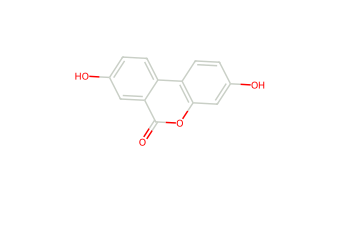
Urolithin A is made in the gut from compounds in foods such as pomegranates, and it is also sold as a supplement. In two studies of older and middle-aged adults, the main result each study set out to test did not beat a dummy pill. Some other measures of muscle and cell energy did improve. The studies were paid for by the company that makes it, and its leaders were among the authors. All the studies so far are short and small.
A letter describes the human evidence, not the product, the manufacturer, or the ingredient's worth.
See the full evidence record →Who responds: this record's trial reading reports no subgroup that identifies who responds.
Muscle endurance and strength on small mixed trials; larger trials missed their primary endpoints The outcome a trial measures to decide whether the treatment worked, such as heart attacks, blood pressure or a symptom score. and a 2026 pooled analysis was inconclusive.
The trial that would change this grade.
A positive trial of this shape, supported by further trials, would move this entry to B.
Why the current trials fall short
Existing trials report muscle endurance and mitochondrial gene expression over shorter periods.
Why people believe itTwo human sources; no published case reports of benefit; no reports of harm.
The case for urolithin A is that it switches on mitophagy, the process cells use to clear out worn mitochondria, which slows with age. In old worms and mice it improved muscle function, and in people it moves markers of mitochondrial health. The human trials that found those changes were run or funded by the company that sells it.
What supporters point to, and what each source actually shows. None of it is enough to move this letter higher; the trial described above under Evidence wanted is what would.
- Human trial, blood or body markerIn the first trial in people, healthy older adults took urolithin A for 4 weeks. It was safe and changed blood and muscle markers of mitochondrial health. Markers, not a health outcome. PMID 32694802
- Human trial, blood or body markerIn 50 healthy middle-aged adults, 4 weeks of urolithin A shifted some immune cells toward a younger profile. Immune markers measured in the blood, not a health outcome. PMID 41174221
A case report describes what happened to one or a few patients. It cannot show the treatment caused the change, and reports of success are published more often than reports of failure.
A PubMed search in October 2026 found no published case report of benefit for this use.
Searched PubMed, October 2026: case report record(s) returned. The search returned no case report of any kind for urolithin A.
How this letter has changed · latest: October 2026 · Corrected
best_use led with mitophagy and mitochondrial health, which are markers, and said safety is well established on 4 weeks to 4 months of exposure in a few hundred people. It now names muscle function, where both larger trials missed their pre-registered primary endpoints, and states the exposure. Added: Dao et al. (Front Nutr, 2026; PMID PubMed ID: the permanent number the US National Library of Medicine gives a published paper. Each one links to that paper's record on PubMed. 42559151), meta-analysis with the 6-minute walk inconclusive at low certainty; Jamialahmadi et al. (Rev Recent Clin Trials, 2024; PMID 38415449), null in heart failure; Monsalve Acevedo et al. (Front Nutr, 2025; PMID 41245402), a small positive pilot in young soccer players. Andreux et al. (Nat Metab, 2019; PMID 32694802) is relabeled as a phase 1 trial with safety as its primary outcome. The maker's funding of five trials was already stated trial by trial. C unchanged. Applied the written grade definition under the editor's standing instruction of October 2026 (Arnold Sandlow, D.C.).PMID 32694802 PMID 38415449 PMID 41245402 PMID 42559151
Funding stated beside each trial. The company that makes the urolithin A product tested funded or ran five of the six randomized trials cited: Andreux 2019 (PMID 32694802), Liu 2022 (PMID 35050355), Singh 2022 (PMID 35584623), Whitfield 2025 (PMID 40839339) and Denk 2025 (PMID 41174221). Its employees, founder and board members are among the authors, and Liu 2022 (PMID 35050355) states the company had a role in design, conduct and analysis. The one independent trial, Zhao 2024 (PMID 39487653), was publicly funded in China. Whitfield 2025 (PMID 40839339), maker-funded and null on running performance in trained runners, is now cited. Letter unchanged.PMID 32694802 PMID 35050355 PMID 35584623 PMID 40839339 PMID 41174221 PMID 35050355 PMID 39487653 PMID 40839339
Every change to a letter on this site is dated and published. The full evidence log →
Commercial disclosure
EBL earns no commission on any supplement it grades. A purchase made through the dispensary link below pays EBL nothing, the practitioner discount goes to you in full. The dispensary is Fullscript, a practitioner dispensary, and many of the professional-grade brands in it are sold mainly through practitioners rather than in health food stores. Grades are assigned by published rubric before any commercial relationship exists and are never influenced by one. Full disclosure.
500–1,000 mg/day (the dose range used in the clinical trials)
Direct urolithin A supplementation bypasses dependence on gut conversion from ellagitannins. Five of the six randomized trials cited used one proprietary urolithin A product, made by the company that funded or ran them; other products should not be assumed outcome-equivalent unless their identity, purity, dose and bioavailability The share of a dose that reaches the bloodstream in a form the body can use. are shown to match the tested material.
Timing differed between the cited trials. In two, the daily dose was taken in the morning on an empty stomach, with water (PMID 35584623, PMID 35050355). In a third, it was split, with one capsule after breakfast and one after dinner (PMID 39487653).
Checked against the full published reports. What the cited trials did, not a schedule. Every supplement, by trial timing →
How to buy this: quality criteria, not a brand
500 to 1,000 mg/day of purified urolithin A.
Purified urolithin A, a single proprietary product in every published trial. Only about 40% of people make meaningful urolithin A from pomegranate.
Any USP or NSF third-party seal.
Pomegranate or ellagic-acid extract sold as equivalent to urolithin A.
The grade and these criteria are set only from human trials. Any purchase link is convenience and does not affect the grade.
Pregnancy and breastfeeding, on absence of data rather than evidence of harm. Exposure in trials is 4 weeks to 4 months in a few hundred people, mostly healthy or older adults, so this is a young evidence base rather than a clean safety record.
No drug interaction has been identified in a human trial. Urolithin A is produced by gut bacteria from ellagitannins in most people who can make it at all, so antibiotics plausibly affect endogenous production, though the supplement bypasses that route by design. Absence of a finding here reflects how little has been looked at.
The antibiotic question is about the body's own production, not the capsule. Urolithin A is made by gut bacteria from ellagitannins in people who carry the right organisms, so antibiotics plausibly interrupt endogenous production. The supplement is synthetic and bypasses that route by design, which is the entire reason it exists. Nothing has been measured either way: a scoped human search for urolithin A with antibiotics or drug interactions returns four records, none of them an interaction study. The record's own sentence, that the absence of a finding reflects how little has been looked at, is the accurate statement and is now recorded with the count behind it. Basis: pharmacological mechanism, not a human study. Searched PubMed in August 2026: 1 query, 4 human results.
Grip strength and endurance in a research context only. Both major randomized trials missed their pre-registered primary endpoints; what moved was a secondary muscle-endurance measure. Treat any change as unexplained, not as confirmation.
Primary evidenceNine papers, each linked to its PubMed record.
Andreux et al. (Nat Metab, 2019; PMID 32694802, n=60): a phase 1 trial whose primary outcome was safety; urolithin A 500 and 1,000 mg/day for 4 weeks improved mitochondrial gene expression and plasma acylcarnitines vs. placebo An inactive substitute made to look like the real treatment, so participants cannot tell which one they received. as secondary outcomes; five of nine authors are employees of the company that makes the urolithin A tested. Liu et al. (JAMA Netw Open, 2022; PMID 35050355): randomized clinical trial reporting improved muscle endurance and mitochondrial health in older adults. The pre-registered primary endpoint was not superior to placebo, so the endurance result is a secondary one. Funded by the maker, which the paper states had a role in the design and conduct of the study and in the analysis and interpretation of the data; the founder, chief executive and board chair of the company are among the authors. Singh et al. (Cell Rep Med, 2022; PMID 35584623): randomized trial in middle-aged adults reporting improved muscle strength, exercise performance and biomarkers A measurable sign in the body, such as a blood test value, used to track a condition or the effect of a treatment. of mitochondrial health. Here too the pre-registered primary endpoint was not superior to placebo, so these are secondary results. Sponsored by the maker; six authors are its employees and two sit on its board. Zhao et al. (J Int Soc Sports Nutr, 2024; PMID 39487653): 8-week randomized double-blind placebo-controlled trial in male resistance-trained athletes measuring muscle endurance, strength, inflammation, oxidative stress and protein metabolism; funded by the Jiangsu Province education plan, no company involvement declared, the one trial here independent of the maker. Whitfield et al. (Sports Med, 2025; PMID 40839339, n=42): highly trained male distance runners, 1,000 mg/day for 4 weeks during an altitude camp; the 3,000 m time trial did not improve and the VO2max The most oxygen the body can use during all-out exercise, a standard measure of aerobic fitness. time-by-treatment interaction was not significant, with lower perceived exertion and lower creatine kinase after the time trial; funded by the maker, with one of its staff among the authors. Denk et al. (Nature Aging, 2025; PMID 41174221, n=50): randomized double-blind placebo-controlled trial, 1,000 mg/day for 4 weeks in healthy middle-aged adults, with peripheral CD3+ T cell subsets and immune metabolic remodeling as primary outcomes; funded by the maker, which also provided the product, with three of its employees and its president among the authors. Immune-cell phenotype markers, not a clinical endpoint, and no independent replication The same finding reproduced by a separate research group. A result seen once can be chance or bias; a replicated one is harder to explain away. of a clinical result. Dao et al. (Front Nutr, 2026; PMID 42559151): meta-analysis of five randomized trials, 236 participants; only the 6-minute walk test could be pooled, +17 m with a confidence interval The range the true effect probably falls in. A wide interval means the estimate is uncertain. crossing zero (-5 to 39 m), low certainty; other muscle outcomes were exploratory signals rather than reproducible effects. Monsalve Acevedo et al. (Front Nutr, 2025; PMID 41245402): single-blind pilot, 20 academy soccer players aged about 17, 1,000 mg/day for 6 weeks; the intermittent recovery running test improved; a supplement company reimbursed one author's conference travel. Jamialahmadi et al. (Rev Recent Clin Trials, 2024; PMID 38415449): crossover A trial design in which each participant receives both the treatment and the comparison, one after the other, and serves as their own control. in 10 patients with heart failure with reduced ejection fraction, 1,000 mg/day for 4 weeks; no change in echocardiographic measures, pro-BNP or CRP. Grade C. Funding: the company that makes the urolithin A tested funded or ran five of the six trials cited (PMIDs 32694802, 35050355, 35584623, 40839339, 41174221); the sixth (PMID 39487653) was publicly funded in China.
The urolithin A used in every published trial is a proprietary product of the company that developed it, and that company funded or ran the trials. That commercial interest is disclosed in the published papers and here. EBL has no commercial relationship with it.
Educational use only · Not medical advice · Starting, stopping or changing any supplement or medication is a decision for your physician
These statements have not been evaluated by the Food and Drug Administration. This product is not intended to diagnose, treat, cure, or prevent any disease. The grade on this page describes the strength of published human trial evidence in the populations studied. It is not a recommendation for any individual and is not medical advice. Starting, stopping or changing any supplement or medication is a decision for your physician.
This page carries a letter. EBL takes no commission, referral fee or payment of any kind on anything it grades. No letter has been bought and none is for sale.
How this is enforced
That is not a promise, it is a build condition. Two checks run on every deploy: one refuses to publish if a commission is claimed on anything graded, the other refuses if a page names a commercial relationship that is not declared in the register. If either fails, this page does not go live. You can read how the checks work, and what they do not cover, on the evidence integrity page.
How EBL searched for the trials (1 search)
The search that was run, what it returned, and what was left out and why, so the absence of evidence can be checked as well as its presence.
"urolithin A"[tiab] AND (randomized controlled trial[pt] OR meta-analysis[pt] OR placebo[tiab]) AND humans[mesh]Grades move when new trials publish. A free monthly email lists every grade EBL moved, with the reason and the trial behind it: the sign-up is on the Evidence Log →