Supplement
Saffron (Crocus sativus)
Mild to moderate depression, on standard symptom scales; trials are mostly small and short.
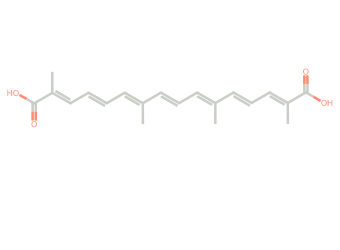
Saffron is a spice. In people with mild to moderate depression, it improved scores on standard depression scales. The studies were mostly small and short, so the result is less firm than it sounds. At six weeks, the response was about the same as a low dose of a common antidepressant. It has been given with antidepressants, but no study checked for a harmful reaction between them. It was not tested in pregnant women.
- Dose studied
- 30 mg/day standardized extract
- Form graded
- Standardized Crocus sativus stigma extract
- Cited PMIDs PubMed ID: the permanent number the US National Library of Medicine gives a published paper. Each one links to that paper's record on PubMed.
- PMID 30036891 →PMID 38913392 →
A letter describes the human evidence, not the product, the manufacturer, or the ingredient's worth.
See the full evidence record →Who responds: this record's trial reading reports no subgroup that identifies who responds.
Saffron (Crocus sativus) for depression symptom scales such as HAM-D, graded on published human trial evidence.
A grade describes the intervention that was tested. Where the product on the shelf differs from it, this says so.
Commercial disclosure
EBL earns no commission on any supplement it grades. A purchase made through the dispensary link below pays EBL nothing, the practitioner discount goes to you in full. The dispensary is Fullscript, a practitioner dispensary, and many of the professional-grade brands in it are sold mainly through practitioners rather than in health food stores. Grades are assigned by published rubric before any commercial relationship exists and are never influenced by one. Full disclosure.
No dose is published here. This record carries no authored dose, because the cited trials do not converge on a single figure. Each trial cited on this page states the dose it used, and EBL has not turned those into a recommendation.
Standardized extracts were used in the cited trials; product quality varies.
The cited reviews pool trials and do not report when doses were taken (PMID 30036891, PMID 38913392).
Checked against the published summaries; the full papers could not be read. What the cited trials did, not a schedule. Every supplement, by trial timing →
Pregnancy: high doses have a traditional abortifacient reputation and the trials were not run in pregnant women. Bipolar disorder, on the mood-active effect.
Antidepressants, particularly SSRIs: saffron has been given alongside an SSRI in randomized trials, so the combination itself is not untested, but no trial has looked for serotonin toxicity as an outcome and the combination studies are short and small. Crocin has antiplatelet activity in laboratory work, which is a mechanistic caution alongside anticoagulants.
The combination has been given to people; the toxicity question was never the question. Most saffron depression trials are head-to-head against an SSRI, which cannot answer an interaction question. One is not. Thirty-six men with major depression already stabilized on fluoxetine were randomized to saffron 15 mg twice daily or placebo for four weeks, with 30 completing, in a double-blind trial of fluoxetine-related sexual dysfunction. That is genuine co-administration of saffron with an SSRI in a controlled setting, and tolerability was assessed. What it is not is a study of serotonin toxicity: nobody was looking for it, four weeks in 30 completers cannot exclude an uncommon syndrome, and every participant was under psychiatric care. The additive-serotonergic caution therefore stands as a caution, with the honest addition that the pairing has been done in a trial without a reported problem. Modabbernia et al. (Psychopharmacology (Berl), 2012;223(4):381-8; PMID 22552758): randomized double-blind placebo-controlled trial of saffron added to ongoing fluoxetine in 36 men with major depressive disorder.
The HAMD-17 or PHQ-9 depression scale at baseline and 6 weeks for mood applications; for cognitive applications, use the ADAS-Cog or MoCA. Sleep quality using the PSQI if sleep is a target outcome. Response at 6 weeks in the published trials was roughly equivalent to low-dose fluoxetine on HAMD-17: that is the benchmark for meaningful improvement.
Primary evidenceTwo papers, each linked to its PubMed record.
Toth et al. (Planta Medica, 2019; PMID 30036891) and Shafiee et al. (Nutrition Reviews, 2025; PMID 38913392): meta-analyses A study that pools the numbers from several trials into one combined estimate. of randomized trials: saffron improved mild-to-moderate depression, in some analyses comparable to SSRIs. Grade B: multiple RCTs Randomized controlled trial: people are assigned to the treatment or a comparison by chance, so the groups differ only in what they received. It is the design that can show cause and effect. and meta-analyses, though trials are mostly small.
Educational use only · Not medical advice · Starting, stopping or changing any supplement or medication is a decision for your physician
These statements have not been evaluated by the Food and Drug Administration. This product is not intended to diagnose, treat, cure, or prevent any disease. The grade on this page describes the strength of published human trial evidence in the populations studied. It is not a recommendation for any individual and is not medical advice. Starting, stopping or changing any supplement or medication is a decision for your physician.
This page carries a letter. EBL takes no commission, referral fee or payment of any kind on anything it grades. No letter has been bought and none is for sale.
How this is enforced
That is not a promise, it is a build condition. Two checks run on every deploy: one refuses to publish if a commission is claimed on anything graded, the other refuses if a page names a commercial relationship that is not declared in the register. If either fails, this page does not go live. You can read how the checks work, and what they do not cover, on the evidence integrity page.
Grades move when new trials publish. A free monthly email lists every grade EBL moved, with the reason and the trial behind it: the sign-up is on the Evidence Log →