Supplement · graded by use, four uses
Quercetin
Blood pressure at 500 mg/day or more.
Grade C: human trials exist, but they are small, mixed or not yet repeated. This is not a finding that it does not work. How to read a grade →
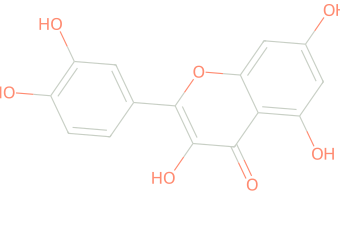
Quercetin is a plant compound found in apples, onions and tea, and it is sold as a pill. When studies were pooled, people taking 500 mg a day or more had blood pressure a little lower, by about 2 to 4 points on the top number. The studies did not agree well with each other. Pills did not help blood fats or blood sugar. No study shows that quercetin alone slows aging.
The C belongs to one of the four uses graded on this record. The other three carry their own letters.
As studied, and the trials
Mixed. Two meta-analyses A study that pools the numbers from several trials into one combined estimate. pool systolic pressure about 3 mmHg lower and diastolic about 3 mmHg lower (Serban et al., 2016; PMID PubMed ID: the permanent number the US National Library of Medicine gives a published paper. Each one links to that paper's record on PubMed. 27405810; Huang et al., 2020; PMID 31940027), with the effect confined to 500 mg/day or more. The 2023 umbrella review finds systolic pressure 1.9 mmHg lower with 88 percent heterogeneity How much the results of the pooled trials differ from each other. High heterogeneity makes a combined estimate less reliable. and diastolic pressure unchanged, at very low to moderate certainty (Arabi et al., PMID 37654199). A small, inconsistent effect on a surrogate from small trials: C.
As studied, and the trials
Sahebkar (2017; PMID 25897620) found no change in LDL Low-density lipoprotein cholesterol, the cholesterol fraction most closely tied to plaque in the arteries., HDL or triglycerides and a borderline rise in total cholesterol; Huang et al. (2020; PMID 31940027) and the umbrella review (Arabi et al., 2023; PMID 37654199) agree. Tested and no benefit: D on Route 2 Human randomized trials have been run and did not show benefit on the stated outcome. One of the two routes to the lowest letter on EBL's scale..
As studied, and the trials
Ostadmohammadi et al. (2019; PMID 30848564): fasting glucose, HOMA-IR and HbA1c A blood test that reflects average blood sugar over the previous two to three months. unchanged overall, positive only in subgroups; Huang et al. (2020; PMID 31940027) and Arabi et al. (2023; PMID 37654199) find glucose and HOMA-IR unchanged. Tested and no benefit: D on Route 2.
As studied, and the trials
No randomized trial has tested quercetin alone as a senolytic on any clinical or functional outcome. The published senolytic trials combined dasatinib with quercetin, a different intervention, and the quercetin plus fisetin schedules sold to consumers have no trial at all. The one quercetin-alone randomized study in this area (Mury et al., Aging Cell, 2025; PMID 40375481) measured vascular senescence markers in 97 bypass patients over a few days, with benefit in men only and a pro-inflammatory signal in women; a marker study, not an outcome. Route 1 No human randomized trial has been run, so the record rests on animal or mechanistic evidence only. One of the two routes to the lowest letter on EBL's scale.: untested.
Read the grade that matches your goal. How EBL grades by use →
A letter describes the human evidence, not the product, the manufacturer, or the ingredient's worth.
See the full evidence record →Blood pressure 2 to 4 mmHg lower at 500 mg/day or more in pooled trials, heterogeneous, low to moderate certainty.
As studied: dose, form, population and duration for every use
A grade describes the intervention that was tested. Where the product on the shelf differs from it, this says so.
The trial that would change this grade.
A positive trial of this shape, supported by further trials, would move this entry to B.
Why the current trials fall short
Pooled trials put systolic pressure about 2 to 3 mmHg lower at 500 mg/day or more, with high heterogeneity and low certainty in the latest umbrella review (PMID 37654199). A well-run trial that makes blood pressure its primary question, supported by further trials, is what B requires. Quercetin alone has no randomized trial on any aging outcome; the human senolytic trials gave it together with dasatinib.
Why people believe itTwo human sources; three published case reports of benefit; three reports of harm.
The case for quercetin rests on two ideas: that this plant flavonoid lowers blood pressure, and that it clears senescent cells, the worn-out cells that build up with age. Pooled trials find a small fall in blood pressure. The senolytic idea comes from laboratory work and from trials that gave quercetin together with the cancer drug dasatinib.
What supporters point to, and what each source actually shows. None of it is enough to move this letter higher; the trial described above under Evidence wanted is what would.
- Human trial, blood or body markerIn 97 heart bypass patients given quercetin or placebo An inactive substitute made to look like the real treatment, so participants cannot tell which one they received. around their surgery, markers of inflammation and blood vessel aging improved in men but not in women, where inflammation leaned the other way. A short trial measured in blood and artery tissue. PMID 40375481
- Human trial, a different useIn 60 postmenopausal women, dasatinib plus quercetin did not change the main marker of bone breakdown; a marker of bone building rose briefly. Quercetin was given with a cancer drug, so the result cannot speak for quercetin alone. PMID 38956196
A case report describes what happened to one or a few patients. It cannot show the treatment caused the change, and reports of success are published more often than reports of failure.
- A 57-year-old with severe itching from prurigo nodularis that had not responded to standard treatment improved within 4 weeks of isoquercetin, a close relative of quercetin. One patient, with no comparison. PMID 29141065
- A report on quercetin added to treatment for schizophrenia. No abstract is indexed, so its findings are not summarized here. PMID 27035495
- A patient with advanced bladder cancer had a complete response on low-dose oral cyclophosphamide, a chemotherapy drug, taken with quercetin, and fatigue improved. Two treatments given together, in one patient. PMID 26844468
- A report of warfarin, a blood thinner, acting more strongly when taken with quercetin. No abstract is indexed; the title reports the interaction. PMID 36311308
- A 22-month-old taking a quercetin supplement was wrongly suspected of having a nerve tumor, because quercetin raised a blood and urine marker used to screen for it. PMID 15018454
- A 61-year-old man taking berberine, turmeric, quercetin and other supplements developed a dangerous heart rhythm. Several supplements were involved, so the part played by quercetin cannot be separated. PMID 42684237
Searched PubMed, October 2026: 21 case report record(s) returned. Three reports describe possible benefit and three describe harm; they are listed. The other 15 concern laboratory, computer or animal studies indexed as case reports, COVID-19 treatment, a grape juice that interacted with warfarin, and cases where quercetin was one of many treatments.
Animal and laboratory workOne study in animals or cells. Not counted toward the letter.
None of this is human evidence and none of it counts toward the letter. It is listed so the reader can see what the idea rests on. Most findings in animals do not hold up when tested in people.
- Cell cultureQuercetin selectively killed senescent human endothelial cells and senescent mouse bone-marrow stem cells in culture. In living mice, the reduction in senescent cells was shown only for quercetin combined with dasatinib. PMID 25754370
How this letter has changed · latest: October 2026 · Changed
The record's C rested on two meta-analyses it described as showing modest benefit; both are null on their pooled outcomes (Sahebkar, 2017; PMID 25897620, lipids; Ostadmohammadi et al., 2019; PMID 30848564, glucose), so those uses are D Route 2 rows. The only positive pooled quercetin-alone evidence is blood pressure: systolic about 2 to 3 mmHg lower at 500 mg/day or more in two meta-analyses (Serban et al., 2016; PMID 27405810; Huang et al., 2020; PMID 31940027) with the 2023 umbrella review finding very high heterogeneity and diastolic pressure unchanged (Arabi et al., PMID 37654199), mixed, C, and the headline now attaches to it. The best-use line led with senolytic use in combination with dasatinib or fisetin and the dose line described a quercetin plus fisetin schedule with no trial behind it; quercetin alone as a senolytic is untested on any outcome, D Route 1 with an absence record, and the one quercetin-alone marker study (Mury et al., 2025; PMID 40375481) is cited as such. The phytosome form note's Mayo Clinic claim and 20-fold figure, unsupported, are removed. The headline letter stays C. Applied the written grade definition under the editor's standing instruction of October 2026 (Arnold Sandlow, D.C.).PMID 25897620 PMID 27405810 PMID 30848564 PMID 31940027 PMID 37654199 PMID 40375481
Every change to a letter on this site is dated and published. The full evidence log →
Commercial disclosure
EBL earns no commission on any supplement it grades. A purchase made through the dispensary link below pays EBL nothing, the practitioner discount goes to you in full. The dispensary is Fullscript, a practitioner dispensary, and many of the professional-grade brands in it are sold mainly through practitioners rather than in health food stores. Grades are assigned by published rubric before any commercial relationship exists and are never influenced by one. Full disclosure.
500 to 1,000 mg/day in the blood pressure trials; effects were absent below 500 mg/day. The on-off senolytic schedules sold with fisetin have no trial behind them; the published senolytic trials used dasatinib with quercetin for three days.
Quercetin phytosome (with phosphatidylcholine) is marketed on higher absorption; the pooled blood pressure trials used standard quercetin or quercetin-rich extracts, and no graded trial on this record used the phytosome form.
The summaries of the cited meta-analyses on blood pressure, lipids and glucose do not state the time of administration (PMID 27405810, PMID 31940027, PMID 25897620, PMID 30848564). None of the cited studies tested an on-off senolytic schedule.
Checked against the published summaries; the full papers could not be read. What the cited trials did, not a schedule. Every supplement, by trial timing →
Kidney disease, on case reports of nephrotoxicity at high intravenous doses. Hypothyroidism, since quercetin inhibits thyroid peroxidase at high doses.
Quercetin inhibits CYP3A4 and CYP2C8 and several drug transporters including OATP, BCRP and P-glycoprotein, so drugs cleared by those routes can reach higher levels. Ciclosporin is the sharpest case, on the narrow window. Warfarin: raised INR has been reported. Fluoroquinolone antibiotics: quercetin competes at the same bacterial target in laboratory work, which is a theoretical reduction in effect. Most of this rests on laboratory and transporter work rather than on human interaction trials.
Quercetin inhibits CYP enzymes and drug transporters. Quercetin and its circulating conjugates inhibit several cytochrome P450 enzymes and the OATP, BCRP and MRP2 transporters, which is the basis of the narrow-window drug caution. The work is laboratory-based rather than a human interaction trial. Mohos et al. (Nutrients, 2020; PMID 32751996): inhibitory effects of quercetin and its main methyl, sulfate and glucuronic acid conjugates on cytochrome P450 enzymes and on OATP, BCRP and MRP2 transporters.
For the graded use, home or office blood pressure at baseline and 8 weeks at 500 mg/day or more, remembering the pooled fall is 2 to 4 mmHg systolic. Inflammatory markers, functional measures and fatigue are not graded endpoints on this record.
Primary evidenceSix papers, each linked to its PubMed record.
Blood pressure. Serban et al. (J Am Heart Assoc, 2016; PMID 27405810): 7 randomized trials, 587 patients; systolic pressure 3.0 mmHg and diastolic 2.6 mmHg lower, the effect confined to doses of 500 mg/day or more. Huang et al. (Nutr Rev, 2020; PMID 31940027): 17 trials, 896 participants; systolic 3.1 and diastolic 2.9 mmHg lower, lipids and glucose unchanged. Arabi et al. (Phytother Res, 2023; PMID 37654199): umbrella review of 5 meta-analyses and 23 trials; systolic pressure 1.9 mmHg lower with 88 percent heterogeneity, diastolic pressure, lipids, inflammation, fasting glucose and HOMA-IR unchanged, certainty very low to moderate. Lipids and glucose. Sahebkar (Crit Rev Food Sci Nutr, 2017; PMID 25897620): 5 trials, 442 subjects; LDL, HDL and triglycerides unchanged, a borderline and clinically irrelevant rise in total cholesterol. Ostadmohammadi et al. (Phytother Res, 2019; PMID 30848564): 9 trials in metabolic syndrome and related disorders; fasting glucose, HOMA-IR and HbA1c unchanged overall, with glucose lower only in subgroups at 500 mg/day or more for 8 weeks or longer. Senescence. Mury et al. (Aging Cell, 2025; PMID 40375481): 97 patients around coronary bypass surgery, quercetin 500 mg twice daily for a few days; ex vivo endothelial relaxation improved in men only, C-reactive protein a trend, a pro-inflammatory signal in women; a short marker study, not an outcome trial. The human senolytic trials used dasatinib with quercetin, which does not grade quercetin alone. Grade C on blood pressure: small, heterogeneous surrogate effect; lipids and glycemic control tested without change.
Educational use only · Not medical advice · Starting, stopping or changing any supplement or medication is a decision for your physician
These statements have not been evaluated by the Food and Drug Administration. This product is not intended to diagnose, treat, cure, or prevent any disease. The grade on this page describes the strength of published human trial evidence in the populations studied. It is not a recommendation for any individual and is not medical advice. Starting, stopping or changing any supplement or medication is a decision for your physician.
Trials report an average. This box says whether any trial on this record looked at who the result applies to, and what it found.
For Glycemic control in metabolic syndrome and related disorders, Grade D · Subgroup tested, effect differedOstadmohammadi et al. (2019; PMID 30848564) found fasting glucose, HOMA-IR and HbA1c unchanged overall and positive only in subgroups; Huang et al. (2020; PMID 31940027) and Arabi et al. (2023; PMID 37654199) found glucose and HOMA-IR unchanged. A subgroup result shows who the effect appeared in within these trials. It does not change the letter.
This page carries a letter. EBL takes no commission, referral fee or payment of any kind on anything it grades. No letter has been bought and none is for sale.
How this is enforced
That is not a promise, it is a build condition. Two checks run on every deploy: one refuses to publish if a commission is claimed on anything graded, the other refuses if a page names a commercial relationship that is not declared in the register. If either fails, this page does not go live. You can read how the checks work, and what they do not cover, on the evidence integrity page.
How EBL searched for the trials (1 search)
The search that was run, what it returned, and what was left out and why, so the absence of evidence can be checked as well as its presence.
quercetin[tiab] AND blood pressure[tiab] AND (randomized controlled trial[pt] OR meta-analysis[pt])Grades move when new trials publish. A free monthly email lists every grade EBL moved, with the reason and the trial behind it: the sign-up is on the Evidence Log →