Supplement
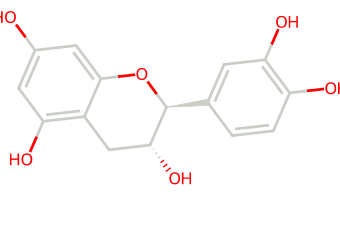
Procyanidin C1 (PCC1)
No human trial has been published.
Grade D, not yet tested: no human randomized trial has been run. This D records missing trials, not a finding that it does not work. How to read a grade →
Procyanidin C1 is a compound found in grape seeds. In a study of mice, it cleared out worn-out cells and the mice lived a little longer. The journal has since raised concerns about that study. No study in people has been published. So the claim that it slows aging in people has not been tested.
A letter describes the human evidence, not the product, the manufacturer, or the ingredient's worth.
See the full evidence record →Who responds: this record's trial reading reports no subgroup that identifies who responds.
No human randomized trial has tested this at the dose and form graded, so there is nothing for a higher letter to rest on. A Route 1 Grade D records the absence of trials. It is not a finding against the compound, and it is not a finding that the compound is safe, because neither has been established. It may turn out to work once someone tests it. The grade moves when a qualifying human trial reports.
Procyanidin C1 (PCC1) shows senolytic A compound intended to clear senescent cells: older cells that have stopped dividing but remain in tissue. activity in mouse models. No human randomized trial has been published.
The trial that would change this grade.
A positive trial of this shape would move this entry to C.
Why the current trials fall short
No human trial of PCC1 has been published. The main mouse study is under an Expression of Concern from the journal that published it (PMID PubMed ID: the permanent number the US National Library of Medicine gives a published paper. Each one links to that paper's record on PubMed. 41731120).
Why people believe itNo human sources; no published case reports of benefit; no reports of harm.
The case for PCC1, a compound found in grape seed extract, rests on a 2021 mouse study in which it cleared senescent cells and extended the remaining lifespan of old mice. That study is now under an Expression of Concern from its journal. No study of any kind has been published in people.
No study in people has been published, so there is no human source to list. The trial described above under Evidence wanted is what would move this letter.
A case report describes what happened to one or a few patients. It cannot show the treatment caused the change, and reports of success are published more often than reports of failure.
A PubMed search in October 2026 found no published case report of benefit for this use.
Searched PubMed, October 2026: case report record(s) returned. The search returned no case report of any kind for procyanidin C1.
Animal and laboratory workTwo studies in animals or cells. Not counted toward the letter.
None of this is human evidence and none of it counts toward the letter. It is listed so the reader can see what the idea rests on. Most findings in animals do not hold up when tested in people.
- MouseIn irradiated, senescent-cell-implanted and naturally aged mice, intermittent PCC1 eased physical decline and prolonged survival. In culture it suppressed the secretions of senescent cells at low doses and killed them at higher doses. PMID 34873338 Under an Expression of Concern issued by Nature Metabolism in March 2026. The authors hold a related patent.
- MouseLong-term PCC1 eased age-related structural and functional decline of the retina in naturally aged mice. PMID 38657052
How this letter has changed · latest: October 2026 · Corrected
The record said the evidence was one mouse study acting on BCL-2 pathways. Later mouse work from other groups exists (Liu et al., PNAS, 2024; PMID 38657052), and the founding paper (Xu et al., Nature Metabolism, 2021; PMID 34873338) describes reactive oxygen species and mitochondrial dysfunction, not BCL-2; its supplement-company funding and the authors' patent and senolytic company interests are now stated beside the Expression of Concern (PMID 41731120). D Route 1 unchanged. Applied the written grade definition under the editor's standing instruction of October 2026 (Arnold Sandlow, D.C.).PMID 34873338 PMID 38657052 PMID 41731120
Every change to a letter on this site is dated and published. The full evidence log →
Commercial disclosure
EBL earns no commission on any supplement it grades. Grades are assigned by published rubric before any commercial relationship exists and are never influenced by one. Full disclosure.
No established human dose. Human trials absent.
Found naturally in grape seed extract (which also contains procyanidins B1 and B2). Obtaining a specific dose of PCC1 from standard grape seed extract is not currently reliable.
The cited study was done in mice and cell cultures (PMID 34873338). There is no human trial timing on this record.
Checked against the full published report. What the cited trials did, not a schedule. Every supplement, by trial timing →
How to buy this: quality criteria, not a brand
No established human dose. Human trials are absent.
Found in grape-seed extract alongside other procyanidins, a specific PCC1 dose is not reliably obtainable from standard GSE.
Quantified PCC1 content (rarely available).
“Grape seed extract” marketed as a PCC1 dose; any human-benefit claim.
The grade and these criteria are set only from human trials. Any purchase link is convenience and does not affect the grade.
No human safety data at proposed senolytic doses. The evidence is preclinical and the dosing used in supplements is extrapolated rather than tested.
None established in humans, because no human study has been done. Procyanidins as a class show antiplatelet activity and CYP inhibition in laboratory work, so anticoagulants and narrow-window drugs are the plausible concerns.
Mechanism-based, no human interaction study located. The drug interactions described for Procyanidin C1 (PCC1) are mechanism-based. A PubMed search for human interaction, pharmacokinetic or co-administration studies pairing it with anticoagulant, antiplatelet returned no results in August 2026. The caution stands on pharmacology, not on a trial, and is labeled as such. Basis: pharmacological mechanism, not a human study. Searched PubMed in August 2026: 2 queries, 0 human results.
Research context only. No validated human biomarker A measurable sign in the body, such as a blood test value, used to track a condition or the effect of a treatment. or dosing protocol.
Primary evidenceThree papers, each linked to its PubMed record.
Xu et al. (Nature Metabolism, 2021; PMID 34873338): PCC1 selectively eliminated senescent cells, possibly by promoting reactive oxygen species production and mitochondrial dysfunction, and extended health and lifespan in mice; a supplement company funds senolytic research in the senior author's laboratory, the authors hold a related patent, and co-authors have senolytic company and patent interests. That paper is now the subject of an Expression of Concern issued by Nature Metabolism in March 2026 (PMID 41731120), so its findings are under question by the journal that published them. Liu et al. (PNAS, 2024; PMID 38657052): a later mouse study from another group reporting senolytic and senomorphic effects in the aged retina. No human trial published as of October 2026. The Grade D is unaffected, because D already reflects the absence of any human trial.
Educational use only · Not medical advice · Starting, stopping or changing any supplement or medication is a decision for your physician
These statements have not been evaluated by the Food and Drug Administration. This product is not intended to diagnose, treat, cure, or prevent any disease. The grade on this page describes the strength of published human trial evidence in the populations studied. It is not a recommendation for any individual and is not medical advice. Starting, stopping or changing any supplement or medication is a decision for your physician.
This page carries a letter. EBL takes no commission, referral fee or payment of any kind on anything it grades. No letter has been bought and none is for sale.
How this is enforced
That is not a promise, it is a build condition. Two checks run on every deploy: one refuses to publish if a commission is claimed on anything graded, the other refuses if a page names a commercial relationship that is not declared in the register. If either fails, this page does not go live. You can read how the checks work, and what they do not cover, on the evidence integrity page.
Grades move when new trials publish. A free monthly email lists every grade EBL moved, with the reason and the trial behind it: the sign-up is on the Evidence Log →