Supplement
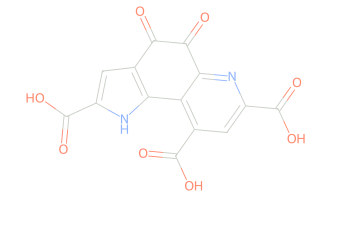
PQQ (Pyrroloquinoline Quinone)
Cognitive test performance in middle-aged and older adults; three small 12-week trials of branded PQQ, all manufacturer-linked, none independently replicated The same finding reproduced by a separate research group. A result seen once can be chance or bias; a replicated one is harder to explain away..
Grade C: human trials exist, but they are small, mixed or not yet repeated. This is not a finding that it does not work. How to read a grade →
PQQ is a compound found in foods like kiwi and parsley. It is sold for energy and brain health. Three small studies of middle-aged and older adults found better scores on some thinking tests after 12 weeks. All three used the same branded product and were linked to its maker. No outside group has repeated the result yet.
A letter describes the human evidence, not the product, the manufacturer, or the ingredient's worth.
See the full evidence record →Who responds: this record's trial reading reports no subgroup that identifies who responds.
Cognitive test performance in middle-aged and older adults, on small randomized trials.
Commercial disclosure
EBL earns no commission on any supplement it grades. A purchase made through the dispensary link below pays EBL nothing, the practitioner discount goes to you in full. The dispensary is Fullscript, a practitioner dispensary, and many of the professional-grade brands in it are sold mainly through practitioners rather than in health food stores. Grades are assigned by published rubric before any commercial relationship exists and are never influenced by one. Full disclosure.
10–20 mg/day
BioPQQ (Mitsubishi Gas Chemical) is the most studied branded form. Often combined with CoQ10.
The cited studies gave PQQ once daily (PMID PubMed ID: the permanent number the US National Library of Medicine gives a published paper. Each one links to that paper's record on PubMed. 27526146) or as a drink dosed by body weight (PMID 24231099). Neither summary states a time of day or whether it was taken with food.
Checked against the published summaries; the full papers could not be read. What the cited trials did, not a schedule. Every supplement, by trial timing →
Pregnancy and breastfeeding, on absence of data. High doses have produced headache and sleep disturbance.
No drug interaction has been identified in a human trial, and very little has been looked for. PQQ is redox-active, so the general antioxidant caution around chemotherapy and radiotherapy applies as an oncology decision.
Mechanism-based, no human interaction study located. The drug interactions described for PQQ (Pyrroloquinoline Quinone) are mechanism-based. A PubMed search for human interaction, pharmacokinetic or co-administration studies pairing it with chemotherapy returned no results in August 2026. The caution stands on pharmacology, not on a trial, and is labeled as such. Basis: pharmacological mechanism, not a human study. Searched PubMed in August 2026: 1 query, 0 human results.
Energy levels, cognitive self-report, mitochondrial function (no validated consumer test)
Primary evidenceFive papers, each linked to its PubMed record.
Three small randomized placebo-controlled trials measured cognition, all with a branded PQQ disodium salt and all 12 weeks. Itoh et al. (Adv Exp Med Biol, 2016; PMID 26782228): 41 healthy older adults, BioPQQ 20 mg/day; Stroop interference improved against placebo An inactive substitute made to look like the real treatment, so participants cannot tell which one they received., and a visual-spatial test improved only in the half with lower baseline scores. Shiojima et al. (J Am Nutr Assoc, 2022; PMID 34415830): 64 healthy adults aged 40 to 80, mnemoPQQ 21.5 mg/day; Cognitrax was the primary outcome and several domains improved against placebo. Tamakoshi et al. (Food Funct, 2023; PMID 36807425): adults aged 20 to 65, PQQ 20 mg/day; composite and verbal memory improved at 12 weeks. Two further trials measured no cognition: Nakano et al. (Adv Exp Med Biol, 2016; PMID 27526146) measured prefrontal blood flow by near-infrared spectroscopy, and Harris et al. (J Nutr Biochem, 2013; PMID 24231099) measured blood inflammatory markers in 10 young adults with no placebo arm. Grade C: small manufacturer-linked trials on cognitive test scores, none independently replicated; nothing here speaks to dementia prevention or longevity.
Educational use only · Not medical advice · Starting, stopping or changing any supplement or medication is a decision for your physician
These statements have not been evaluated by the Food and Drug Administration. This product is not intended to diagnose, treat, cure, or prevent any disease. The grade on this page describes the strength of published human trial evidence in the populations studied. It is not a recommendation for any individual and is not medical advice. Starting, stopping or changing any supplement or medication is a decision for your physician.
This page carries a letter. EBL takes no commission, referral fee or payment of any kind on anything it grades. No letter has been bought and none is for sale.
How this is enforced
That is not a promise, it is a build condition. Two checks run on every deploy: one refuses to publish if a commission is claimed on anything graded, the other refuses if a page names a commercial relationship that is not declared in the register. If either fails, this page does not go live. You can read how the checks work, and what they do not cover, on the evidence integrity page.
Grades move when new trials publish. A free monthly email lists every grade EBL moved, with the reason and the trial behind it: the sign-up is on the Evidence Log →