Supplement
Piperlongumine
No human trial has been run, and no human dose or safety data exist.
Grade D, not yet tested: no human randomized trial has been run. This D records missing trials, not a finding that it does not work. How to read a grade →
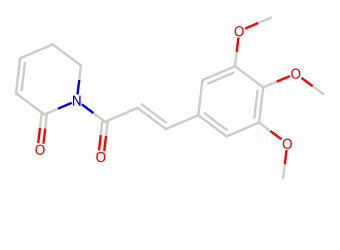
Piperlongumine is a compound from long pepper. It is studied for clearing out worn-out cells, an idea linked to slowing aging. It has only been tested on cells grown in a lab, by a group that holds a patent on it. It has never been tested in people, and there is no known safe dose for people.
A letter describes the human evidence, not the product, the manufacturer, or the ingredient's worth.
See the full evidence record →Who responds: this record's trial reading reports no subgroup that identifies who responds.
No human randomized trial has tested this at the dose and form graded, so there is nothing for a higher letter to rest on. A Route 1 Grade D records the absence of trials. It is not a finding against the compound, and it is not a finding that the compound is safe, because neither has been established. It may turn out to work once someone tests it. The grade moves when a qualifying human trial reports.
Senolytic A compound intended to clear senescent cells: older cells that have stopped dividing but remain in tissue. activity in cultured cells only, from a group holding a patent on it; no human trial of any kind.
The trial that would change this grade.
A positive trial of this shape would move this entry to C.
Why the current trials fall short
No human trial, dose or safety data exist for piperlongumine. Everything known about it as a senolytic comes from cells in culture.
Why people believe itNo human sources; no published case reports of benefit; no reports of harm.
The case for piperlongumine, a compound from the long pepper plant, rests on laboratory work: in a dish it killed senescent human cells while sparing normal ones. Its discoverers patented it as a lead for anti-aging drugs. No study of any kind has been published in people.
No study in people has been published, so there is no human source to list. The trial described above under Evidence wanted is what would move this letter.
A case report describes what happened to one or a few patients. It cannot show the treatment caused the change, and reports of success are published more often than reports of failure.
A PubMed search in October 2026 found no published case report of benefit for this use.
Searched PubMed, October 2026: case report record(s) returned. The search returned no case report of any kind for piperlongumine.
Animal and laboratory workOne study in animals or cells. Not counted toward the letter.
None of this is human evidence and none of it counts toward the letter. It is listed so the reader can see what the idea rests on. Most findings in animals do not hold up when tested in people.
- Cell culturePiperlongumine preferentially killed senescent human fibroblasts (WI-38 cells) in culture by apoptosis, and worked together with the senolytic ABT-263. PMID 27913811 The authors filed a patent application on piperlongumine and its analogs as anti-aging agents.
How this letter has changed · latest: October 2026 · Corrected
The record said piperlongumine kills senescent cells by pushing reactive oxygen species past a threshold, shown in cells and animals. The one cited paper (Wang et al., Aging, 2016; PMID PubMed ID: the permanent number the US National Library of Medicine gives a published paper. Each one links to that paper's record on PubMed. 27913811) reports apoptosis in cultured fibroblasts that did not require reactive oxygen species, and its abstract reports no animal work. Its authors' patent application and senolytic company ties are now stated. The advice-shaped sentence in the form note is replaced with a description. D Route 1 unchanged. Applied the written grade definition under the editor's standing instruction of October 2026 (Arnold Sandlow, D.C.).PMID 27913811
Every change to a letter on this site is dated and published. The full evidence log →
Commercial disclosure
EBL earns no commission on any supplement it grades. Grades are assigned by published rubric before any commercial relationship exists and are never influenced by one. Full disclosure.
No established human dose. Human trials absent.
Piperlongumine is an alkaloid derived from long pepper (Piper longum). Efficacy evidence is preclinical, and there is no established human supplement form or dosing protocol to describe; products sold under the name have no trial behind them.
The cited study was done in cell cultures (PMID 27913811). There is no human trial timing on this record.
Checked against the full published report. What the cited trials did, not a schedule. Every supplement, by trial timing →
How to buy this: quality criteria, not a brand
No established human dose. Human trials are absent.
An alkaloid from long pepper. All meaningful evidence is preclinical (cell/animal).
Third-party purity, if you proceed, but note the D grade.
Any human-benefit claim; this is preclinical-only.
The grade and these criteria are set only from human trials. Any purchase link is convenience and does not affect the grade.
There is no human safety data at senolytic doses, and it is not sold as a standardized supplement with verified content, so dose is not knowable from the label. That is the contraindication.
None established in humans, because no human study has been done. Piperlongumine is a piperine relative and piperine is a well-known inhibitor of CYP3A4 and P-glycoprotein that raises blood levels of many drugs, which makes an unstudied interaction profile a live concern rather than an academic one.
The piperine comparison the record draws does have human evidence behind it. The record argues that piperlongumine's unstudied interaction profile is a live concern because its relative piperine inhibits CYP3A4 and P-glycoprotein. The piperine half of that is measured in people: a clinical study in healthy volunteers found that 20 mg of piperine raised curcumin bioavailability The share of a dose that reaches the bloodstream in a form the body can use. by a large multiple. That is the evidence the analogy rests on. It is an analogy and not a finding about piperlongumine, which is why the separate absence record on this supplement matters as much as this one. Shoba et al. (Planta Medica, 1998;64(4):353-6; PMID 9619120): clinical study of the influence of piperine on the pharmacokinetics of curcumin in rats and in healthy human volunteers.
Thirty-nine records on piperlongumine itself, every one preclinical. The record says no human study has been done and the search agrees. Thirty-nine records returned in August 2026, all of them cell lines, mouse models, nanoparticle formulations and combination oncology work. Nothing has given piperlongumine to a person, which means nothing has measured what it does to a drug either. Basis: pharmacological mechanism, not a human study. Searched PubMed in August 2026: 1 query, 39 human results.
Research context only. No validated human biomarker A measurable sign in the body, such as a blood test value, used to track a condition or the effect of a treatment. or dosing protocol.
Primary evidenceOne paper, linked to its PubMed record.
Not tested in humans. Preclinical senolytic activity, Wang et al. (Aging, 2016; PMID 27913811): piperlongumine preferentially killed senescent human WI-38 fibroblasts in culture by apoptosis, a process the authors report did not require reactive oxygen species; the abstract reports cell culture only. The authors filed a patent application on piperlongumine and its analogs as anti-aging agents, and two are a consultant to and a co-founder of a senolytic company. No human trial, dose, or safety data exist.
Educational use only · Not medical advice · Starting, stopping or changing any supplement or medication is a decision for your physician
These statements have not been evaluated by the Food and Drug Administration. This product is not intended to diagnose, treat, cure, or prevent any disease. The grade on this page describes the strength of published human trial evidence in the populations studied. It is not a recommendation for any individual and is not medical advice. Starting, stopping or changing any supplement or medication is a decision for your physician.
This page carries a letter. EBL takes no commission, referral fee or payment of any kind on anything it grades. No letter has been bought and none is for sale.
How this is enforced
That is not a promise, it is a build condition. Two checks run on every deploy: one refuses to publish if a commission is claimed on anything graded, the other refuses if a page names a commercial relationship that is not declared in the register. If either fails, this page does not go live. You can read how the checks work, and what they do not cover, on the evidence integrity page.
Grades move when new trials publish. A free monthly email lists every grade EBL moved, with the reason and the trial behind it: the sign-up is on the Evidence Log →