Supplement
NAD+ (Direct Oral Supplementation)
No randomized trial has tested oral NAD+ Nicotinamide adenine dinucleotide, a molecule cells use in energy metabolism. Its level falls with age in some tissues. itself on a clinical, functional or validated-scale outcome, and a 2026 systematic review A review that searches for every study on a question using a method set in advance, then assesses them together. found none for oral or intravenous NAD+.
Grade D, not yet tested: no human randomized trial has been run. This D records missing trials, not a finding that it does not work. How to read a grade →
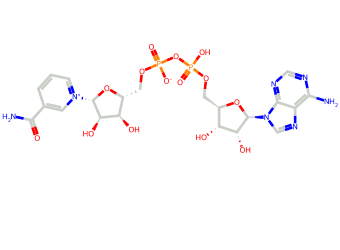
NAD is a molecule cells use to make energy, and its levels fall with age. This record covers NAD taken directly as a pill. No study has tested NAD pills on health, energy or how people feel. A review in 2026 found none for pills or for IV drips. The only study looked at blood levels for five days. NMN and NR are different products.
A letter describes the human evidence, not the product, the manufacturer, or the ingredient's worth.
See the full evidence record →Who responds: this record's trial reading reports no subgroup that identifies who responds.
No human randomized trial has tested this at the dose and form graded, so there is nothing for a higher letter to rest on. A Route 1 Grade D records the absence of trials. It is not a finding against the compound, and it is not a finding that the compound is safe, because neither has been established. It may turn out to work once someone tests it. The grade moves when a qualifying human trial reports.
No randomized trial of oral NAD+ on a health outcome; one 5-day pharmacokinetic study of a proprietary form; NMN and NR are different molecules.
The trial that would change this grade.
A positive trial of this shape would move this entry to C.
Why the current trials fall short
The only randomized trial of an oral NAD+ product ran 5 days, used a proprietary modified formulation from the company developing it, and measured NAD inside blood cells rather than any health outcome (PMID PubMed ID: the permanent number the US National Library of Medicine gives a published paper. Each one links to that paper's record on PubMed. 42530810). Ordinary NAD+ appears to be broken down in the gut, which is why plasma NAD did not rise. The precursors NMN and NR have their own records and their own trials.
Why people believe itOne human source; one published case report of benefit; no reports of harm.
The case for taking NAD+ directly is simple: NAD+ falls with age, so swallowing or infusing it should restore it, and clinics offer NAD+ infusions on that basis. Taken by mouth, ordinary NAD+ appears to be broken down in the gut before it reaches the blood.
What supporters point to, and what each source actually shows. None of it is enough to move this letter higher; the trial described above under Evidence wanted is what would.
- Human trial, blood or body markerIn a 5-day trial of a modified NAD+ formulation, NAD inside blood cells rose 53 percent compared with placebo An inactive substitute made to look like the real treatment, so participants cannot tell which one they received., while NAD in the plasma did not. The formulation's developers are linked to the trial, and no health outcome was measured. PMID 42530810
A case report describes what happened to one or a few patients. It cannot show the treatment caused the change, and reports of success are published more often than reports of failure.
- A 49-year-old woman with rheumatoid arthritis who received four NAD+ infusions for anti-aging reasons reported less pain and swelling, and her joint scans improved. Infusions into a vein, not NAD+ taken by mouth, in one patient. PMID 42751848
Searched PubMed, October 2026: 19 case report record(s) returned. One report describes NAD+ given to a patient, by infusion into a vein, and is listed. None describes NAD+ taken by mouth. The rest concern inherited disorders of NAD metabolism, nicotinamide (a different compound) and unrelated conditions.
How this letter has changed · latest: October 2026 · Corrected
The best-use line and ref said intact oral NAD+ had no controlled human trial while the form note described one. The one randomized trial (Kornilov et al., GeroScience, 2026; PMID 42530810) is a 5-day pharmacokinetic study of a proprietary formulation whose authors are linked to its developer; it raised whole-blood intracellular NAD and left plasma NAD unchanged, and measured no outcome. The record now says no randomized trial has tested oral NAD+ on any health outcome, cites the 2026 systematic review that found none for oral or intravenous NAD+ (Gallagher et al., Aging Res Rev, 2026; PMID 41655607), corrects the preclinical-only flags, and notes that NADH trials are a different form in combination. D Route 1 unchanged. Applied the written grade definition under the editor's standing instruction of October 2026 (Arnold Sandlow, D.C.).PMID 41655607 PMID 42530810
Every change to a letter on this site is dated and published. The full evidence log →
Commercial disclosure
EBL earns no commission on any supplement it grades. Grades are assigned by published rubric before any commercial relationship exists and are never influenced by one. Full disclosure.
No well-established oral dose. Oral bioavailability The share of a dose that reaches the bloodstream in a form the body can use. as intact NAD+ is questioned; most is hydrolyzed in the gut to nicotinamide before absorption. Some liposomal and sublingual formulations claim improved delivery.
Direct oral NAD+ has historically had limited human bioavailability evidence. A 2026 randomized trial of a proprietary physicochemically modified oral NAD+ formulation increased whole-blood intracellular NAD over five days without raising plasma NAD (PMID 42530810); its authors hold positions in or stock of the company developing the formulation. Treat that result as formulation-specific; it does not validate conventional or liposomal oral NAD+ products, nor does it establish clinical benefit.
No cited study gave NAD+ itself by mouth. In the cited NMN study, 125 mg was taken in the morning and 125 mg in the evening (PMID 35479740). In the cited NR study, a single 900 mg dose was taken at 5 a.m., four hours before a brain scan (PMID 39044608).
Checked against the full published reports. What the cited trials did, not a schedule. Every supplement, by trial timing →
How to buy this: quality criteria, not a brand
No well-established oral dose, oral NAD+ is largely hydrolyzed in the gut before absorption.
NMN and NR are the clinically validated precursor routes to raise NAD+. IV/IM NAD+ is a separate protocol.
Bioavailability data (rarely provided for oral NAD+).
“Direct NAD+” absorption claims without data. NMN and NR are the oral precursors with human trial data.
The grade and these criteria are set only from human trials. Any purchase link is convenience and does not affect the grade.
Active malignancy, as a precaution rather than a finding: NAD+ is required for cell replication The same finding reproduced by a separate research group. A result seen once can be chance or bias; a replicated one is harder to explain away. and no trial has tested direct NAD+ in cancer patients. Pregnancy. Intravenous administration carries infusion-site and infection risks that oral forms do not, and it is often given outside any regulated setting.
No drug interaction has been documented in a human trial. Diabetes medication: NAD+ precursors have been studied for metabolic effects, so additive glucose lowering is plausible and unmeasured. Chemotherapy: an oncology decision, on the same reasoning as the contraindication above.
Nothing has been measured: no human trial has given direct oral NAD+ during chemotherapy or alongside diabetes medication. Both assertions on this record are honest about being unmeasured and the search confirms it. A PubMed search for randomized trials pairing NAD+ or its precursors with chemotherapy or cancer patients returned nothing, and the additive glucose statement rests on metabolic trials in people without diabetes rather than on any trial in people taking a glucose-lowering drug. The chemotherapy caution is therefore borrowed whole from the class evidence, and the class evidence did not study this compound either. The class-level human evidence is real but it is not about this compound. Neither study tested it, and neither result is statistically significant Unlikely to be explained by chance alone at the threshold the study set. It says nothing about whether the difference is large enough to matter. on its own: the breast cancer analysis was observational Research that watches what people already do rather than assigning a treatment. It can show that two things travel together, not that one causes the other. within a randomized trial and its antioxidant signal did not reach significance, and the head and neck trial's recurrence signal was a trend. Two independent trends in the same direction, on hard endpoints An outcome that matters directly to a person and is counted without judgment, such as death, heart attack, stroke or fracture., in a setting where the mechanism predicts exactly that direction, is why the caution exists. It is not a measured effect for any supplement here. Ambrosone et al. (Journal of Clinical Oncology, 2020;38(8):804-814; PMID 31855498): prospective study of 1,134 patients ancillary to the randomized SWOG S0221 breast cancer trial; any antioxidant use both before and during chemotherapy carried an adjusted hazard ratio How often an event happened in the treated group compared with the control group over the same period. A ratio of 0.80 means 20 percent fewer events. for recurrence of 1.41 (95% CI 0.98 to 2.04, P = .06). Bairati et al. (Journal of Clinical Oncology, 2005;23(24):5805-13; PMID 16027437): randomized double-blind placebo-controlled trial, 540 head and neck cancer patients given alpha-tocopherol and beta-carotene during radiotherapy; acute adverse effects fell, and local recurrence tended to rise (hazard ratio 1.37, 95% CI 0.93 to 2.02).
For direct oral NAD+, plasma NAD alone should not be used as the response marker. A 2026 randomized trial of a proprietary oral NAD+ formulation increased whole-blood intracellular NAD without increasing plasma NAD. This is formulation-specific and short-term; there is still no validated clinical outcome marker for ordinary oral NAD+ supplements.
Primary evidenceSix papers, each linked to its PubMed record.
Not established in humans on any outcome. Kornilov et al. (GeroScience, 2026; PMID 42530810): double-blind randomized placebo-controlled phase 0/1b trial, 60 healthy adults aged 45 to 75 randomized and 50 analyzed, 5 days of a proprietary physicochemically modified oral NAD+ formulation; whole-blood intracellular NAD rose 53 percent against placebo while plasma NAD was unchanged, consistent with gut hydrolysis of ordinary NAD+ to nicotinamide; the authors are linked to the company developing the formulation; no clinical outcome. Gallagher et al. (Aging Res Rev, 2026; PMID 41655607): systematic review of 33 human intervention studies of NAD-related compounds; no eligible outcome trial evaluated oral, intravenous or intramuscular NAD+ itself, and the precursor trials showed biochemical target engagement with heterogeneous and often null functional outcomes. The validated oral route is the precursors: nicotinamide riboside is orally bioavailable in humans, Trammell et al. (Nat Commun, 2016; PMID 27721479). The precursor trials are Yoshino et al. (Science, 2021; PMID 33888596): NMN improved muscle insulin sensitivity in postmenopausal women with prediabetes who were overweight or obese; Okabe et al. (Front Nutr, 2022; PMID 35479740): oral NMN raised blood NAD+ levels in healthy subjects; and Nanga et al. (Magn Reson Med, 2024; PMID 39044608): acute nicotinamide riboside raised cerebral NAD+ measured in vivo. None of them tested intact oral NAD+, which is why this entry is graded D and they are not. See NMN (Grade C) and NR (Grade C). Oral NADH, the reduced form, has small trials in chronic fatigue syndrome mostly combined with coenzyme Q10; it is a different form and a combination, and does not grade this record.
Educational use only · Not medical advice · Starting, stopping or changing any supplement or medication is a decision for your physician
These statements have not been evaluated by the Food and Drug Administration. This product is not intended to diagnose, treat, cure, or prevent any disease. The grade on this page describes the strength of published human trial evidence in the populations studied. It is not a recommendation for any individual and is not medical advice. Starting, stopping or changing any supplement or medication is a decision for your physician.
This page carries a letter. EBL takes no commission, referral fee or payment of any kind on anything it grades. No letter has been bought and none is for sale.
How this is enforced
That is not a promise, it is a build condition. Two checks run on every deploy: one refuses to publish if a commission is claimed on anything graded, the other refuses if a page names a commercial relationship that is not declared in the register. If either fails, this page does not go live. You can read how the checks work, and what they do not cover, on the evidence integrity page.
Grades move when new trials publish. A free monthly email lists every grade EBL moved, with the reason and the trial behind it: the sign-up is on the Evidence Log →