Supplement · graded by use, two uses
Methylene Blue (low-dose)
Memory retrieval and contextual memory after a single oral dose of about 260 mg.
Grade C: human trials exist, but they are small, mixed or not yet repeated. This is not a finding that it does not work. How to read a grade →
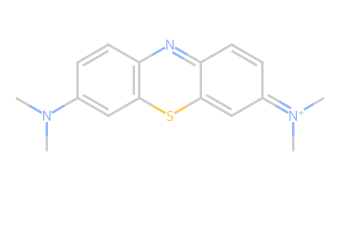
Methylene blue is a blue dye that is also a prescription drug. In two small studies from one lab, a single dose of about 260 mg helped people hold on to what they had learned in a therapy session. The low daily doses sold in stores have never been tested for memory. A 6-month study at a daily dose found no gain in thinking. It interacts with some medicines, including some antidepressants.
The C belongs to one of the two uses graded on this record. The other one carries its own letter.
As studied, and the trials
Telch et al. (Am J Psychiatry, 2014; PMID PubMed ID: the permanent number the US National Library of Medicine gives a published paper. Each one links to that paper's record on PubMed. 25018057): a single 260 mg dose after exposure sessions improved contextual memory as a secondary measure and retention of fear extinction only in people with low end-of-session fear. Rodriguez et al. (Radiology, 2016; PMID 27351678): one oral dose in 26 healthy adults, 7 percent more correct answers on short-term memory retrieval one hour later, with increased functional MRI response. Both trials are from the same University of Texas laboratory, so they are not independent replication The same finding reproduced by a separate research group. A result seen once can be chance or bias; a replicated one is harder to explain away.. Where cognition was measured over months, 195 mg/day in bipolar disorder changed nothing (Alda et al., 2017; PMID 27284082). Small unreplicated single-dose positives are C.
As studied, and the trials
No randomized trial has tested daily low-dose methylene blue for memory or cognition in anyone. The positive trials are single doses of about 260 mg from one laboratory, roughly a hundred times what consumer low-dose products deliver per day, and the one multi-week trial measuring cognition (Alda et al., 2017; PMID 27284082, 195 mg/day) was null. The related methylthioninium compound LMTM failed its phase 3 Alzheimer's trial, a different form and population that does not grade this record. Route 1 No human randomized trial has been run, so the record rests on animal or mechanistic evidence only. One of the two routes to the lowest letter on EBL's scale.: untested as sold.
Read the grade that matches your goal. How EBL grades by use →
- Dose studied
- 260 mg (single acute dose)
- Form graded
- Pharmaceutical-grade methylene blue (USP)
- Evidence behind the C
- PMID 25018057 →PMID 27351678 →PMID 27284082 →
A letter describes the human evidence, not the product, the manufacturer, or the ingredient's worth.
See the full evidence record →Memory retrieval after a single oral dose of about 260 mg, two small randomized trials from one laboratory.
As studied: dose, form, population and duration for every use
A grade describes the intervention that was tested. Where the product on the shelf differs from it, this says so.
The trial that would change this grade.
A positive trial of this shape, supported by further trials, would move this entry to B.
Why the current trials fall short
The C rests on single doses in small trials from one research group. Daily use at the doses consumer products supply has not been tested, and the one multi-week trial that measured cognition found no effect.
Why people believe itOne human source; no published case reports of benefit; two reports of harm.
The case for methylene blue is that at low doses it helps mitochondria pass electrons along when their normal chain falters, and it has been used in medicine for over a century. In one research group's trials, a single oral dose improved memory retrieval and changed brain activity on scans. It is sold as a nootropic and for longevity on that basis.
What supporters point to, and what each source actually shows. None of it is enough to move this letter higher; the trial described above under Evidence wanted is what would.
- Human trial, blood or body markerIn 26 healthy adults, one low oral dose raised brain activity on MRI during attention and memory tasks and increased correct memory answers by 7 percent, against placebo An inactive substitute made to look like the real treatment, so participants cannot tell which one they received., an hour later. One dose, measured by brain scan. PMID 27351678
A case report describes what happened to one or a few patients. It cannot show the treatment caused the change, and reports of success are published more often than reports of failure.
A PubMed search in October 2026 found no published case report of benefit for this use.
- A report of life-threatening serotonin syndrome, a dangerous excess of the brain chemical serotonin, from methylene blue taken together with citalopram, an antidepressant. No abstract is indexed; the title reports the interaction. PMID 30855287
- A patient with cancer developed serotonin syndrome from methylene blue given together with venlafaxine, an antidepressant. PMID 31232145
Searched PubMed, October 2026: 22 case report record(s) returned. 19 describe serotonin syndrome after methylene blue, nearly all given by vein during surgery or intensive care in patients taking antidepressants or other drugs that raise serotonin, and one after a urinary pain medicine containing it; two are listed. None describes a person taking methylene blue as a supplement. The other three concern a staining test, a patient in whom it could not be used, and a dog.
How this letter has changed · latest: October 2026 · Changed
The record's endpoint, memory and cognitive measures, rested on Telch et al. (2014; PMID 25018057), whose primary question was retention of fear extinction; memory was secondary. The closest test of the stated endpoint, Rodriguez et al. (Radiology, 2016; PMID 27351678), one oral dose in 26 healthy adults with 7 percent better retrieval, was not cited; it is from the same laboratory, so the two do not replicate each other. The one trial measuring cognition over months, 195 mg/day in bipolar disorder (Alda et al., 2017; PMID 27284082), was null and is added. The name says low-dose, but the trials used about 260 mg once; the daily few-milligram use consumer products supply has no randomized trial and now carries its own D Route 1 row with an absence record. The headline stays C on the single-dose row. The serotonin syndrome and G6PD cautions were already on the record. Applied the written grade definition under the editor's standing instruction of October 2026 (Arnold Sandlow, D.C.).PMID 25018057 PMID 27284082 PMID 27351678
Every change to a letter on this site is dated and published. The full evidence log →
Commercial disclosure
EBL earns no commission on any supplement it grades. The dispensary is Fullscript, a practitioner dispensary, and many of the professional-grade brands in it are sold mainly through practitioners rather than in health food stores. Grades are assigned by published rubric before any commercial relationship exists and are never influenced by one. Full disclosure.
No dose is published here. This record carries no authored dose, because the cited trials do not converge on a single figure. Each trial cited on this page states the dose it used, and EBL has not turned those into a recommendation.
Standardized forms were used in the cited trials; product quality varies.
In Telch 2014, capsules were taken around therapy sessions: one after the session, one at bedtime that night and one on waking (PMID 25018057). In Rodriguez 2016 a single dose was given one hour before testing (PMID 27351678). Neither was a daily schedule.
Checked against the full report for 1 of the 2 cited studies, and the published summary for the rest. What the cited trials did, not a schedule. Every supplement, by trial timing →
G6PD deficiency: methylene blue can trigger hemolysis. Pregnancy. This is a prescription drug in most of the world before it is anything else, and its monoamine oxidase activity is not a minor property of it.
Serotonergic medication is the principal hazard: SSRIs, SNRIs, MAOIs, tricyclic antidepressants, triptans and tramadol. Methylene blue is itself a potent inhibitor of monoamine oxidase A, so the combination is an MAOI plus a serotonergic drug and can produce serotonin toxicity.
Methylene blue is an MAO-A inhibitor. Methylene blue inhibits monoamine oxidase A, which is the mechanism behind reported serotonin toxicity when it is given to people taking serotonergic drugs. Ramsay et al. (British Journal of Pharmacology, 2007; PMID 17721552): methylene blue inhibits monoamine oxidase A, confirming the predicted route to serotonin toxicity. Gillman (Journal of Psychopharmacology, 2011; PMID 20142303): review of the reported CNS toxicity cases and the interaction pattern that predicts them.
For the single-dose use, the trials tested memory at one hour to one month; there is no validated protocol for ongoing use. Urine color change is a harmless compliance marker. Methylene blue is a potent MAOI at doses above 0.5 mg/kg, so combining it with SSRIs, MAOIs or other serotonergic agents carries a risk of serotonin syndrome.
Primary evidenceThree papers, each linked to its PubMed record.
Telch et al. (American Journal of Psychiatry, 2014; PMID 25018057): randomized placebo-controlled trial, 42 adults with marked claustrophobic fear, a single 260 mg dose given immediately after six 5-minute exposure sessions; the primary question was retention of fear extinction at one month, better on methylene blue among participants with low end-of-session fear and worse among those with high fear; contextual memory was a secondary measure. Rodriguez et al. (Radiology, 2016; PMID 27351678): 26 healthy adults, randomized double-blind placebo-controlled, one oral dose the authors call low-dose; functional MRI response during attention and short-term memory tasks increased and correct memory retrieval rose 7 percent one hour later. Both trials come from the same laboratory, so neither replicates the other. Alda et al. (British Journal of Psychiatry, 2017; PMID 27284082): double-blind crossover A trial design in which each participant receives both the treatment and the comparison, one after the other, and serves as their own control., 37 patients with bipolar disorder on lamotrigine, 195 mg/day against a 15 mg comparator for 6 months; depression and anxiety scores improved, cognitive measures did not. Grade C: small single-dose positives from one group, with the only multi-week cognitive measurement null; daily low-dose use is untested and graded D on its own row. The wider longevity evidence is preclinical.
Educational use only · Not medical advice · Starting, stopping or changing any supplement or medication is a decision for your physician
These statements have not been evaluated by the Food and Drug Administration. This product is not intended to diagnose, treat, cure, or prevent any disease. The grade on this page describes the strength of published human trial evidence in the populations studied. It is not a recommendation for any individual and is not medical advice. Starting, stopping or changing any supplement or medication is a decision for your physician.
Trials report an average. This box says whether any trial on this record looked at who the result applies to, and what it found.
For Memory retrieval and contextual memory after a single oral dose of about 260 mg, Grade C · Subgroup tested, effect differedTelch et al. (Am J Psychiatry, 2014; PMID 25018057) found better retention of fear extinction only in people with low end-of-session fear. A subgroup result shows who the effect appeared in within these trials. It does not change the letter.
This page carries a letter. EBL takes no commission, referral fee or payment of any kind on anything it grades. No letter has been bought and none is for sale.
How this is enforced
That is not a promise, it is a build condition. Two checks run on every deploy: one refuses to publish if a commission is claimed on anything graded, the other refuses if a page names a commercial relationship that is not declared in the register. If either fails, this page does not go live. You can read how the checks work, and what they do not cover, on the evidence integrity page.
How EBL searched for the trials (1 search)
The search that was run, what it returned, and what was left out and why, so the absence of evidence can be checked as well as its presence.
methylene blue[tiab] AND (memory[tiab] OR cognit*[tiab]) AND randomized controlled trial[pt] AND humans[mesh]Grades move when new trials publish. A free monthly email lists every grade EBL moved, with the reason and the trial behind it: the sign-up is on the Evidence Log →