Supplement · graded by use, six uses
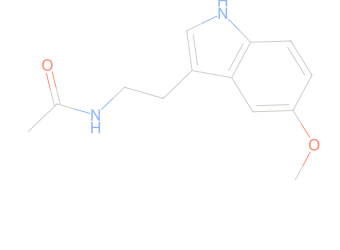
Melatonin
Sleep onset timing in delayed sleep phase disorder.
Melatonin is a hormone the body makes at night as a signal for sleep. As a pill, it helps most with timing. It moved sleep earlier in people whose body clock runs late, and it eased jet lag after flights across five or more time zones. For ordinary trouble falling asleep, it helped only a little, about 7 minutes faster in one review. Taken during the day, it can confuse the body clock.
The B belongs to one of the six uses graded on this record. The other five carry their own letters.
As studied, and the trials
Mixed. Pooled randomized trials find a small shortening of sleep onset: 7.2 minutes in insomnia (Buscemi et al., J Gen Intern Med, 2005; PMID PubMed ID: the permanent number the US National Library of Medicine gives a published paper. Each one links to that paper's record on PubMed. 16423108), about 4 minutes across 17 small studies mostly in healthy people (Brzezinski et al., Sleep Med Rev, 2005; PMID 15649737), 7 minutes across 19 trials of adults and children with primary sleep disorders (Ferracioli-Oda et al., PLoS One, 2013; PMID 23691095), and about 5 minutes objectively for prolonged-release melatonin (Maruani et al., J Sleep Res, 2023; PMID 37434463). The adult-only analysis of chronic insomnia found no significant effect on sleep onset, total sleep time or sleep efficiency (Choi et al., Sleep Med Rev, 2022; PMID 36179487), and Buscemi concluded melatonin is not effective for most primary sleep disorders with short-term use. Most pooled outcomes are polysomnographic or actigraphic, so the endpoint The outcome a trial measures to decide whether the treatment worked, such as heart attacks, blood pressure or a symptom score. is measured function rather than self-report, but an effect of a few minutes that an adult-only analysis cannot detect is mixed evidence: C. The pooled trials span doses; this use does not grade a specific dose.
As studied, and the trials
Sleep onset measured by polysomnography or actigraphy is a qualifying endpoint, and the trials point the same way. Buscemi et al. (J Gen Intern Med, 2005; PMID 16423108) pooled two trials: sleep onset 38.8 minutes earlier. Sletten et al. (PLoS Med, 2018; PMID 29912983): 116 patients, 0.5 mg one hour before desired bedtime with behavioral scheduling against placebo An inactive substitute made to look like the real treatment, so participants cannot tell which one they received. with the same scheduling, actigraphic sleep onset 34 minutes earlier. Kayumov et al. (Psychosom Med, 2001; PMID 11211063): 22 patients, 5 mg, double-blind Neither the participants nor the people assessing them know who received the real treatment until the trial ends. crossover A trial design in which each participant receives both the treatment and the comparison, one after the other, and serves as their own control., polysomnographic sleep onset latency shorter than on placebo. Dahlitz et al. (Lancet, 1991; PMID 1674014): 8 patients, 5 mg, sleep onset 82 minutes earlier on sleep logs. Mundey et al. (Sleep, 2005; PMID 16295212): 13 patients, 0.3 or 3 mg, circadian phase advanced. EBL's published update rule requires more than 30 participants in a trial before it can move a grade. Only Sletten et al. meets it; the trials that repeat its finding have 8 to 22 participants. One qualifying trial supported by smaller trials that agree is the written B definition, not a replicated The same finding reproduced by a separate research group. A result seen once can be chance or bias; a replicated one is harder to explain away. A. Limits stated beside the letter: 4 weeks per trial, one crossover, and the largest trial gave melatonin alongside a sleep-scheduling program that both arms received.
As studied, and the trials
Herxheimer and Petrie (Cochrane Database Syst Rev, 2002; PMID 12076414): ten randomized placebo-controlled trials; nine found melatonin taken at the destination bedtime reduced self-rated jet lag after flights across five or more time zones, doses of 0.5 to 5 mg similarly effective with faster sleep onset at 5 mg, benefit larger eastward and with more time zones. The one null trial is the largest: Spitzer et al. (Am J Psychiatry, 1999; PMID 10484950), 257 travelers, 0.5 and 5 mg, no effect on a validated jet lag scale. Nine independent positive trials against one null are replicated evidence, and the endpoint is self-rated, which caps the letter at B.
As studied, and the trials
Al-Aama et al. (Int J Geriatr Psychiatry, 2011; PMID 20845391): randomized placebo-controlled trial, 145 adults aged 65 and over on a medical ward, 0.5 mg melatonin nightly; delirium 12.0% against 31.0%. Jaiswal et al. (Am J Med, 2018; PMID 29729237): 69 inpatients on medical wards, 3 mg nightly; delirium 22.2% on melatonin against 9.1% on placebo, not significant. Al Alawi et al. (RESTORE, BMJ Open, 2026; PMID 41592826): 109 patients on general medical wards, 5 or 8 mg nightly, stopped for futility. Chen et al. (Molecular Neurobiology, 2016; PMID 26189834): meta-analysis A study that pools the numbers from several trials into one combined estimate. of four randomized trials, 669 patients; pooled delirium incidence not significant (RR 0.41, 95% CI 0.15 to 1.13, P=0.08), medical-ward subgroup significant (RR 0.25). Campbell et al. (BMC Geriatr, 2019; PMID 31619178): six studies in older surgical patients, delirium reduced (OR 0.63) with high heterogeneity How much the results of the pooled trials differ from each other. High heterogeneity makes a combined estimate less reliable.. Intensive care and cardiac surgery are graded on their own rows below. On the medical ward, which is this use: one positive trial (Al-Aama 2011) and two null trials (Jaiswal 2018, RESTORE 2026), with the pooled primary of the cited meta-analysis missed. Mixed randomized evidence is C. Delirium by the Confusion Assessment Method is a clinician-rated scale.
As studied, and the trials
Tested in general intensive care and no benefit. Wibrow et al. (Intensive Care Med, 2022; PMID 35220473), Pro-MEDIC: 847 patients across 12 Australian units, 4 mg nightly; delirium-free assessments 79.2 against 80.0 percent, no difference in stay, mortality or sleep. Mekontso Dessap et al. (Intensive Care Med, 2025; PMID 40608082), DEMEL: 355 ventilated patients in 20 French centers, 0.3 or 3 mg; delirium 55 percent either way, risk ratio 0.99. Bandyopadhyay et al. (Crit Care Sci, 2024; PMID 38656078): 108 patients, 3 mg, 29.6 against 46.2 percent, not significant. Lakbar et al. (Intensive Care Med, 2025; PMID 41051561) pool the low-bias trials, 2,209 patients, RR 0.89 crossing 1, and all 13 trials, RR 0.86 crossing 1; Duan et al. (Front Endocrinol, 2023; PMID 37564987) find no effect in general units (OR 1.14) and an effect only in cardiovascular units; Zhao et al. (Altern Ther Health Med, 2024; PMID 38518134) pool 10 trials and find no significant reduction overall (RR 0.85). Two 2026 poolings that include smaller and higher-bias trials report a reduction (Wu et al., Front Pharmacol, 2026; PMID 41602948, RR 0.75; Chaves-Filho et al., Crit Care, 2026; PMID 42310686, RR 0.77, low certainty), with no effect on duration, stay or mortality. The two largest trials and the lowest-bias pooling are null: D on Route 2 Human randomized trials have been run and did not show benefit on the stated outcome. One of the two routes to the lowest letter on EBL's scale. for the general unit. Cardiac surgery, where the trials point the other way, is graded on its own row.
As studied, and the trials
Mixed. Ford et al. (J Am Geriatr Soc, 2020; PMID 31595489), the Healthy Heart-Mind trial: 210 adults aged 50 or over having bypass or valve surgery in Perth, 3 mg nightly for 7 days from 2 days before surgery; delirium 21.4 against 20.2 percent, no difference, the largest single trial. Javaherforoosh Zadeh et al. (Iran J Med Sci, 2021; PMID 33753956): 60 on-pump bypass patients, 3 mg; delirium 13 against 37 percent on day one and 10 against 47 percent on day two. Han et al. (Front Cardiovasc Med, 2022; PMID 35665270) pool eight randomized trials and two cohorts, 1,714 patients, melatonin or ramelteon; delirium lower (OR 0.46), with the authors noting modest numbers and heterogeneity. Duan et al. (Front Endocrinol, 2023; PMID 37564987) find the effect confined to cardiovascular units (OR 0.52) and absent in general units. Small positive trials and a positive pooling against a null trial that is larger than most of the pooled ones: C. Delirium by the Confusion Assessment Method is a clinician-rated scale.
Read the grade that matches your goal. How EBL grades by use →
A letter describes the human evidence, not the product, the manufacturer, or the ingredient's worth.
See the full evidence record →Sleep onset timing in delayed sleep phase disorder, measured by polysomnography and actigraphy in two independent trials.
As studied: dose, form, population and duration for every use
A grade describes the intervention that was tested. Where the product on the shelf differs from it, this says so.
How this letter has changed · latest: October 2026 · Corrected
Two entries in this log record the delayed sleep phase use rising from B to A and returning to B soon after. Nothing in the evidence changed between them. The upgrade counted Kayumov et al. (Psychosom Med, 2001; PMID 11211063) as the independent replication of Sletten et al. (PLoS Med, 2018; PMID 29912983). The Kayumov trial enrolled 22 people, and the rule this log publishes requires more than 30 participants before a trial can move a grade, so it could not serve as that replication. The A was an error in applying EBL's own rule, and the same rule reversed it. The use is B, as it was before the upgrade, and both entries stay published so the reversal can be checked. Noted by the editor (Arnold Sandlow, D.C.).PMID 11211063 PMID 29912983
The October upgrade to A counted Kayumov et al. (Psychosom Med, 2001; PMID 11211063) as the replication of Sletten et al. (PLoS Med, 2018; PMID 29912983). The Kayumov trial enrolled 22 people, and the rule this log publishes requires more than 30 participants before a trial can move a grade. Without it the use rests on one qualifying trial of 116 people, supported by smaller trials that agree (Dahlitz et al., 1991; PMID 1674014; Mundey et al., 2005; PMID 16295212) and a two-trial pooled estimate (Buscemi et al., 2005; PMID 16423108). That is the written B definition. The use returns to B and the headline follows. Applied the published grade rules under the editor's standing instruction of October 2026 (Arnold Sandlow, D.C.).PMID 29912983 PMID 11211063 PMID 1674014 PMID 16295212 PMID 16423108
The delayed sleep phase use was held at B by judgment while its own note said the endpoint qualifies for A. Under the written A definition, sleep onset measured by polysomnography or actigraphy is function recorded by an instrument, and two independent groups found it earlier on melatonin than on placebo in double-blind trials: Kayumov et al. (Psychosom Med, 2001; PMID 11211063) and Sletten et al. (PLoS Med, 2018; PMID 29912983). The use moves to A with a replication block naming both trials and their limits, and the headline follows the best use. Applied the written grade definition at the editor's request of October 2026 to settle the calls the definitions decide (Arnold Sandlow, D.C.).PMID 11211063 PMID 29912983
One B row covered sleep onset in primary sleep disorders on two pooled analyses. Read against the literature it was three claims. Ordinary adult insomnia: the pooled gain is a few minutes (Buscemi et al., 2005; PMID 16423108; Ferracioli-Oda et al., 2013; PMID 23691095) and the adult-only analysis is null (Choi et al., Sleep Med Rev, 2022; PMID 36179487), mixed evidence, C. Delayed sleep phase disorder: sleep onset earlier by polysomnography or actigraphy in four independent trials (Kayumov et al., 2001; PMID 11211063; Dahlitz et al., 1991; PMID 1674014; Mundey et al., 2005; PMID 16295212; Sletten et al., 2018; PMID 29912983) and a pooled 38.8 minutes, B, with A left to the editor because the only large trial paired melatonin with behavioral scheduling. Jet lag: nine of ten trials positive on self-rated symptoms in the Cochrane review (Herxheimer and Petrie, 2002; PMID 12076414) against the largest trial null (Spitzer et al., 1999; PMID 10484950), B at the self-report ceiling. The headline stays B on the two B uses. Brzezinski 2005 (PMID 15649737) is relabeled as 17 small studies mostly in healthy people. The antioxidant claim, with no randomized clinical evidence, is removed from the best-use line. Added to safety: 5 mg impaired glucose tolerance in MTNR1B risk-allele carriers (Qian et al., 2026; PMID 42346809) and the Cochrane case reports in epilepsy and on warfarin. The timed-release claim is now cited (Maruani et al., 2023; PMID 37434463) and limited to what the review found. Applied the written grade definition under the editor's standing instruction of October 2026 (Arnold Sandlow, D.C.).PMID 10484950 PMID 11211063 PMID 12076414 PMID 15649737 PMID 16295212 PMID 16423108 PMID 1674014 PMID 23691095 PMID 29912983 PMID 36179487 PMID 37434463 PMID 42346809
The protocol named 0.5 to 1 mg at 90 minutes before sleep and said a low dose was as effective as a high one. No trial tested that dose range at that lead time; the low-dose trials used 0.3 mg at 30 minutes (Zhdanova et al., 2001; PMID 11600532) and 0.5 mg at one hour (Sletten et al., 2018; PMID 29912983), and the dose-response evidence runs the other way (Cruz-Sanabria et al., 2024; PMID 38888087; Herxheimer and Petrie, 2002; PMID 12076414). The name now states the studied dose and timing, in the pattern already applied to other protocols. The endpoint type is corrected to measured function, since the trials used polysomnography and actigraphy. Added: the adult-only insomnia null (Choi et al., 2022; PMID 36179487) and the glucose-tolerance signal at 5 mg (Qian et al., 2026; PMID 42346809). C unchanged. Applied the written grade definition under the editor's standing instruction of October 2026 (Arnold Sandlow, D.C.).PMID 11600532 PMID 12076414 PMID 29912983 PMID 36179487 PMID 38888087 PMID 42346809
The ward row disclosed four intensive-care poolings that split two null and two positive, and the question put to the editor was whether to add an intensive-care use. The trials point in opposite directions by unit, so one combined row would misstate both. General intensive care: the two largest trials are null, Pro-MEDIC (Wibrow et al., Intensive Care Med, 2022; PMID 35220473; 847 patients) and DEMEL (Mekontso Dessap et al., Intensive Care Med, 2025; PMID 40608082; 355 ventilated patients), as is the lowest-bias pooling (Lakbar et al., Intensive Care Med, 2025; PMID 41051561); D on Route 2. Cardiac surgery: small trials and a pooling are positive (Javaherforoosh Zadeh et al., Iran J Med Sci, 2021; PMID 33753956; Han et al., Front Cardiovasc Med, 2022; PMID 35665270) against the largest single trial, Healthy Heart-Mind (Ford et al., J Am Geriatr Soc, 2020; PMID 31595489; 210 patients), which found no difference; C. The ward row's review is closed. Decided October 2026 by editor adjudication (Arnold Sandlow, D.C.).PMID 31595489 PMID 33753956 PMID 35220473 PMID 35665270 PMID 40608082 PMID 41051561
The melatonin 0.5 to 1 mg protocol held a B on a meta-analysis that pooled all doses and found larger effects at higher doses (Ferracioli-Oda et al., PLoS One 2013; PMID 23691095), which does not test a low-dose protocol. Direct low-dose trials are small and population-specific (Zhdanova et al., J Clin Endocrinol Metab 2001; PMID 11600532; Sletten et al., PLoS Med 2018; PMID 29912983), and a jet lag trial with 0.5 mg arms was null (Spitzer et al., Am J Psychiatry 1999; PMID 10484950). C. Editor adjudication, October 2026.PMID 23691095 PMID 11600532 PMID 29912983 PMID 10484950
The B rested on the medical-ward subgroup of Chen et al. (Mol Neurobiol, 2016; PMID 26189834), a meta-analysis whose pooled primary was not significant (P=0.08). The subgroup's positive trial is Al-Aama et al. (Int J Geriatr Psychiatry, 2011; PMID 20845391; 145 patients, 0.5 mg). Two later medical-ward trials, neither cited, are null: Jaiswal et al. (Am J Med, 2018; PMID 29729237; 3 mg, delirium numerically more frequent on melatonin) and RESTORE (Al Alawi et al., BMJ Open, 2026; PMID 41592826; 5 or 8 mg, stopped for futility). One positive and two null trials on the same ward is mixed evidence, which is C. The endpoint type is corrected to clinician_rated, since delirium by the Confusion Assessment Method is a clinician-scored scale. Moved October 2026 by editor adjudication (Arnold Sandlow, D.C.) of a use-specific literature search; the search is recorded on the record.PMID 20845391 PMID 29729237 PMID 41592826 PMID 26189834
Every change to a letter on this site is dated and published. The full evidence log →
Commercial disclosure
EBL earns no commission on any supplement it grades. A purchase made through the dispensary link below pays EBL nothing, the practitioner discount goes to you in full. The dispensary is Fullscript, a practitioner dispensary, and many of the professional-grade brands in it are sold mainly through practitioners rather than in health food stores. Grades are assigned by published rubric before any commercial relationship exists and are never influenced by one. Full disclosure.
0.3 to 1 mg for physiological sleep support; 5 to 10 mg doses are common but supraphysiological. Across pooled trials, larger effects on sleep latency came with higher doses (Ferracioli-Oda et al., PLoS One, 2013; PMID 23691095), and a 2024 dose-response analysis found efficacy rising to about 4 mg and larger effects when the dose was taken earlier in the evening (Cruz-Sanabria et al., PMID 38888087). For jet lag, 0.5 to 5 mg were similarly effective, with faster sleep onset at 5 mg (Herxheimer and Petrie, Cochrane, 2002; PMID 12076414).
Lower-dose formulations (0.3 mg, 300 mcg) are closer to physiological levels. Prolonged-release melatonin has its best support for sleep onset and efficiency in adults aged 55 and over, with small objective effects (Maruani et al., J Sleep Res, 2023; PMID 37434463); for jet lag, 2 mg slow-release was relatively ineffective in the Cochrane review (PMID 12076414). No trial cited here shows a timed-release form is better for sleep maintenance.
The 2013 meta-analysis report (Ferracioli-Oda et al., PLoS One, 2013; PMID 23691095) and the summaries of the other two cited reviews (Brzezinski et al., Sleep Med Rev, 2005; PMID 15649737, Chen et al., Mol Neurobiol, 2016; PMID 26189834) give doses and durations but not the time of administration.
Checked against the full report for 1 of the 3 cited studies, and the published summary for the rest. What the cited trials did, not a schedule. Every supplement, by trial timing →
How to buy this: quality criteria, not a brand
0.3–1mg (lower is more physiological). Routine 5–10mg doses are supraphysiological.
Low-dose; timed-release for maintenance vs. immediate for onset.
USP Verified, melatonin content is notoriously mislabeled; the seal matters more here than almost anywhere.
5–10mg megadoses; gummies (widest content variance); no USP verification.
The grade and these criteria are set only from human trials. Any purchase link is convenience and does not affect the grade.
Daytime use disrupts circadian rhythm. Caution with autoimmune disease at high doses (immune-stimulating). In pregnancy, use belongs under clinician guidance. Glucose: a single 5 mg dose impaired glucose tolerance and first-phase insulin secretion in carriers of the MTNR1B risk allele in a small crossover trial of healthy adults (Qian et al., 2026; PMID 42346809), so people with prediabetes or diabetes have a reason to prefer low doses and to watch glucose. The Cochrane jet lag review notes case reports of possible harm in people with epilepsy (PMID 12076414).
CYP1A2 inhibitors, fluvoxamine most of all, and to a lesser degree ciprofloxacin and oral contraceptives: melatonin is cleared largely by CYP1A2, so these can raise exposure to it substantially. This is a pharmacokinetic expectation supported by case and volunteer data rather than by a randomized interaction trial. Sedatives, benzodiazepines and alcohol: additive. Antihypertensives: melatonin can lower blood pressure at higher doses. Anticoagulants: the Cochrane jet lag review (PMID 12076414) notes case reports suggesting people taking warfarin may come to harm from melatonin and calls for the interaction to be studied; no case report of a raised INR on melatonin is itself indexed in PubMed. What exists is a single 2023 pediatric case report of reduced platelet aggregation in a breastfed infant whose mother was taking melatonin, which is a platelet effect rather than an INR effect and rests on one child.
The fluvoxamine interaction is measured in people, and it is large. The record says CYP1A2 inhibitors raise melatonin exposure and calls that a pharmacokinetic expectation supported by case and volunteer data. It is better established than that. Five healthy volunteers given 5 mg of melatonin with and without 50 mg of fluvoxamine showed on average a seventeen-fold higher melatonin AUC on the combination. A separate controlled study found fluvoxamine, but not citalopram, raised serum melatonin, which is what pins the effect to CYP1A2 rather than to serotonergic activity. Both are small and both are in healthy volunteers, so the size of the effect in a patient on long-term fluvoxamine is not established, but the direction and the mechanism are. Hartter et al. (Clin Pharmacol Ther, 2000;67(1):1-6; PMID 10668847): clinical trial, increased bioavailability The share of a dose that reaches the bloodstream in a form the body can use. of oral melatonin after fluvoxamine coadministration. von Bahr et al. (Eur J Clin Pharmacol, 2000;56(8):587-91; PMID 10877005): clinical trial, fluvoxamine but not citalopram increases serum melatonin in healthy subjects.
The blood-pressure caution rests on pooled randomized trials, and the form matters. The record warns that melatonin can lower blood pressure at higher doses, which matters for anyone already on an antihypertensive. Pooled randomized evidence supports it and adds a distinction the record does not make: the effect on nocturnal blood pressure appears with controlled-release preparations and not reliably with fast-release ones. A later systematic review A review that searches for every study on a question using a method set in advance, then assesses them together. and meta-analysis of controlled-release oral melatonin in hypertension reaches the same conclusion. The caution is real, and it is a caution about a specific formulation rather than about melatonin in general. Grossman et al. (Vasc Health Risk Manag, 2011;7:577-84; PMID 21966222): meta-analysis of randomized controlled trials People are assigned to the treatment or a comparison by chance, so the groups differ only in what they received. It is the design that can show cause and effect. of melatonin on nocturnal blood pressure, seven trials and 221 participants, with a controlled-release versus fast-release subgroup analysis. Lee et al. (J Clin Hypertens, 2022;24(5):529-535; PMID 35388609): systematic review and meta-analysis of controlled-release oral melatonin for hypertension and nocturnal hypertension.
The raised-INR case reports were not there. The record used to say that case reports of raised INR on melatonin exist and are not well characterized. They do not exist. A PubMed search for melatonin with INR in humans returns one record, and a search for melatonin with warfarin in humans returns six, of which the top hits are Cochrane reviews of melatonin for jet lag. The prose has been corrected. One relevant case report does exist and is cited here: an 18-month-old with bleeding episodes since birth and reduced platelet aggregation, attributed to melatonin reaching her through breast milk. That is a platelet finding in one infant by an indirect route, and it is not evidence about INR in an adult on warfarin. Iavarone et al. (Children (Basel), 2023;10(12):1938; PMID 38136041): case report, antiplatelet effect of melatonin through breastfeeding in an 18-month-old child.
Nobody has co-administered melatonin with a benzodiazepine to see what happens. The additive-sedation concern with benzodiazepines and alcohol is mechanism, not measurement. The human literature pairing melatonin with a benzodiazepine is real and sizeable, but it is the wrong shape: those are head-to-head premedication trials asking whether melatonin can replace midazolam before surgery, not co-administration studies asking what the two do together. A trial that gives one drug or the other cannot report an interaction. The concern stands on pharmacology and on the direction of both agents, and the reader should know no trial has tested the combination. Basis: pharmacological mechanism, not a human study. Searched PubMed in August 2026: 2 queries, 46 human results.
Sleep onset latency, sleep efficiency, morning alertness, DLMO test if circadian assessment needed; for jet lag, a daily jet lag rating for the first week.
Primary evidence13 papers, each linked to its PubMed record.
Buscemi et al. (J Gen Intern Med, 2005; PMID 16423108), an AHRQ-funded meta-analysis: sleep onset latency shortened by 7.2 minutes in insomnia (12 trials) and by 38.8 minutes in delayed sleep phase syndrome (2 trials); the authors conclude melatonin is not effective for most primary sleep disorders with short-term use but is effective in delayed sleep phase syndrome. Brzezinski et al. (Sleep Med Rev, 2005; PMID 15649737): 17 small studies, 284 subjects, most in healthy people or people without a relevant illness; sleep onset shortened by about 4 minutes. Ferracioli-Oda et al. (PLoS One, 2013; PMID 23691095): 19 trials, 1,683 adults and children with primary sleep disorders; sleep onset shortened by 7 minutes and total sleep lengthened by 8 minutes, larger effects at higher doses. Choi et al. (Sleep Med Rev, 2022; PMID 36179487): 24 trials in chronic insomnia; in adults melatonin did not significantly improve sleep onset, total sleep time or sleep efficiency. Maruani et al. (J Sleep Res, 2023; PMID 37434463): prolonged-release melatonin, small objective effect on sleep onset in adults. Delayed sleep phase: Kayumov et al. (Psychosom Med, 2001; PMID 11211063), Dahlitz et al. (Lancet, 1991; PMID 1674014), Mundey et al. (Sleep, 2005; PMID 16295212) and Sletten et al. (PLoS Med, 2018; PMID 29912983). Jet lag: Herxheimer and Petrie (Cochrane, 2002; PMID 12076414), nine of ten trials positive on self-rated jet lag after flights across five or more time zones; Spitzer et al. (Am J Psychiatry, 1999; PMID 10484950), the largest single trial, 257 travelers, null. Dose and safety: Cruz-Sanabria et al. (J Pineal Res, 2024; PMID 38888087), dose-response meta-analysis, efficacy rising to about 4 mg and larger when taken earlier; Qian et al. (Diabetes Care, 2026; PMID 42346809), a single 5 mg dose impaired glucose tolerance in MTNR1B risk-allele carriers. Grade B, the best letter any use carries: delayed sleep phase B, jet lag B, adult insomnia C, delirium prevention C to D by setting.
Educational use only · Not medical advice · Starting, stopping or changing any supplement or medication is a decision for your physician
These statements have not been evaluated by the Food and Drug Administration. This product is not intended to diagnose, treat, cure, or prevent any disease. The grade on this page describes the strength of published human trial evidence in the populations studied. It is not a recommendation for any individual and is not medical advice. Starting, stopping or changing any supplement or medication is a decision for your physician.
Trials report an average. This box says whether any trial on this record looked at who the result applies to, and what it found.
For Prevention of delirium in older hospitalized/medical-ward patients, Grade C · Subgroup tested, effect differedChen et al. (Molecular Neurobiology, 2016; PMID 26189834) found the pooled effect on delirium not significant and a significant effect in the medical-ward subgroup (RR 0.25). Two later trials on medical wards were null: Jaiswal et al. (Am J Med, 2018; PMID 29729237) and RESTORE (BMJ Open, 2026; PMID 41592826). A subgroup result shows who the effect appeared in within these trials. It does not change the letter.
For Prevention of delirium after cardiac surgery, Grade C · Subgroup tested, effect differedDuan et al. (Front Endocrinol, 2023; PMID 37564987) found the effect confined to cardiovascular units (OR 0.52) and absent in general units, while the largest single cardiac-surgery trial, Ford et al. (J Am Geriatr Soc, 2020; PMID 31595489), found no difference. A subgroup result shows who the effect appeared in within these trials. It does not change the letter.
This page carries a letter. EBL takes no commission, referral fee or payment of any kind on anything it grades. No letter has been bought and none is for sale.
How this is enforced
That is not a promise, it is a build condition. Two checks run on every deploy: one refuses to publish if a commission is claimed on anything graded, the other refuses if a page names a commercial relationship that is not declared in the register. If either fails, this page does not go live. You can read how the checks work, and what they do not cover, on the evidence integrity page.
How EBL searched for the trials (4 searches)
The search that was run, what it returned, and what was left out and why, so the absence of evidence can be checked as well as its presence.
melatonin[tiab] AND delirium[tiab] AND randomized controlled trial[pt] NOT (intensive care[tiab] OR ICU[tiab] OR surg*[tiab] OR postoperative[tiab])melatonin[tiab] AND insomnia[tiab] AND adult*[tiab] AND meta-analysis[pt]melatonin[tiab] AND delirium[tiab] AND (intensive care[tiab] OR ICU[tiab] OR critically ill[tiab] OR mechanical ventilation[tiab]) AND (randomized controlled trial[pt] OR meta-analysis[pt])melatonin[tiab] AND delirium[tiab] AND (cardiac surgery[tiab] OR coronary artery bypass[tiab] OR CABG[tiab] OR cardiopulmonary bypass[tiab]) AND (randomized controlled trial[pt] OR meta-analysis[pt])Grades move when new trials publish. A free monthly email lists every grade EBL moved, with the reason and the trial behind it: the sign-up is on the Evidence Log →