Supplement · graded by use, two uses
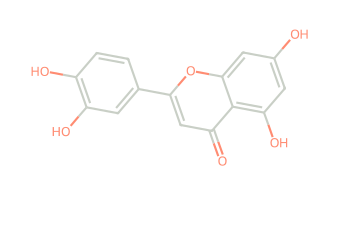
Luteolin
Olfactory recovery after COVID-19, luteolin alone.
Grade D, not yet tested: no human randomized trial has been run. This D records missing trials, not a finding that it does not work. How to read a grade →
Luteolin is a plant compound found in celery and peppers. It has been tested for smell loss after COVID, but only mixed with another ingredient, so its own effect is unknown. The one study of luteolin alone, in Gulf War illness, found no benefit. So luteolin by itself has not been shown to help.
The D belongs to one of the two uses graded on this record. The other one carries its own letter.
As studied, and the trials
No randomized trial has given luteolin alone for olfactory recovery. Every olfactory trial tested a fixed palmitoylethanolamide plus luteolin combination with or without olfactory training (Di Stadio et al., 2022; PMID PubMed ID: the permanent number the US National Library of Medicine gives a published paper. Each one links to that paper's record on PubMed. 35450527; Di Stadio et al., 2023; PMID 37380908; Gellrich et al., 2024; PMID 38861957), and a combination does not grade a single ingredient. Even the combination's evidence is mixed: the independent Dresden trial found no difference in clinically meaningful improvement, and the combination without training did no better than training with placebo An inactive substitute made to look like the real treatment, so participants cannot tell which one they received.. Smell tests are measured performance, so the endpoint The outcome a trial measures to decide whether the treatment worked, such as heart attacks, blood pressure or a symptom score. type is functional. Route 1 No human randomized trial has been run, so the record rests on animal or mechanistic evidence only. One of the two routes to the lowest letter on EBL's scale.: untested.
As studied, and the trials
Hodgin et al. (Int J Environ Res Public Health, 2021; PMID 33802381): the only placebo-controlled trial of luteolin alone found. Luteolin did not reduce symptom severity at either dose; resveratrol in the same screening study did. Tested and no benefit, on a small self-report crossover: D on Route 2 Human randomized trials have been run and did not show benefit on the stated outcome. One of the two routes to the lowest letter on EBL's scale..
Read the grade that matches your goal. How EBL grades by use →
- Dose studied
- 770 mg/day (studied WITH PEA)
- Form graded
- Luteolin
- Evidence behind the D
- PMID 35450527 →PMID 38861957 →PMID 37380908 →
A letter describes the human evidence, not the product, the manufacturer, or the ingredient's worth.
See the full evidence record →No human randomized trial has tested this at the dose and form graded, so there is nothing for a higher letter to rest on. A Route 1 Grade D records the absence of trials. It is not a finding against the compound, and it is not a finding that the compound is safe, because neither has been established. It may turn out to work once someone tests it. The grade moves when a qualifying human trial reports.
Luteolin alone is untested for smell recovery after COVID-19; its one solo trial, in Gulf War illness symptoms, was null.
As studied: dose, form, population and duration for every use
A grade describes the intervention that was tested. Where the product on the shelf differs from it, this says so.
How this letter has changed · latest: October 2026 · Corrected
The record's D Route 1 for the olfactory use stands: every olfactory trial tested palmitoylethanolamide plus luteolin, and a combination does not grade one ingredient. Three corrections: smell tests are measured performance, not surrogates, so the endpoint type is functional; the combination's own evidence is mixed, with the independent Dresden trial finding no difference in clinically meaningful improvement (Gellrich et al., ORL, 2024; PMID 38861957) and the four-arm trial finding the combination without training no better than training with placebo (Di Stadio et al., 2023; PMID 37380908); and the one luteolin-alone placebo-controlled trial (Hodgin et al., 2021; PMID 33802381), null for Gulf War illness symptoms, is a tested null, D on Route 2 on its own row, not an absence. The search note that said all 14 records were combination products is corrected. Applied the written grade definition under the editor's standing instruction of October 2026 (Arnold Sandlow, D.C.).PMID 33802381 PMID 37380908 PMID 38861957
Luteolin held a C on Di Stadio et al. (Curr Neuropharmacol, 2022; PMID 35450527), a randomized trial of a fixed palmitoylethanolamide plus luteolin combination with olfactory training. The trial does not isolate luteolin, and under the published scale a combination product grades the combination, not its parts. A PubMed search in October 2026 for randomized trials naming luteolin returned 14 records, all combination or mixture products; the only luteolin-alone arm is a pseudo-randomized botanical crossover in Gulf War illness (Hodgin et al., Int J Environ Res Public Health, 2021; PMID 33802381), a different claim. With no randomized trial of luteolin alone on any graded outcome the letter is D on Route 1, untested. Moved October 2026 by editor adjudication; the absence check and the search are recorded on the record.PMID 35450527 PMID 33802381
Every change to a letter on this site is dated and published. The full evidence log →
Commercial disclosure
EBL earns no commission on any supplement it grades. A purchase made through the dispensary link below pays EBL nothing, the practitioner discount goes to you in full. The dispensary is Fullscript, a practitioner dispensary, and many of the professional-grade brands in it are sold mainly through practitioners rather than in health food stores. Grades are assigned by published rubric before any commercial relationship exists and are never influenced by one. Full disclosure.
No dose is published here. This record carries no authored dose, because the cited trials do not converge on a single figure. Each trial cited on this page states the dose it used, and EBL has not turned those into a recommendation.
Standardized extracts/forms were used in the cited trials; product quality varies.
In the cited trial, a combination of palmitoylethanolamide and luteolin was taken once daily, 5 to 10 minutes before breakfast (PMID 35450527).
Checked against the full published report. What the cited trials did, not a schedule. Every supplement, by trial timing →
Pregnancy. Thyroid disease: flavonoids in this class inhibit thyroid peroxidase in laboratory work.
Laboratory work reports inhibition of several CYP enzymes and of P-glycoprotein, which would matter for narrow-window drugs. No human interaction study has measured it, so this is a mechanistic caution.
Everything on this record's interaction line happens outside a person. Luteolin's caution is CYP and P-glycoprotein inhibition reported in laboratory work, which the record already labels as mechanistic. The search agrees: the human-tagged results are reviews of herbal medicine and therapeutic potential rather than dosing studies, and the nearest thing to an interaction study is a pharmacokinetic experiment on luteolin with magnoflorine in rats. No human has been given luteolin with a narrow-window drug and had levels measured. For a supplement whose interaction claim concerns drugs where a small change matters, that gap is the finding. Basis: pharmacological mechanism, not a human study. Searched PubMed in August 2026: 1 query, 105 human results.
HsCRP and IL-6 at baseline and 8 weeks for anti-inflammatory applications. For cognitive applications, use a validated brief cognitive battery at baseline and 12 weeks. Luteolin bioavailability The share of a dose that reaches the bloodstream in a form the body can use. is low in standard forms: formulations using liposomal delivery or quercetin co-administration, which improve absorption.
Primary evidenceFour papers, each linked to its PubMed record.
Di Stadio et al. (Current Neuropharmacology, 2022; PMID 35450527): randomized trial of co-ultramicronized palmitoylethanolamide plus luteolin with olfactory training for olfactory recovery after COVID-19. The trial does not isolate luteolin; the product is a fixed combination, allocation was unbalanced (130 against 55) and the comparator arms differ in training, not in luteolin. Even for the combination the picture is mixed: Gellrich et al. (ORL, 2024; PMID 38861957), an independent Dresden trial of 50 patients, found no difference in clinically meaningful olfactory improvement over training alone, and in Di Stadio et al. (Eur Arch Otorhinolaryngol, 2023; PMID 37380908), 202 patients in four arms, the combination without olfactory training did no better than training with placebo. Grade D on Route 1: no randomized trial of luteolin alone has tested an olfactory, cognitive or neuro-inflammatory outcome. A PubMed search in October 2026 for randomized trials naming luteolin returned 14 records, every one a combination or mixture product except one: the luteolin-alone arm of a placebo-controlled pseudo-randomized crossover of botanical agents in 21 veterans with Gulf War illness (Hodgin et al., Int J Environ Res Public Health, 2021; PMID 33802381), in which luteolin did not reduce symptom severity at either dose while resveratrol did. That is a tested null in a different population, graded on its own row.
Educational use only · Not medical advice · Starting, stopping or changing any supplement or medication is a decision for your physician
These statements have not been evaluated by the Food and Drug Administration. This product is not intended to diagnose, treat, cure, or prevent any disease. The grade on this page describes the strength of published human trial evidence in the populations studied. It is not a recommendation for any individual and is not medical advice. Starting, stopping or changing any supplement or medication is a decision for your physician.
Who responds: this record's trial reading reports no subgroup that identifies who responds.
This page carries a letter. EBL takes no commission, referral fee or payment of any kind on anything it grades. No letter has been bought and none is for sale.
How this is enforced
That is not a promise, it is a build condition. Two checks run on every deploy: one refuses to publish if a commission is claimed on anything graded, the other refuses if a page names a commercial relationship that is not declared in the register. If either fails, this page does not go live. You can read how the checks work, and what they do not cover, on the evidence integrity page.
How EBL searched for the trials (1 search)
The search that was run, what it returned, and what was left out and why, so the absence of evidence can be checked as well as its presence.
luteolin[Title] AND (randomized controlled trial[pt] OR randomized[tiab]) AND humans[mesh]Grades move when new trials publish. A free monthly email lists every grade EBL moved, with the reason and the trial behind it: the sign-up is on the Evidence Log →