Supplement
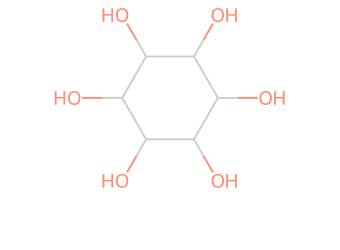
Inositol (Myo-inositol)
Insulin resistance and reproductive measures in PCOS (myo-inositol); the evidence is specific to that population.
Myo-inositol is the form of inositol tested in the studies behind this page. In women with polycystic ovary syndrome, or PCOS, pooled studies found better insulin response and better reproductive measures. The evidence applies to that group only. It lowers blood sugar, so its effect adds to diabetes drugs. In theory it could weaken lithium, but two small studies in people taking lithium did not find that. Stomach upset can happen at higher doses.
- Dose studied
- Myo-inositol 4 g/day (2 g twice daily)
- Form graded
- Myo-inositol (± D-chiro)
- Cited PMIDs PubMed ID: the permanent number the US National Library of Medicine gives a published paper. Each one links to that paper's record on PubMed.
- PMID 36703143 →PMID 35477841 →
A letter describes the human evidence, not the product, the manufacturer, or the ingredient's worth.
See the full evidence record →Who responds: this record's trial reading reports no subgroup that identifies who responds.
Inositol (Myo-inositol) for PCOS metabolic and reproductive measures, graded on published human trial evidence.
A grade describes the intervention that was tested. Where the product on the shelf differs from it, this says so.
How this letter has changed · latest: October 2026 · Corrected
The record said both cited meta-analyses found myo-inositol improved insulin resistance in PCOS. Greff et al. (Reproductive Biology and Endocrinology, 2023; PMID 36703143) did, against placebo, across 26 trials. Jethaliya et al. (Reprod Sci, 2022; PMID 35477841) found no significant difference in fasting insulin, fasting glucose or HOMA, but its comparators were folic acid, metformin and oral contraceptives, not placebo. The record now says so. The B rests on the placebo-controlled pooled evidence and is unchanged.PMID 36703143 PMID 35477841
Every change to a letter on this site is dated and published. The full evidence log →
Commercial disclosure
EBL earns no commission on any supplement it grades. A purchase made through the dispensary link below pays EBL nothing, the practitioner discount goes to you in full. The dispensary is Fullscript, a practitioner dispensary, and many of the professional-grade brands in it are sold mainly through practitioners rather than in health food stores. Grades are assigned by published rubric before any commercial relationship exists and are never influenced by one. Full disclosure.
No dose is published here. This record carries no authored dose, because the cited trials do not converge on a single figure. Each trial cited on this page states the dose it used, and EBL has not turned those into a recommendation.
Standardized extracts/forms were used in the cited trials; product quality varies.
The cited reviews pool trials and do not report when doses were taken (PMID 36703143, PMID 35477841).
Checked against the full published reports. What the cited trials did, not a schedule. Every supplement, by trial timing →
No prominent contraindication at the doses studied. Gastrointestinal upset is dose-related.
Lithium: depletion A fall in a nutrient's level caused by a medication, for example through reduced absorption or increased loss. of inositol is one of the proposed mechanisms of lithium's action, so supplementing it is a theoretical route to reducing lithium's effect. Two small human studies in patients taking lithium have looked for that loss of effect and did not find it, which is thin reassurance rather than none. Diabetes medication: myo-inositol lowers glucose in insulin-resistance trials, so the effect is additive.
Two small human studies in patients on lithium looked for the predicted loss of effect and did not find it. The mechanism is real: lithium is thought to act partly by depleting inositol, so supplementing inositol is a plausible route to undoing that. It has been looked at twice in people actually taking lithium. A randomized double-blind placebo-controlled crossover A trial design in which each participant receives both the treatment and the comparison, one after the other, and serves as their own control. trial in 15 patients and a later 15-patient pilot both report no loss of mood-stabiliser effect. Fifteen patients is far too few to exclude an uncommon or partial effect, and neither study was designed with relapse as its primary endpoint The one outcome a trial names in advance as its main test. Results on other outcomes carry less weight., so this is thin reassurance rather than a settled answer. It is still more than the page previously claimed existed. Allan and Kavanagh (British Journal of Dermatology, 2004;150(5):966-9; PMID 15149510): randomized, double-blind, placebo-controlled crossover trial of inositol supplements in 15 patients with psoriasis who were taking lithium. Cantelmi et al. (European Review for Medical and Pharmacological Sciences, 2022;26(19):7269-7276; PMID 36263538): pilot clinical study of tailored-dose inositol in 15 patients taking lithium or valproic acid.
The additive glucose effect is measured: inositol added to metformin has been trialed against metformin alone. This pair is unusual because it has been tested as an addition rather than only as an alternative. A randomized controlled trial People are assigned to the treatment or a comparison by chance, so the groups differ only in what they received. It is the design that can show cause and effect. compared metformin plus inositol against metformin alone in polycystic ovary syndrome, and a systematic review A review that searches for every study on a question using a method set in advance, then assesses them together. and meta-analysis of randomized trials establishes that inositol lowers glucose through improved insulin sensitivity. Additive glucose lowering is therefore a measured expectation rather than a prediction. Note the population: these trials are in insulin resistance and PCOS, not in people using insulin itself, so nothing here quantifies the effect alongside injected insulin. Nazirudeen et al. (Clinical Endocrinology, 2023;99(2):198-205; PMID 37265016): randomized controlled trial comparing myoinositol with metformin against metformin monotherapy in polycystic ovary syndrome. Minambres et al. (Clinical Nutrition, 2019;38(3):1146-1152; PMID 29980312): systematic review and meta-analysis of randomized trials of inositol on glucose homeostasis.
For PCOS applications, track fasting insulin, testosterone, and menstrual cycle regularity at baseline and 3 months. For anxiety applications, use the HAM-A or GAD-7 scale at baseline and 4 weeks. Myo-inositol and D-chiro-inositol have different evidence profiles, and the trials behind this record used myo-inositol in PCOS.
Primary evidenceTwo papers, each linked to its PubMed record.
Greff et al. (Reproductive Biology and Endocrinology, 2023; PMID 36703143): meta-analysis of 26 randomized trials, 1,691 women with PCOS, any inositol against placebo or metformin; against placebo, inositol raised the chance of a regular menstrual cycle (1.79 times) and lowered glucose, insulin area under the curve, BMI and androgens, and it was non-inferior to metformin on most outcomes. Jethaliya et al. (Reprod Sci, 2022; PMID 35477841): meta-analysis of 17 randomized trials, 1,083 women with PCOS, myo-inositol compared with folic acid, metformin or oral contraceptives; no significant difference in fasting insulin, fasting glucose or HOMA against those comparators, which is a comparison with active treatment, not with placebo. Grade B: placebo-controlled pooled evidence on metabolic and reproductive surrogates, specific to PCOS.
The trials below gave the supplement in addition to a prescribed drug, with the drug present in both arms. Each result is stated as it was measured. EBL does not translate these findings into anything about a prescription.
53 overweight and obese women with polycystic ovary syndrome were randomized to metformin alone or metformin plus myo-inositol and D-chiro-inositol for six months. Menstrual cycle regularity and the PCOSQ quality-of-life score improved significantly more in the combination arm. The hormonal and metabolic measures, including HOMA-IR, testosterone, lipids and ovarian volume, did not differ between groups, and pregnancy rates were equal. What separated the arms were the symptom and questionnaire endpoints The outcome a trial measures to decide whether the treatment worked, such as heart attacks, blood pressure or a symptom score.; the objective ones did not move.
Background therapy. Metformin was given in both arms; myo-inositol and D-chiro-inositol were added in one of them.
Nazirudeen et al. (Clinical Endocrinology, 2023; PMID 37265016): randomized controlled trial comparing myoinositol with metformin against metformin monotherapy in polycystic ovary syndrome.
Educational use only · Not medical advice · Starting, stopping or changing any supplement or medication is a decision for your physician
These statements have not been evaluated by the Food and Drug Administration. This product is not intended to diagnose, treat, cure, or prevent any disease. The grade on this page describes the strength of published human trial evidence in the populations studied. It is not a recommendation for any individual and is not medical advice. Starting, stopping or changing any supplement or medication is a decision for your physician.
This page carries a letter. EBL takes no commission, referral fee or payment of any kind on anything it grades. No letter has been bought and none is for sale.
How this is enforced
That is not a promise, it is a build condition. Two checks run on every deploy: one refuses to publish if a commission is claimed on anything graded, the other refuses if a page names a commercial relationship that is not declared in the register. If either fails, this page does not go live. You can read how the checks work, and what they do not cover, on the evidence integrity page.
Grades move when new trials publish. A free monthly email lists every grade EBL moved, with the reason and the trial behind it: the sign-up is on the Evidence Log →