Supplement
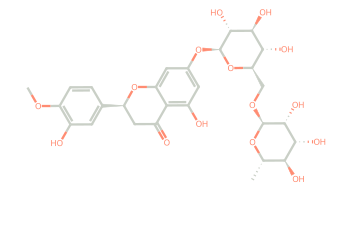
Hesperidin
C-reactive protein, where a 2019 meta-analysis A study that pools the numbers from several trials into one combined estimate. was null and three later meta-analyses (2024 to 2026) each report a modest pooled reduction graded moderate certainty; the adhesion marker VCAM-1, where the pooled effect rests on three small trials and is graded very low certainty.
Grade C: human trials exist, but they are small, mixed or not yet repeated. This is not a finding that it does not work. How to read a grade →
Hesperidin is a compound found in oranges and other citrus fruits. Studies looked at a blood marker of swelling in the body. One review found no change, and three newer reviews found a modest drop. A second marker, linked to the lining of blood vessels, fell in three small studies, but that result is very uncertain. One recent study at food-level doses found no benefit to blood vessels.
- Dose studied
- ~500 mg/day (common range, not from cited trial)
- Form graded
- Hesperidin (2S / micronised)
- Cited PMIDs PubMed ID: the permanent number the US National Library of Medicine gives a published paper. Each one links to that paper's record on PubMed.
- PMID 30991044 →
A letter describes the human evidence, not the product, the manufacturer, or the ingredient's worth.
See the full evidence record →Who responds: this record's trial reading reports no subgroup that identifies who responds.
Hesperidin for one endothelial adhesion marker (VCAM-1) specifically, graded on published human trial evidence.
How this letter has changed · latest: October 2026 · Corrected
The record said CRP was null; that was true of Lorzadeh 2019 (PMID 30991044), but Huang 2024 (PMID 39279783), Ouyang 2026 (PMID 41883255) and Zhu 2026 (PMID 42434414) each pool a modest CRP reduction, so the inflammatory evidence is restated. The VCAM-1 effect came from Salden 2016 (PMID 27797708), where it was a trend overall and significant only in an unadjusted exploratory subgroup; the record now says so, and that the pool mixes hesperidin 2S and purified hesperidin at different doses in different populations. Gilcher 2026 (PMID 42605853), null on flow-mediated dilation at a dietary dose, is added. Letter unchanged.PMID 30991044 PMID 39279783 PMID 41883255 PMID 42434414 PMID 27797708 PMID 42605853
Every change to a letter on this site is dated and published. The full evidence log →
Commercial disclosure
EBL earns no commission on any supplement it grades. A purchase made through the dispensary link below pays EBL nothing, the practitioner discount goes to you in full. The dispensary is Fullscript, a practitioner dispensary, and many of the professional-grade brands in it are sold mainly through practitioners rather than in health food stores. Grades are assigned by published rubric before any commercial relationship exists and are never influenced by one. Full disclosure.
No single studied dose. The trial behind the VCAM-1 pool used hesperidin 2S 450 mg/day for 6 weeks (Salden 2016, PMID 27797708); the null 2026 vascular trial used 210 mg/day (PMID 42605853); the pooled analyses mix purified hesperidin and hesperidin-containing citrus preparations at a range of doses.
Standardized extracts/forms were used in the cited trials; product quality varies.
The trial behind the VCAM-1 pool gave hesperidin 2S once daily for 6 weeks (PMID 27797708) and the 2026 vascular trial gave 210 mg/day in a beverage (PMID 42605853); neither summary states a time of day. The pooled analyses do not report timing (PMID 30991044).
Checked against the published summaries; the full papers could not be read. What the cited trials did, not a schedule. Every supplement, by trial timing →
No prominent contraindication has been identified at the doses studied. Hesperidin has not been tested in pregnancy or breastfeeding, so the caution there rests on absent data rather than on a finding.
Hesperidin is a citrus flavonoid and citrus juice constituents inhibit OATP transporters, which lowers rather than raises blood levels of drugs such as fexofenadine and some beta-blockers. That is the opposite direction from the grapefruit CYP3A4 effect people expect, and it is worth being precise about. Calcium channel blockers and antihypertensives: additive blood-pressure lowering.
The transporter direction is documented, and it is the opposite of what people expect. The record makes an unusually precise claim: citrus constituents inhibit OATP uptake transporters, which lowers rather than raises drug levels, the opposite direction from the grapefruit CYP3A4 effect. A systematic review A review that searches for every study on a question using a method set in advance, then assesses them together. of intestinal OATP-mediated interactions supports it and names the drugs where the effect is clinically demonstrated: twelve drugs emerge as possible substrates of OATP2B1 and OATP1A2, with atenolol, celiprolol and fexofenadine the most sensitive. Two limits belong with it. The clinical evidence is for citrus and apple juices, not for hesperidin given on its own, so a capsule has not been tested against a transported drug. And the additive blood-pressure caution on the same record is separate and remains mechanistic. Bailey and colleagues, reviewed in Kalliokoski-style analyses; the source used here is Yu et al. (J Pharm Sci, 2017;106(9):2312-2325; PMID 28414144): systematic review of intestinal drug interactions mediated by OATPs, preclinical and clinical.
Systolic blood pressure and arterial stiffness (PWV if available) at baseline and 8 weeks for cardiovascular applications. CRP and IL-6 at baseline and 8 weeks. Hesperidin bioavailability The share of a dose that reaches the bloodstream in a form the body can use. depends on gut microbiome conversion to hesperetin: individuals with lower microbial diversity may have reduced responses.
Primary evidenceSix papers, each linked to its PubMed record.
Lorzadeh et al. (Chem Biol Interact, 2019; PMID 30991044): meta-analysis of 6 randomized trials, 296 participants; VCAM-1 lower, pooled from only 3 trials at P = 0.041; CRP, IL-6, ICAM-1 and E-selectin not changed overall. Salden et al. (Am J Clin Nutr, 2016; PMID 27797708): the primary trial behind the VCAM-1 pool, 68 overweight adults, hesperidin 2S 450 mg/day for 6 weeks; flow-mediated dilation did not change, VCAM-1, ICAM-1 and blood pressure showed trends only, and the significant VCAM-1 and postprandial findings came from an exploratory subgroup with baseline FMD of 3 percent or more that the authors say was not adjusted for multiplicity; funding not stated in the indexed record. Later syntheses: Huang et al. (Curr Dev Nutr, 2024; PMID 39279783): 12 trials, 589 participants, CRP 0.56 mg/L lower, with LDL Low-density lipoprotein cholesterol, the cholesterol fraction most closely tied to plaque in the arteries., total cholesterol, fasting glucose, ICAM-1 and VCAM-1 also lower. Ouyang et al. (Br J Nutr, 2026; PMID 41883255): 10 trials, 532 participants, CRP and TNF-alpha lower, IL-6 not. Zhu et al. (Front Nutr, 2026; PMID 42434414): 16 trials, 845 overweight or obese participants; CRP 0.43 mg/L lower at moderate certainty, TNF-alpha and VCAM-1 lower at very low certainty, IL-6 and ICAM-1 not changed. Against: Gilcher et al. (Food Funct, 2026; PMID 42605853): randomized three-period crossover A trial design in which each participant receives both the treatment and the comparison, one after the other, and serves as their own control., 37 overweight men, hesperidin 210 mg/day for 6 weeks against orange juice and control; no effect on fasting or postprandial flow-mediated dilation or any vascular or metabolic parameter. Grade C: pooled surrogate effects of modest size across mixed preparations and populations, with the vascular trials null.
Educational use only · Not medical advice · Starting, stopping or changing any supplement or medication is a decision for your physician
These statements have not been evaluated by the Food and Drug Administration. This product is not intended to diagnose, treat, cure, or prevent any disease. The grade on this page describes the strength of published human trial evidence in the populations studied. It is not a recommendation for any individual and is not medical advice. Starting, stopping or changing any supplement or medication is a decision for your physician.
This page carries a letter. EBL takes no commission, referral fee or payment of any kind on anything it grades. No letter has been bought and none is for sale.
How this is enforced
That is not a promise, it is a build condition. Two checks run on every deploy: one refuses to publish if a commission is claimed on anything graded, the other refuses if a page names a commercial relationship that is not declared in the register. If either fails, this page does not go live. You can read how the checks work, and what they do not cover, on the evidence integrity page.
How EBL searched for the trials (1 search)
The search that was run, what it returned, and what was left out and why, so the absence of evidence can be checked as well as its presence.
hesperidin[tiab] AND (randomized controlled trial[pt] OR meta-analysis[pt]) AND humans[mesh]Grades move when new trials publish. A free monthly email lists every grade EBL moved, with the reason and the trial behind it: the sign-up is on the Evidence Log →