Supplement
Glycine
Sleep and next-day fatigue after short sleep; collagen synthesis; methyl donor support (with TMG).
Grade C: human trials exist, but they are small, mixed or not yet repeated. This is not a finding that it does not work. How to read a grade →
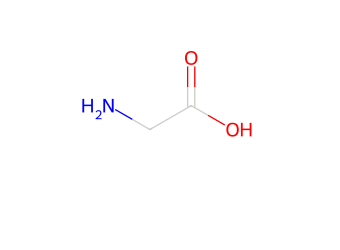
Glycine is an amino acid, one of the building blocks of protein. One small study gave healthy people 3 grams before bed while their sleep was cut short on purpose. The next day they felt less tired and reacted faster than people taking a dummy powder. It has not been tested this way in people with insomnia. Studies that mixed glycine with another supplement, called NAC, cannot show what glycine does on its own.
A letter describes the human evidence, not the product, the manufacturer, or the ingredient's worth.
See the full evidence record →Who responds: this record's trial reading reports no subgroup that identifies who responds.
Next-day fatigue after short sleep in healthy volunteers, on one small trial. The GlyNAC combination with NAC is graded separately.
The trial that would change this grade.
A positive trial of this shape, supported by further trials, would move this entry to B.
Why the current trials fall short
The grade rests on small trials of a few nights after deliberate sleep restriction in healthy volunteers. Nightly use over weeks, in people who actually sleep poorly, has not been tested.
Why people believe itOne human source; no published case reports of benefit; no reports of harm.
The case for glycine is that this amino acid lowers core body temperature slightly at bedtime, which helps sleep begin, and that taking about 3 g before bed left people less tired the next day in small trials. It is also a building block of collagen and of glutathione, and is taken with NAC in the GlyNAC combination on that reasoning.
What supporters point to, and what each source actually shows. None of it is enough to move this letter higher; the trial described above under Evidence wanted is what would.
- Human trial, blood or body markerIn 24 older adults, 16 weeks of glycine with NAC raised glutathione and improved markers of oxidative stress and mitochondrial function, along with gait speed and strength, against an alanine placebo An inactive substitute made to look like the real treatment, so participants cannot tell which one they received.. A small trial of the combination, so it cannot show what glycine does alone. PMID 35975308
A case report describes what happened to one or a few patients. It cannot show the treatment caused the change, and reports of success are published more often than reports of failure.
A PubMed search in October 2026 found no published case report of benefit for this use.
Searched PubMed, October 2026: 29 case report record(s) returned. None describes a person taking glycine for sleep or general health. The records concern inherited metabolic and nerve disorders treated with glycine or other compounds, antibodies against glycine receptors, gene changes named for a glycine substitution, and the soybean plant, whose scientific name is Glycine max.
How this letter has changed · latest: August 2026 · Downgraded
The Grade B rested on two citations and both tested GlyNAC, glycine combined with N-acetylcysteine, so neither isolated glycine. The record's own reference field said so and the grade did not follow. The only placebo-controlled human study of glycine alone bearing on sleep is Bannai 2012 (PMID PubMed ID: the permanent number the US National Library of Medicine gives a published paper. Each one links to that paper's record on PubMed. 22529837), which gave 3 g before bed to healthy volunteers under experimental sleep restriction and found reduced next-day fatigue and improved psychomotor vigilance. Small, unreplicated, not a population with insomnia, and PubMed assigns it no trial publication type. The widely quoted Yamadera 2007 glycine sleep study appeared in a journal PubMed does not index, so it carries no identifier and is not used. Regraded C.PMID 22529837
Every change to a letter on this site is dated and published. The full evidence log →
Commercial disclosure
EBL earns no commission on any supplement it grades. A purchase made through the dispensary link below pays EBL nothing, the practitioner discount goes to you in full. The dispensary is Fullscript, a practitioner dispensary, and many of the professional-grade brands in it are sold mainly through practitioners rather than in health food stores. Grades are assigned by published rubric before any commercial relationship exists and are never influenced by one. Full disclosure.
3 g before bed, the dose used in the cited human study. GlyNAC longevity protocols use 8 to 10 g/day of glycine, which is a combination regimen and not the dose studied here.
Pure glycine powder is inexpensive and very effective. Can be mixed in water. Slightly sweet taste.
In the cited trial, 3 g was taken 30 minutes before bedtime on each of three nights (PMID 22529837).
Checked against the full published report. What the cited trials did, not a schedule. Every supplement, by trial timing →
How to buy this: quality criteria, not a brand
3–5g/day for sleep; 8–10g/day in GlyNAC protocols.
Pure glycine powder, inexpensive and effective; mixes in water.
USP / pharma-grade, third-party tested.
Proprietary “sleep blends” that hide the glycine dose; overpriced capsules vs. cheap powder.
The grade and these criteria are set only from human trials. Any purchase link is convenience and does not affect the grade.
No prominent contraindication at studied doses.
Clozapine: this is the one documented interaction and it runs the opposite way to what people expect from an add-on. Randomized trials of high-dose glycine added to clozapine found no benefit, and one reported that glycine may work against clozapine's effect specifically, unlike with other antipsychotics. Anyone on clozapine should treat this as a prescriber's decision rather than a supplement one. No other prominent drug interaction has been identified.
Glycine works against clozapine, not with it. Randomized trials of high-dose glycine added to clozapine found no benefit, and reported that glycine may reduce clozapine's effect specifically, unlike its behavior with other antipsychotics. Potkin et al. (American Journal of Psychiatry, 1999; PMID 9892314): effect of clozapine and adjunctive high-dose glycine in treatment-resistant schizophrenia. Evins et al. (American Journal of Psychiatry, 2000; PMID 10784481): placebo-controlled trial of glycine added to clozapine in schizophrenia.
Next-day fatigue and sleep quality, the endpoints of the one cited glycine-alone study. Collagen markers and fasting glucose are not graded endpoints for glycine.
Primary evidenceThree papers, each linked to its PubMed record.
Bannai et al. (Frontiers in Neurology, 2012; PMID 22529837): 3 g of glycine before bed against placebo in partially sleep-restricted healthy volunteers significantly reduced next-day fatigue on a visual analogue scale and improved psychomotor vigilance, with a non-significant trend on sleepiness. This is the only placebo-controlled human study of glycine ALONE that bears on sleep, it is small, it enrolled healthy volunteers under experimental sleep restriction rather than people with insomnia, and PubMed assigns it no trial publication type. The two GlyNAC papers below tested glycine COMBINED with N-acetylcysteine and cannot support a grade for glycine on its own: Kumar et al. (Journal of Gerontology, 2023; PMID 35975308) and Wang et al. (Frontiers in Nutrition, 2026; PMID 42232577). Graded C on that basis. The frequently cited Yamadera 2007 glycine sleep study was published in Sleep and Biological Rhythms, which PubMed does not index, so it carries no identifier and is not used here.
Educational use only · Not medical advice · Starting, stopping or changing any supplement or medication is a decision for your physician
These statements have not been evaluated by the Food and Drug Administration. This product is not intended to diagnose, treat, cure, or prevent any disease. The grade on this page describes the strength of published human trial evidence in the populations studied. It is not a recommendation for any individual and is not medical advice. Starting, stopping or changing any supplement or medication is a decision for your physician.
This page carries a letter. EBL takes no commission, referral fee or payment of any kind on anything it grades. No letter has been bought and none is for sale.
How this is enforced
That is not a promise, it is a build condition. Two checks run on every deploy: one refuses to publish if a commission is claimed on anything graded, the other refuses if a page names a commercial relationship that is not declared in the register. If either fails, this page does not go live. You can read how the checks work, and what they do not cover, on the evidence integrity page.
Grades move when new trials publish. A free monthly email lists every grade EBL moved, with the reason and the trial behind it: the sign-up is on the Evidence Log →