Supplement
Glucosamine Sulfate
Knee osteoarthritis: structural (joint-space) and symptom evidence for crystalline glucosamine sulfate is mixed; the hydrochloride salt was null on pain in GAIT.
Grade C: human trials exist, but they are small, mixed or not yet repeated. This is not a finding that it does not work. How to read a grade →
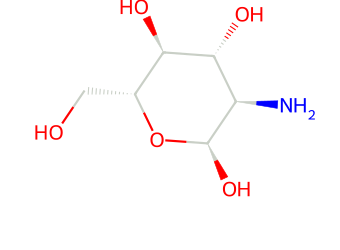
Glucosamine is a building block of joint cartilage. It is sold for knee arthritis. Studies of one form, glucosamine sulfate, gave mixed results for pain and for how fast the joint space narrowed. Another form, glucosamine hydrochloride, did not ease pain in a large study. So whether it helps may depend on the form, and the results are not consistent.
A letter describes the human evidence, not the product, the manufacturer, or the ingredient's worth.
See the full evidence record →Who responds: this record's trial reading reports no subgroup that identifies who responds.
Knee osteoarthritis joint-space narrowing and symptoms: mixed for glucosamine sulfate, null on pain for the hydrochloride salt.
How this letter has changed · latest: October 2026 · Added
Hawkinson et al. (Nat Metab, 2026; PMID PubMed ID: the permanent number the US National Library of Medicine gives a published paper. Each one links to that paper's record on PubMed. 42265388) found oral glucosamine worsened cognition in Alzheimer's mouse models, and in health records glucosamine use went with faster disease progression and shorter survival. A preprint by Nakashima et al. (medRxiv, 2026; PMID 42619916) found the same progression estimate for multivitamin and calcium plus vitamin D records and no mortality excess, which points to the record marking the patient. Both are cited on the record as context. The C for knee osteoarthritis is unchanged.PMID 42265388 PMID 42619916
The dose field credited its 1,500 mg/day figure to "the Zheng et al. mortality analysis". No Zheng paper is cited by this record and none was ever attached to it. The dose actually comes from Clegg et al. (PMID 16495392), the randomized trial the record does cite. The record's two cohort mortality citations are Li (PMID 32253185) and King (PMID 33219063), and both analyze regular glucosamine use without establishing any dose. The attribution was removed and the dose is now credited to the trial that used it. Nothing about the grade changed, because the grade never rested on the misattributed paper. This is the same class of defect as the two fabricated attributions found in the July audit: a named author standing where a citation should be, passing every check that reads identifiers because it contains none.PMID 16495392 PMID 32253185 PMID 33219063
Every change to a letter on this site is dated and published. The full evidence log →
Commercial disclosure
EBL earns no commission on any supplement it grades. A purchase made through the dispensary link below pays EBL nothing, the practitioner discount goes to you in full. The dispensary is Fullscript, a practitioner dispensary, and many of the professional-grade brands in it are sold mainly through practitioners rather than in health food stores. Grades are assigned by published rubric before any commercial relationship exists and are never influenced by one. Full disclosure.
Grade C reflects limited, mixed, or single-trial human data not yet independently replicated The same finding reproduced by a separate research group. A result seen once can be chance or bias; a replicated one is harder to explain away.. The biological rationale may be strong. The human evidence does not currently meet the bar for Grade B. EBL re-grades when new RCT evidence is published.
1,500 mg/day. The two positive 3-year trials (Reginster, PMID 11214126; Pavelka, PMID 12374520) and the null 6-month pain trial (Hughes, PMID 11934964) all used crystalline glucosamine SULFATE at 1,500 mg/day. GAIT (Clegg, PMID 16495392) used glucosamine HYDROCHLORIDE at 1,500 mg/day. The cohort mortality citations, Li (PMID 32253185) and King (PMID 33219063), analyze regular glucosamine use without establishing a dose or form.
For knee osteoarthritis, the strongest positive long-term trials used crystalline glucosamine sulfate at 1,500 mg/day. Glucosamine hydrochloride is not interchangeable with that evidence. Vegetarian fermentation-derived products are an option when they deliver the same glucosamine sulfate form.
The cited trial gave 1,500 mg a day (PMID 16495392). Its summary does not state a time of day or whether it was taken with food.
Checked against the published summary; the full paper could not be read. What the cited trials did, not a schedule. Every supplement, by trial timing →
How to buy this: quality criteria, not a brand
1,500mg/day glucosamine sulfate (the dose in positive trials and the mortality analysis).
Glucosamine SULFATE, not HCl, the positive trials used sulfate. Plant-fermented versions exist for shellfish allergy.
“Glucosamine sulfate” stated; third-party tested.
Glucosamine HCl sold as equal; shellfish source if allergic; underdosing below 1,500mg.
The grade and these criteria are set only from human trials. Any purchase link is convenience and does not affect the grade.
Shellfish allergy, since most products are shellfish-derived, though the allergen is in the flesh rather than the shell and reactions are uncommon. Raised bleeding risk.
Warfarin: case reports and pharmacovigilance records describe INR rising on glucosamine, sometimes substantially. No controlled trial has quantified it, so this is a monitoring caution. Diabetes medication: glucosamine may modestly affect insulin sensitivity, and the effect is small and inconsistent.
Glucosamine and warfarin. Case reports and pharmacovigilance records describe INR rising when glucosamine is added to warfarin. No controlled trial has quantified the size of the effect. Knudsen and Sokol (Pharmacotherapy, 2008; PMID 18363538): case report with a review of the literature and MedWatch reports of a potential glucosamine-warfarin interaction raising INR.
For knee osteoarthritis, use a consistent pain and function measure such as WOMAC at baseline and follow-up. Glucose monitoring should follow the patient's usual diabetes/clinical needs rather than being presented as a glucosamine efficacy endpoint The outcome a trial measures to decide whether the treatment worked, such as heart attacks, blood pressure or a symptom score..
Primary evidenceNine papers, each linked to its PubMed record.
Graded by salt and by endpoint. Reginster et al. (Lancet, 2001; PMID 11214126) and Pavelka et al. (Arch Intern Med, 2002; PMID 12374520): two 3-year randomized placebo-controlled trials of crystalline glucosamine sulfate 1,500 mg/day; joint-space narrowing slowed and symptom scores improved against placebo An inactive substitute made to look like the real treatment, so participants cannot tell which one they received.. Hughes and Carr (Rheumatology, 2002; PMID 11934964): 6-month randomized trial of the same sulfate dose in 80 patients; no difference from placebo on pain. Fransen et al. (Ann Rheum Dis, 2015; PMID 24395557, LEGS): 2-year randomized trial, 605 participants; glucosamine sulfate alone did not change joint-space narrowing or pain, and only the glucosamine plus chondroitin combination reduced narrowing (0.10 mm). Clegg et al. (New England Journal of Medicine, 2006; PMID 16495392, GAIT): 24-week randomized trial, 1,583 patients; glucosamine hydrochloride alone did not reduce pain (P=0.30). Li et al. (Annals of the Rheumatic Diseases, 2020; PMID 32253185) and King et al. (2020; PMID 33219063): prospective cohorts associating regular glucosamine use with lower mortality; observational Research that watches what people already do rather than assigning a treatment. It can show that two things travel together, not that one causes the other., so they inform context and carry no grade. Grade C: two positive and two null randomized trials of the sulfate, with the positive pair sharing one manufacturer-supplied product, and a null trial of the hydrochloride. Hawkinson et al. (Nat Metab, 2026; PMID 42265388): in Alzheimer's mouse models oral glucosamine worsened cognitive outcomes, and in a retrospective review of electronic health records, patients with Alzheimer's disease who had glucosamine recorded progressed faster and survived less long. Nakashima et al. (medRxiv preprint, 2026; PMID 42619916), testing the same question in the National Alzheimer's Coordinating Center cohort, found a similar progression estimate for multivitamin and calcium plus vitamin D records, and no excess mortality with glucosamine, which suggests the record is marking the patient rather than the supplement. Animal plus health-record association, not yet peer reviewed on the rebuttal side; it carries no grade.
Educational use only · Not medical advice · Starting, stopping or changing any supplement or medication is a decision for your physician
These statements have not been evaluated by the Food and Drug Administration. This product is not intended to diagnose, treat, cure, or prevent any disease. The grade on this page describes the strength of published human trial evidence in the populations studied. It is not a recommendation for any individual and is not medical advice. Starting, stopping or changing any supplement or medication is a decision for your physician.
This page carries a letter. EBL takes no commission, referral fee or payment of any kind on anything it grades. No letter has been bought and none is for sale.
How this is enforced
That is not a promise, it is a build condition. Two checks run on every deploy: one refuses to publish if a commission is claimed on anything graded, the other refuses if a page names a commercial relationship that is not declared in the register. If either fails, this page does not go live. You can read how the checks work, and what they do not cover, on the evidence integrity page.
Grades move when new trials publish. A free monthly email lists every grade EBL moved, with the reason and the trial behind it: the sign-up is on the Evidence Log →