Supplement
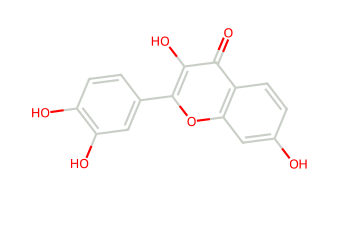
Fisetin
No randomized trial of fisetin as a senolytic A compound intended to clear senescent cells: older cells that have stopped dividing but remain in tissue. for aging has reported results.
Grade D, not yet tested: no human randomized trial has been run. This D records missing trials, not a finding that it does not work. How to read a grade →
Fisetin is a plant compound found in strawberries. It is sold with the claim that it clears out worn-out cells and slows aging. No study in people has reported results for that claim. A few small studies tested fisetin for other problems. In one, people with Gulf War illness did no better on fisetin than on a dummy pill. The aging claim rests on work in cells and animals.
A letter describes the human evidence, not the product, the manufacturer, or the ingredient's worth.
See the full evidence record →Who responds: this record's trial reading reports no subgroup that identifies who responds.
No human randomized trial has tested this at the dose and form graded, so there is nothing for a higher letter to rest on. A Route 1 Grade D records the absence of trials. It is not a finding against the compound, and it is not a finding that the compound is safe, because neither has been established. It may turn out to work once someone tests it. The grade moves when a qualifying human trial reports.
No randomized trial of fisetin as a senolytic for aging has reported results; small trials in other uses are cited on the record.
The trial that would change this grade.
A positive trial of this shape would move this entry to C.
Why the current trials fall short
Preclinical senolytic activity is not in dispute. What is missing is any human trial reporting an outcome a patient would notice.
Why people believe itOne human source; no published case reports of benefit; no reports of harm.
The case for fisetin is that it clears senescent cells, worn-out cells that build up with age and release inflammatory signals. In mice it extended lifespan, and in the laboratory it killed some types of senescent human cells. No human trial has yet reported on it for aging.
What supporters point to, and what each source actually shows. None of it is enough to move this letter higher; the trial described above under Evidence wanted is what would.
- Human trial, a different useIn patients with colorectal cancer, fisetin lowered some inflammatory markers over seven weeks. A different use, measured with blood markers. PMID 29541713
A case report describes what happened to one or a few patients. It cannot show the treatment caused the change, and reports of success are published more often than reports of failure.
A PubMed search in October 2026 found no published case report of benefit for this use.
Searched PubMed, October 2026: 1 case report record(s) returned. The one record describes a diet rich in fisetin and another compound in Parkinson disease. It does not test fisetin as a supplement.
Animal and laboratory workOne study in animals or cells. Not counted toward the letter.
None of this is human evidence and none of it counts toward the letter. It is listed so the reader can see what the idea rests on. Most findings in animals do not hold up when tested in people.
- Cell cultureFisetin killed senescent human blood-vessel cells in the laboratory but not senescent lung cells or fat-cell precursors. PMID 28273655
How this letter has changed · latest: October 2026 · Corrected
The October adjudication had already scoped the 'no human trial' statement to the senolytic use. Remaining from the review: the dose line gave a 100 to 200 mg/day anti-aging maintenance dose that no trial in healthy or aging adults supports; it is removed, and the doses actually used, 100 mg/day in colorectal cancer (Farsad-Naeimi 2018, PMID PubMed ID: the permanent number the US National Library of Medicine gives a published paper. Each one links to that paper's record on PubMed. 29541713) and 200 mg/day in obese men (Alipour 2026, PMID 42218768 and PMID 41683255), are stated as other uses. The form note claimed liposomal fisetin improves absorption with no citation; the one human bioavailability trial, Krishnakumar 2022 (PMID 36304817), tested a hydrogel formulation, and the note now says so. Yousefzadeh 2018 (PMID 30279143) is labeled mouse data only. Letter unchanged.PMID 29541713 PMID 42218768 PMID 41683255 PMID 36304817 PMID 30279143
Every change to a letter on this site is dated and published. The full evidence log →
Commercial disclosure
EBL earns no commission on any supplement it grades, and there is no dispensary link on this page to earn one from. Grades are assigned by published rubric before any commercial relationship exists and are never influenced by one. Full disclosure.
No dispensary link. EBL’s practitioner dispensary does not carry this item, so there is nothing to link to. Its absence is not a judgment beyond the letter above.
No dose is established for the senolytic use in any human trial. Senolytic protocols used in registered trials give 20 mg/kg on 2 consecutive days per month, and this is unvalidated. The published human trials in other uses gave 100 mg/day for 7 weeks in colorectal cancer and 200 mg/day for 12 weeks in obese men. No trial supports a daily 'maintenance' dose in healthy or aging adults.
Fisetin is poorly absorbed when taken plain. The one human bioavailability trial, Krishnakumar et al. (J Nutr Sci, 2022; PMID 36304817), 15 volunteers, found a fenugreek-galactomannan hydrogel formulation gave about 27 times the plasma exposure of unformulated fisetin; no human trial of a liposomal formulation was found. Most commercially available fisetin is from the Japanese wax tree (Rhus succedanea).
The senolytic study was done in mice and in laboratory cell and tissue samples (PMID 30279143). The human trials in other uses gave fisetin daily (PMID 29541713, PMID 42218768) without a stated time; none is a trial of the graded use.
Checked against the full report for 1 of the 3 cited studies, and the published summary for the rest. What the cited trials did, not a schedule. Every supplement, by trial timing →
Active malignancy: an oncology decision, and the reasoning cuts both ways since fisetin is being studied both as a senolytic and for antitumour effects. Pregnancy. Human safety data is confined to short trials at intermittent high doses.
Fisetin inhibits CYP2C9 and CYP3A4 in laboratory work, so warfarin and other narrow-window drugs cleared by those routes are the plausible concerns. Anticoagulants and antiplatelets: flavonol antiplatelet activity adds. No human interaction study has been published, and the intermittent dosing used in senolytic protocols has not been studied for interactions at all.
Mechanism-based, no human interaction study located. The drug interactions described for Fisetin are mechanism-based. A PubMed search for human interaction, pharmacokinetic or co-administration studies pairing it with anticoagulant, antiplatelet, warfarin returned no results in August 2026. The caution stands on pharmacology, not on a trial, and is labeled as such. Basis: pharmacological mechanism, not a human study. Searched PubMed in August 2026: 3 queries, 0 human results.
No validated human outcome to track. Research context only.
Primary evidenceSix papers, each linked to its PubMed record.
Yousefzadeh et al. (EBioMedicine, 2018; PMID 30279143): fisetin acts as a senotherapeutic extending health and lifespan in MICE; mouse data only. Human trials exist in other uses, none of them senolytic: Hodgin et al. (Int J Environ Res Public Health, 2021; PMID 33802381): placebo-controlled crossover A trial design in which each participant receives both the treatment and the comparison, one after the other, and serves as their own control. of botanical agents including fisetin in Gulf War illness; no symptom benefit. Farsad-Naeimi et al. (Food Funct, 2018; PMID 29541713): 37 colorectal cancer patients on chemotherapy, 100 mg/day for 7 weeks; IL-8 lower than placebo An inactive substitute made to look like the real treatment, so participants cannot tell which one they received., other markers not. Alipour et al. (J Int Soc Sports Nutr, 2026; PMID 42218768; Nutrients, 2026; PMID 41683255): 12-week trials of 200 mg/day with or without training in obese men, inflammatory and adipokine markers. Krishnakumar et al. (J Nutr Sci, 2022; PMID 36304817): single-dose pharmacokinetics in 15 volunteers. D Route 1: no human trial of the senolytic use has reported results.
Educational use only · Not medical advice · Starting, stopping or changing any supplement or medication is a decision for your physician
These statements have not been evaluated by the Food and Drug Administration. This product is not intended to diagnose, treat, cure, or prevent any disease. The grade on this page describes the strength of published human trial evidence in the populations studied. It is not a recommendation for any individual and is not medical advice. Starting, stopping or changing any supplement or medication is a decision for your physician.
This page carries a letter. EBL takes no commission, referral fee or payment of any kind on anything it grades. No letter has been bought and none is for sale.
How this is enforced
That is not a promise, it is a build condition. Two checks run on every deploy: one refuses to publish if a commission is claimed on anything graded, the other refuses if a page names a commercial relationship that is not declared in the register. If either fails, this page does not go live. You can read how the checks work, and what they do not cover, on the evidence integrity page.
Grades move when new trials publish. A free monthly email lists every grade EBL moved, with the reason and the trial behind it: the sign-up is on the Evidence Log →