Supplement
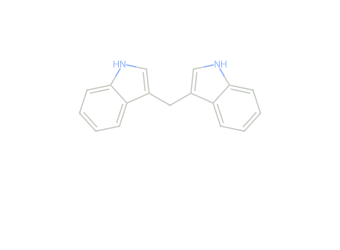
DIM (Diindolylmethane)
The one 12-month randomized trial, in women on tamoxifen, changed urinary estrogen metabolite ratios, a surrogate that no trial has linked to a cancer outcome, and found DIM lowered the active tamoxifen metabolites, a drug interaction signal.
Grade C: human trials exist, but they are small, mixed or not yet repeated. This is not a finding that it does not work. How to read a grade →
DIM is a compound made when you digest broccoli and cabbage. It is sold for hormone balance. In the one year-long study, in women taking the breast cancer drug tamoxifen, DIM changed how estrogen was broken down, as shown in urine tests. No study has linked that change to less cancer. It also lowered the active form of tamoxifen in the blood, and breast density did not change.
- Dose studied
- 150 mg twice daily (300 mg/day)
- Form graded
- Diindolylmethane (microencapsulated, absorption-enhanced)
- Cited PMIDs PubMed ID: the permanent number the US National Library of Medicine gives a published paper. Each one links to that paper's record on PubMed.
- PMID 28560655 →
A letter describes the human evidence, not the product, the manufacturer, or the ingredient's worth.
See the full evidence record →Who responds: this record's trial reading reports no subgroup that identifies who responds.
DIM (Diindolylmethane) for hormone-metabolism and tissue biomarkers A measurable sign in the body, such as a blood test value, used to track a condition or the effect of a treatment., graded on published human trial evidence.
How this letter has changed · latest: October 2026 · Corrected
Thomson 2017 (PMID 28560655) now carries what its full text reports: the primary endpoint The outcome a trial measures to decide whether the treatment worked, such as heart attacks, blood pressure or a symptom score. was originally breast density and was changed to the urinary 2/16 ratio on the monitoring board's advice after recruitment problems, the original primary was null, 98 of 130 randomized women completed, and the active and placebo An inactive substitute made to look like the real treatment, so participants cannot tell which one they received. capsules were supplied by the maker of the studied product while the NCI funded the work. The best-use line called the ratio change a benefit; no trial has linked it to a cancer outcome, and the line now says so. Castañon 2012 (PMID 22075942), the largest DIM trial, null on cervical cytology and HPV, Dalessandri 2004 (PMID 15623462) and Godínez-Martínez 2023 (PMID 36111381), where 75 mg/day did not raise the ratio, are added. The formulation's maker is no longer named on the record. The tamoxifen-metabolite signal stays in the avoid and drug-conflict fields the page renders. Letter unchanged.PMID 28560655 PMID 22075942 PMID 15623462 PMID 36111381
The DIM record cited Thomson 2017 for a favorable change in an estrogen-metabolism biomarker. The same trial, in 130 women taking tamoxifen for breast cancer, found plasma endoxifen, 4-hydroxytamoxifen and N-desmethyltamoxifen lower on DIM than on placebo (P<0.001), and breast density unchanged. Endoxifen is tamoxifen's main active form. Whether the drop reduces tamoxifen's benefit has not been tested. The record now states the finding in its caution, its drug-conflict text and a new interaction entry. The grade is unchanged; the omission was the defect.PMID 28560655
Every change to a letter on this site is dated and published. The full evidence log →
Commercial disclosure
EBL earns no commission on any supplement it grades. A purchase made through the dispensary link below pays EBL nothing, the practitioner discount goes to you in full. The dispensary is Fullscript, a practitioner dispensary, and many of the professional-grade brands in it are sold mainly through practitioners rather than in health food stores. Grades are assigned by published rubric before any commercial relationship exists and are never influenced by one. Full disclosure.
No dose is published here. This record carries no authored dose, because the cited trials do not converge on a single figure. Each trial cited on this page states the dose it used, and EBL has not turned those into a recommendation.
Standardized forms were used in the cited trials; product quality varies.
The cited trial gave DIM twice daily (PMID 28560655). Its report does not state a time of day or whether doses were taken with food.
Checked against the full published report. What the cited trials did, not a schedule. Every supplement, by trial timing →
Pregnancy and breastfeeding. Hormone-sensitive conditions, on the estrogen-metabolism effect. Women taking tamoxifen: in the only randomized trial of DIM with tamoxifen (Thomson 2017, PMID 28560655), the DIM group had lower plasma endoxifen, 4-hydroxytamoxifen and N-desmethyltamoxifen than placebo, and endoxifen is the main active form of tamoxifen. Whether this reduces tamoxifen's benefit has not been tested. This is a question for the treating oncologist.
Tamoxifen: a 12-month randomized trial in 130 women on tamoxifen (Thomson 2017, PMID 28560655) found lower plasma levels of the active tamoxifen metabolites endoxifen, 4-hydroxytamoxifen and N-desmethyltamoxifen on DIM than on placebo (P<0.001). This is a measured human interaction, not a mechanism, and its effect on tamoxifen's clinical benefit is untested. Hormonal contraceptives and hormone replacement therapy are a mechanistic concern on the estrogen-metabolism effect; a 2025 study measured the estrogen half directly, in postmenopausal women taking DIM while on a transdermal estradiol patch. The CYP half remains laboratory work with no human interaction study behind it.
Somebody finally ran this one, in 2025. The record said DIM shifts estrogen metabolism and that none of it had been measured in humans. That is no longer true for the pair that matters. A 2025 study in Menopause examined DIM's effect on estradiol and estrogen metabolism in postmenopausal women who were concurrently using a transdermal estradiol patch, run precisely because integrative practitioners recommend DIM to women who may also be on menopausal hormone therapy and a supplement-drug interaction was possible. The concern about combining DIM with hormone therapy is therefore no longer purely mechanistic, and anyone on hormone therapy considering DIM is asking a question that has been studied rather than one nobody has looked at. The separate CYP1A2 claim on the same record is still laboratory work with no human study behind it. Newman et al. (Menopause, 2025;32(7):630-639; PMID 40298801): study of 3,3'-diindolylmethane and estradiol metabolism in postmenopausal women using a transdermal estradiol patch.
DIM lowered the active tamoxifen metabolites in the trial the record already cites. The DIM record cited Thomson 2017 for its estrogen-metabolism biomarker result and said nothing about the trial's other finding. In 130 women taking tamoxifen for breast cancer, 12 months of DIM 150 mg twice daily lowered plasma endoxifen, 4-hydroxytamoxifen and N-desmethyltamoxifen compared with placebo (P<0.001). Endoxifen is the main active metabolite of tamoxifen. The authors did not test whether the lower levels reduce tamoxifen's protective effect, and no later trial has. A measured drop in the active form of a cancer drug is a caution a reader on that drug needs to see, whatever the biomarker result beside it. Thomson et al. (Breast Cancer Res Treat, 2017; PMID 28560655): randomized placebo-controlled trial, 130 women on tamoxifen, a microencapsulated DIM formulation, 150 mg twice daily for 12 months; tamoxifen metabolites reduced versus placebo.
Estrogen metabolite ratio (2-OHE1 to 16-OHE1) in urine at baseline and 12 weeks: this is the proposed mechanism endpoint, and it has not been linked to a cancer outcome in any trial. Total estradiol and testosterone at baseline and 12 weeks. DIM bioavailability The share of a dose that reaches the bloodstream in a form the body can use. is low in standard form: the trials used microencapsulated, absorption-enhanced formulations.
Primary evidenceFour papers, each linked to its PubMed record.
Thomson et al. (Breast Cancer Research and Treatment, 2017; PMID 28560655): 12-month randomized placebo-controlled trial; 130 women taking tamoxifen for breast cancer were randomized to a microencapsulated DIM formulation, 150 mg twice daily, or placebo, and 98 (47 DIM, 51 placebo) completed, so the biomarker results rest on 98. The primary endpoint was originally breast density; on the data and safety monitoring board's advice, after bilateral mastectomies hampered recruitment, it was changed to the urinary 2/16-hydroxyestrone ratio, and the original primary, breast density on mammography and MRI, did not change. The urinary 2/16 ratio rose and SHBG rose against placebo; plasma tamoxifen metabolites, including endoxifen, 4-hydroxytamoxifen and N-desmethyltamoxifen, were LOWER in the DIM group (P<0.001). The authors state that whether this lowering reduces the clinical benefit of tamoxifen is not known. Funded by the National Cancer Institute; the active and placebo capsules were supplied by the maker of the studied product. No trial has shown that raising the 2/16 ratio changes a cancer outcome. Other randomized trials, different populations: Castañon et al. (Br J Cancer, 2012; PMID 22075942): the largest DIM trial, 551 women with low-grade cervical cytological abnormalities, 150 mg/day for 6 months, funded by Cancer Research UK using the same maker's formulation; no effect on cytology or HPV clearance. Dalessandri et al. (Nutr Cancer, 2004; PMID 15623462): pilot trial, 19 postmenopausal breast cancer survivors, 108 mg/day for 30 days; 2-hydroxyestrone rose, the 2/16 ratio change was not significant (P=0.059). Godínez-Martínez et al. (Nutr Cancer, 2023; PMID 36111381): 60 premenopausal women, 75 mg/day for 30 days; the urinary ratio did not rise. Grade C: one randomized trial on surrogate hormonal endpoints, in a population taking a cancer drug whose active metabolites DIM reduced.
Educational use only · Not medical advice · Starting, stopping or changing any supplement or medication is a decision for your physician
These statements have not been evaluated by the Food and Drug Administration. This product is not intended to diagnose, treat, cure, or prevent any disease. The grade on this page describes the strength of published human trial evidence in the populations studied. It is not a recommendation for any individual and is not medical advice. Starting, stopping or changing any supplement or medication is a decision for your physician.
This page carries a letter. EBL takes no commission, referral fee or payment of any kind on anything it grades. No letter has been bought and none is for sale.
How this is enforced
That is not a promise, it is a build condition. Two checks run on every deploy: one refuses to publish if a commission is claimed on anything graded, the other refuses if a page names a commercial relationship that is not declared in the register. If either fails, this page does not go live. You can read how the checks work, and what they do not cover, on the evidence integrity page.
How EBL searched for the trials (1 search)
The search that was run, what it returned, and what was left out and why, so the absence of evidence can be checked as well as its presence.
(diindolylmethane[tiab] OR "DIM"[tiab]) AND (estrogen[tiab] OR tamoxifen[tiab] OR cervical[tiab]) AND randomized controlled trial[pt]Grades move when new trials publish. A free monthly email lists every grade EBL moved, with the reason and the trial behind it: the sign-up is on the Evidence Log →