Supplement
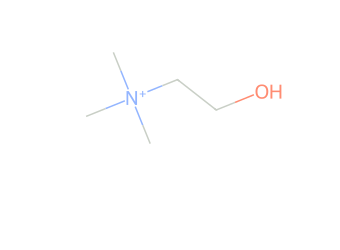
Choline
Infant information-processing speed after maternal supplementation in the third trimester (930 versus 480 mg/day, 26 mothers, no placebo An inactive substitute made to look like the real treatment, so participants cannot tell which one they received. arm); the larger placebo-controlled prenatal trial was null.
Grade C: human trials exist, but they are small, mixed or not yet repeated. This is not a finding that it does not work. How to read a grade →
Choline is a nutrient found in eggs and liver. In one small study of 26 pregnant women, a higher dose was linked to faster thinking in their babies, but there was no dummy-pill group. A larger study against a dummy pill during pregnancy found no benefit. Small studies in adults found no benefit.
- Dose studied
- 480–930 mg/day
- Form graded
- Choline bitartrate or alpha-GPC
- Cited PMIDs PubMed ID: the permanent number the US National Library of Medicine gives a published paper. Each one links to that paper's record on PubMed.
- PMID 29217669 →
A letter describes the human evidence, not the product, the manufacturer, or the ingredient's worth.
See the full evidence record →Who responds: this record's trial reading reports no subgroup that identifies who responds.
Choline for cognitive and developmental measures, graded on published human trial evidence.
How this letter has changed · latest: October 2026 · Corrected
The record was named 'Choline' with a generic use line while its only evidence was Caudill 2018 (PMID 29217669): 26 mothers, 930 versus 480 mg/day, no placebo, infant reaction time. The population, dose, comparator and n are now stated, with the egg and beef industry part-funding the paper discloses. The larger placebo-controlled trial, Cheatham 2012 (PMID 23134891), was null and is cited, with the 7-year follow-up Bahnfleth 2022 (PMID 34962672) and the Gould 2025 (PMID 40077755) review that finds the evidence insufficient. Adult use is stated as ungraded, with Deuster 2002 (PMID 12502178) null. Letter unchanged.PMID 29217669 PMID 23134891 PMID 34962672 PMID 40077755 PMID 12502178
Every change to a letter on this site is dated and published. The full evidence log →
Commercial disclosure
EBL earns no commission on any supplement it grades. A purchase made through the dispensary link below pays EBL nothing, the practitioner discount goes to you in full. The dispensary is Fullscript, a practitioner dispensary, and many of the professional-grade brands in it are sold mainly through practitioners rather than in health food stores. Grades are assigned by published rubric before any commercial relationship exists and are never influenced by one. Full disclosure.
No dose is published here. This record carries no authored dose, because the cited trials do not converge on a single figure. Each trial cited on this page states the dose it used, and EBL has not turned those into a recommendation.
Standardized forms were used in the cited trials; product quality varies.
The summary of the cited pregnancy trial does not state a time of day or whether choline was taken with food (PMID 29217669).
Checked against the published summary; the full paper could not be read. What the cited trials did, not a schedule. Every supplement, by trial timing →
Trimethylaminuria, where the odor is the whole point of the condition.
No prominent drug interaction. The concern that belongs here is metabolic rather than pharmacological: gut bacteria convert dietary choline to trimethylamine, which the liver oxidizes to TMAO, and TMAO has been linked to atherosclerosis in mechanistic and cohort work. Antibiotics suppress that conversion, which is a demonstration of the pathway rather than a reason to combine them.
Dietary choline feeds the TMAO pathway. Gut bacteria convert dietary choline and carnitine to trimethylamine, which the liver oxidizes to TMAO; TMAO has been linked to atherosclerosis in mechanistic work and to incident cardiovascular events in cohorts. Koeth et al. (Nature Medicine, 2013; PMID 23563705): intestinal microbiota metabolism of L-carnitine promotes atherosclerosis. Budoff et al. (Scientific Reports, 2025; PMID 40603925): TMAO and risk of incident cardiovascular events in the Multi-Ethnic Study of Atherosclerosis.
Serum choline and TMAO at baseline and 8 weeks: TMAO elevation is a relevant safety signal for cardiovascular risk with sustained high-dose choline. For cognitive applications, use a validated brief battery at baseline and 12 weeks. CDP-choline and alpha-GPC have better blood-brain barrier penetration than choline bitartrate: The form matches the indication.
Primary evidenceFive papers, each linked to its PubMed record.
Caudill et al. (FASEB J, 2018; PMID 29217669): 26 women in the third trimester randomized to 930 or 480 mg choline/day in a controlled feeding study, no placebo arm; infants of the 930 mg group (24 tested) had faster mean reaction time across 4 to 13 months; funded by the USDA and NIH with part funding from the Egg Nutrition Center and The Beef Checkoff, bodies that promote choline-rich foods, which the paper states had no role in the study. Bahnfleth et al. (FASEB J, 2022; PMID 34962672): 7-year follow-up of the same children (20 tested), better sustained attention in the 930 mg group. Null: Cheatham et al. (Am J Clin Nutr, 2012; PMID 23134891), 140 pregnant women randomized to phosphatidylcholine 750 mg or placebo from 18 weeks to 90 days postpartum, 99 infants tested, no difference in memory, language or global development. Gould et al. (Nutrients, 2025; PMID 40077755): systematic review A review that searches for every study on a question using a method set in advance, then assesses them together. of 4 trials and 5 observational Research that watches what people already do rather than assigning a treatment. It can show that two things travel together, not that one causes the other. studies; most neurodevelopmental outcomes did not support benefit, and the authors find the evidence insufficient to support or refute it. Adults: Deuster et al. (Mil Med, 2002; PMID 12502178), 13 men, choline 50 mg/kg, no effect on physical or cognitive performance after exhaustive exercise. Grade C for the infant endpoint: one small dose-comparison trial with a positive follow-up against a larger null placebo-controlled trial; the endpoint is measured in the offspring, not in the person taking the supplement. Adult use is ungraded.
Educational use only · Not medical advice · Starting, stopping or changing any supplement or medication is a decision for your physician
These statements have not been evaluated by the Food and Drug Administration. This product is not intended to diagnose, treat, cure, or prevent any disease. The grade on this page describes the strength of published human trial evidence in the populations studied. It is not a recommendation for any individual and is not medical advice. Starting, stopping or changing any supplement or medication is a decision for your physician.
This page carries a letter. EBL takes no commission, referral fee or payment of any kind on anything it grades. No letter has been bought and none is for sale.
How this is enforced
That is not a promise, it is a build condition. Two checks run on every deploy: one refuses to publish if a commission is claimed on anything graded, the other refuses if a page names a commercial relationship that is not declared in the register. If either fails, this page does not go live. You can read how the checks work, and what they do not cover, on the evidence integrity page.
How EBL searched for the trials (1 search)
The search that was run, what it returned, and what was left out and why, so the absence of evidence can be checked as well as its presence.
choline[tiab] AND supplement*[tiab] AND (pregnan*[tiab] OR cognit*[tiab]) AND (randomized controlled trial[pt] OR systematic review[pt]) AND humans[mesh]Grades move when new trials publish. A free monthly email lists every grade EBL moved, with the reason and the trial behind it: the sign-up is on the Evidence Log →