Supplement · graded by use, two uses
Carnosine
Glycemic markers in prediabetes or type 2 diabetes.
Grade C: human trials exist, but they are small, mixed or not yet repeated. This is not a finding that it does not work. How to read a grade →
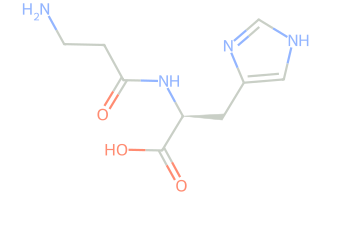
Carnosine is made of two amino acids and is found in meat. In small studies of people with prediabetes or type 2 diabetes, it gave mixed results on blood sugar tests. In the same kind of people, it did not improve strength, muscle or bone. No study has tested it in healthy adults.
The C belongs to one of the two uses graded on this record. The other one carries its own letter.
As studied, and the trials
Houjeghani et al. (Nutr Res, 2018; PMID PubMed ID: the permanent number the US National Library of Medicine gives a published paper. Each one links to that paper's record on PubMed. 29420997): 54 adults with type 2 diabetes, 1 g/day for 12 weeks, fasting glucose 13 mg/dL and HbA1c A blood test that reflects average blood sugar over the previous two to three months. 0.6 points lower than placebo An inactive substitute made to look like the real treatment, so participants cannot tell which one they received., fat mass lower. Hariharan et al. (Nutr Metab Cardiovasc Dis, 2024; PMID 38172006): 43 adults with prediabetes or type 2 diabetes, 2 g/day for 14 weeks, glucose at 90 and 120 minutes of an oral glucose tolerance test lower, no change in secondary outcomes; the carnosine was provided by a manufacturer with no role in the study. Peng et al. (Complement Ther Med, 2020; PMID 31987255): meta-analysis A study that pools the numbers from several trials into one combined estimate. of 4 carnosine-only trials, 184 participants, HbA1c 0.92 points lower with high heterogeneity How much the results of the pooled trials differ from each other. High heterogeneity makes a combined estimate less reliable., no effect on fasting glucose, HOMA-IR or lipids. Small, mixed: C.
As studied, and the trials
Read the grade that matches your goal. How EBL grades by use →
- Dose studied
- 2 g/day
- Form graded
- L-carnosine
- Evidence behind the C
- PMID 29420997 →PMID 38172006 →PMID 31987255 →
A letter describes the human evidence, not the product, the manufacturer, or the ingredient's worth.
See the full evidence record →Carnosine for glycemic markers in prediabetes or type 2 diabetes, on small randomized trials.
How this letter has changed · latest: October 2026 · Corrected
The October split left the editor to confirm: glycemic markers in prediabetes or type 2 diabetes at C on small mixed trials (Houjeghani et al., 2018; PMID 29420997; Hariharan et al., 2024; PMID 38172006; Peng et al., 2020; PMID 31987255), musculoskeletal measures at D Route 2 Human randomized trials have been run and did not show benefit on the stated outcome. One of the two routes to the lowest letter on EBL's scale. on null trials (Saadati et al., 2024; PMID 39770949; O'Toole et al., 2026; PMID 42308284). Small positive trials with high heterogeneity and no effect on fasting glucose or insulin resistance in the pooled data is thin randomized evidence, which is C by definition; tested without benefit is D Route 2 by definition. Applied the written grade definition under the editor's standing instruction of October 2026 (Arnold Sandlow, D.C.).PMID 29420997 PMID 31987255 PMID 38172006 PMID 39770949 PMID 42308284
The ref described Saadati 2024 (PMID 39770949) as a trial of carnosine 'on musculoskeletal and metabolic measures' without saying it was null on all of them, and the best-use line named musculoskeletal measures as the use. That use is now D Route 2, with O'Toole 2026 (PMID 42308284) beside it. The glycemic evidence that is the only basis for a C is now cited: Houjeghani 2018 (PMID 29420997), Hariharan 2024 (PMID 38172006), Peng 2020 (PMID 31987255). The nulls from the same parent trial on vascular, lipid, organ and inflammatory outcomes (PMIDs 38004228, 39599686) are stated, the population (prediabetes and type 2 diabetes, never healthy adults) is stated, and the pooled analyses that mix beta-alanine (PMIDs 34333586, 40999397) are labeled. Headline C held pending editor confirmation.PMID 39770949 PMID 42308284 PMID 29420997 PMID 38172006 PMID 31987255
Every change to a letter on this site is dated and published. The full evidence log →
Commercial disclosure
EBL earns no commission on any supplement it grades. A purchase made through the dispensary link below pays EBL nothing, the practitioner discount goes to you in full. The dispensary is Fullscript, a practitioner dispensary, and many of the professional-grade brands in it are sold mainly through practitioners rather than in health food stores. Grades are assigned by published rubric before any commercial relationship exists and are never influenced by one. Full disclosure.
No dose is published here. This record carries no authored dose, because the cited trials do not converge on a single figure. Each trial cited on this page states the dose it used, and EBL has not turned those into a recommendation.
Standardized extracts/forms were used in the cited trials; product quality varies.
The cited trial gave 2 g a day (PMID 39770949). Its report does not state a time of day or whether doses were taken with food.
Checked against the full published report. What the cited trials did, not a schedule. Every supplement, by trial timing →
No prominent contraindication at studied doses. Histidine and beta-alanine intolerance would apply to the constituents.
No prominent drug interaction has been identified. Carnosine is hydrolyzed rapidly by serum carnosinase, which is also why the oral evidence base is thin.
Forty records, none an interaction study; the one human trial is safety and pharmacokinetics. Forty records returned in August 2026 and none tests carnosine against a drug. They are conjugate chemistry, hydrogel delivery, in-silico screening and enzyme work. One is a genuine human trial, a dose-escalation safety, tolerability and pharmacokinetic study in sixteen volunteers, and it is not an interaction study. The serum-carnosinase point the record makes is the reason to expect little systemic exposure in the first place, and that is pharmacology rather than a measured interaction. Basis: pharmacological mechanism, not a human study. Searched PubMed in August 2026: 1 query, 40 human results.
The primary outcome for your specific application at baseline and 12 weeks: glycation (HbA1c, fructosamine) for metabolic use, cognitive battery for neuroprotection use, exercise performance test for athletic use. Serum carnosine is rapidly degraded by carnosinase: oral supplementation raises tissue carnosine; direct serum measurement is not a reliable proxy.
Primary evidenceNine papers, each linked to its PubMed record.
All trials cited enrolled adults with prediabetes, type 2 diabetes or overweight; nothing tests healthy adults. Glycemic markers: Houjeghani et al. (Nutr Res, 2018; PMID 29420997), Hariharan et al. (Nutr Metab Cardiovasc Dis, 2024; PMID 38172006) and the Peng et al. meta-analysis (Complement Ther Med, 2020; PMID 31987255) are positive on HbA1c or glucose-tolerance glucose with high heterogeneity and no effect on fasting glucose, HOMA-IR or lipids in the pooled data. Null from the same parent trial as Hariharan: Saadati et al. (Nutrients, 2024; PMID 39770949), no effect on grip strength, lean mass, fat, visceral fat or bone; Saadati et al. (Nutrients, 2023; PMID 38004228), no effect on blood pressure, endothelial function, arterial stiffness, lipids, liver or kidney outcomes; Saadati et al. (Nutrients, 2024; PMID 39599686), no effect on inflammatory markers or adipokines. O'Toole et al. (J Int Soc Sports Nutr, 2026; PMID 42308284): 299 adults, no overall effect on grip strength or performance. Pooled analyses that mix carnosine with its precursor beta-alanine, Matthews et al. (Adv Nutr, 2021; PMID 34333586) and Li et al. (BMC Endocr Disord, 2025; PMID 40999397), are labeled as such and do not grade carnosine alone. Grade C rests on the glycemic use; the musculoskeletal use is D, Route 2.
Educational use only · Not medical advice · Starting, stopping or changing any supplement or medication is a decision for your physician
These statements have not been evaluated by the Food and Drug Administration. This product is not intended to diagnose, treat, cure, or prevent any disease. The grade on this page describes the strength of published human trial evidence in the populations studied. It is not a recommendation for any individual and is not medical advice. Starting, stopping or changing any supplement or medication is a decision for your physician.
Who responds: this record's trial reading reports no subgroup that identifies who responds.
This page carries a letter. EBL takes no commission, referral fee or payment of any kind on anything it grades. No letter has been bought and none is for sale.
How this is enforced
That is not a promise, it is a build condition. Two checks run on every deploy: one refuses to publish if a commission is claimed on anything graded, the other refuses if a page names a commercial relationship that is not declared in the register. If either fails, this page does not go live. You can read how the checks work, and what they do not cover, on the evidence integrity page.
How EBL searched for the trials (1 search)
The search that was run, what it returned, and what was left out and why, so the absence of evidence can be checked as well as its presence.
carnosine[tiab] AND supplement*[tiab] AND (randomized controlled trial[pt] OR meta-analysis[pt]) AND humans[mesh]Grades move when new trials publish. A free monthly email lists every grade EBL moved, with the reason and the trial behind it: the sign-up is on the Evidence Log →