Supplement
Boswellia serrata
Osteoarthritis pain and joint function; consistent across randomized trials, but those trials are small.
Boswellia is a plant extract. In people with osteoarthritis, studies found less joint pain and better joint function. The results were consistent, but the studies were small. The positive studies used extracts with a set amount of one active acid, at 100 to 250 mg a day, and found gains by week 8. Other products may not do the same. In lab work it slowed blood clotting, so it may raise bleeding risk. Pregnancy is a listed concern.
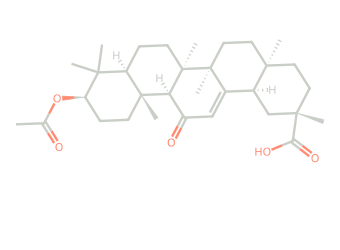
- Dose studied
- 100–250 mg/day (AKBA, RCT Randomized controlled trial: people are assigned to the treatment or a comparison by chance, so the groups differ only in what they received. It is the design that can show cause and effect. range)
- Form graded
- Standardized Boswellia serrata (AKBA)
- Cited PMIDs PubMed ID: the permanent number the US National Library of Medicine gives a published paper. Each one links to that paper's record on PubMed.
- PMID 32680575 →PMID 29018060 →
A letter describes the human evidence, not the product, the manufacturer, or the ingredient's worth.
See the full evidence record →Who responds: this record's trial reading reports no subgroup that identifies who responds.
Boswellia serrata for osteoarthritis pain and function, graded on human trial evidence.
A grade describes the intervention that was tested. Where the product on the shelf differs from it, this says so.
Commercial disclosure
EBL earns no commission on any supplement it grades. A purchase made through the dispensary link below pays EBL nothing, the practitioner discount goes to you in full. The dispensary is Fullscript, a practitioner dispensary, and many of the professional-grade brands in it are sold mainly through practitioners rather than in health food stores. Grades are assigned by published rubric before any commercial relationship exists and are never influenced by one. Full disclosure.
No dose is published here. This record carries no authored dose, because the cited trials do not converge on a single figure. Each trial cited on this page states the dose it used, and EBL has not turned those into a recommendation.
Standardized extracts/forms were used in the cited trials; product quality varies.
The cited reviews pool trials and do not report when doses were taken (PMID 32680575, PMID 29018060).
Checked against the full report for 1 of the 2 cited studies, and the published summary for the rest. What the cited trials did, not a schedule. Every supplement, by trial timing →
Pregnancy. Raised bleeding risk.
Boswellic acids inhibit 5-lipoxygenase and show antiplatelet activity in laboratory work, so anticoagulants and antiplatelets are a mechanistic caution rather than a measured one. In vitro CYP inhibition has been reported and its clinical relevance is not established.
The record calls it mechanistic, and the record is right. Boswellia's antiplatelet caution rests entirely on laboratory work, which is what the record already says. The search confirms it rather than correcting it. Boswellic acids inhibit platelet aggregation and monocyte activation in isolated human cells, and a separate study describes their signalling effects in human platelets, but both are done to platelets in a dish. The animal work is in rats. No study has given boswellia to a person and measured bleeding time, platelet function or INR, so the size of the effect at a capsule dose is unknown in both directions. Basis: pharmacological mechanism, not a human study. Searched PubMed in August 2026: 2 queries, 21 human results.
Joint pain and stiffness on the WOMAC or VAS scale at baseline and 8 weeks. CRP or IL-6 if available: the anti-inflammatory mechanism is measurable through these markers. The AKBA extract used in the positive trials (Aflapin, 5-Loxin) achieved significant WOMAC improvement by week 8 at 100-250 mg/day; generic boswellia products without standardized AKBA content may not replicate this.
Primary evidenceTwo papers, each linked to its PubMed record.
Yu et al. (BMC Complementary Medicine and Therapies, 2020; PMID 32680575) and Liu et al. (2018 meta-analysis A study that pools the numbers from several trials into one combined estimate.; PMID 29018060): meta-analyses of randomized trials: Boswellia serrata extract, alone in 3 of the 7 trials Yu pooled and combined with other agents in 4, improved osteoarthritis pain and function. Grade B: replicated The same finding reproduced by a separate research group. A result seen once can be chance or bias; a replicated one is harder to explain away. randomized evidence on symptom endpoints The outcome a trial measures to decide whether the treatment worked, such as heart attacks, blood pressure or a symptom score.; the trials are small and of medium to low quality.
Educational use only · Not medical advice · Starting, stopping or changing any supplement or medication is a decision for your physician
These statements have not been evaluated by the Food and Drug Administration. This product is not intended to diagnose, treat, cure, or prevent any disease. The grade on this page describes the strength of published human trial evidence in the populations studied. It is not a recommendation for any individual and is not medical advice. Starting, stopping or changing any supplement or medication is a decision for your physician.
This page carries a letter. EBL takes no commission, referral fee or payment of any kind on anything it grades. No letter has been bought and none is for sale.
How this is enforced
That is not a promise, it is a build condition. Two checks run on every deploy: one refuses to publish if a commission is claimed on anything graded, the other refuses if a page names a commercial relationship that is not declared in the register. If either fails, this page does not go live. You can read how the checks work, and what they do not cover, on the evidence integrity page.
Grades move when new trials publish. A free monthly email lists every grade EBL moved, with the reason and the trial behind it: the sign-up is on the Evidence Log →