Supplement
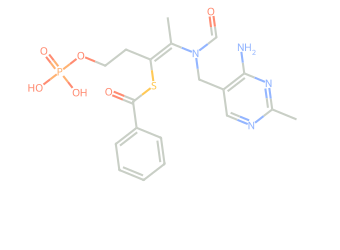
Benfotiamine
Diabetic neuropathy symptoms: short trials report symptom-score gains, trials of a year or longer find no change in nerve function.
Grade C: human trials exist, but they are small, mixed or not yet repeated. This is not a finding that it does not work. How to read a grade →
Benfotiamine is a form of vitamin B1 that the body absorbs well. It is sold for nerve pain in diabetes. Short studies found that symptoms such as burning and tingling eased. Studies lasting a year or longer found no change in how well the nerves worked. So the short-term symptom gains have not held up over time.
- Dose studied
- 300–900 mg/day
- Form graded
- Benfotiamine (lipid-soluble thiamine)
- Cited PMIDs PubMed ID: the permanent number the US National Library of Medicine gives a published paper. Each one links to that paper's record on PubMed.
- PMID 41571333 →PMID 23701274 →
A letter describes the human evidence, not the product, the manufacturer, or the ingredient's worth.
See the full evidence record →Who responds: this record's trial reading reports no subgroup that identifies who responds.
Benfotiamine for diabetic neuropathy measures, graded on published human trial evidence.
Commercial disclosure
EBL earns no commission on any supplement it grades. A purchase made through the dispensary link below pays EBL nothing, the practitioner discount goes to you in full. The dispensary is Fullscript, a practitioner dispensary, and many of the professional-grade brands in it are sold mainly through practitioners rather than in health food stores. Grades are assigned by published rubric before any commercial relationship exists and are never influenced by one. Full disclosure.
No dose is published here. This record carries no authored dose, because the cited trials do not converge on a single figure. Each trial cited on this page states the dose it used, and EBL has not turned those into a recommendation.
Standardized extracts/forms were used in the cited trials; product quality varies.
The cited 12-month trial gave 300 mg twice a day (PMID 41571333). Its report does not state a time of day or whether doses were taken with food.
Checked against the full published report. What the cited trials did, not a schedule. Every supplement, by trial timing →
No prominent contraindication at studied doses.
No prominent drug interaction. Loop diuretics increase thiamine loss, so the relationship there is depletion A fall in a nutrient's level caused by a medication, for example through reduced absorption or increased loss. rather than interference. Fluorouracil interferes with thiamine metabolism, which is a prescriber's consideration during treatment.
Mechanism-based, no human interaction study located. The drug interactions described for Benfotiamine are mechanism-based. A PubMed search for human interaction, pharmacokinetic or co-administration studies pairing it with diuretic, loop diuretic returned no results in August 2026. The caution stands on pharmacology, not on a trial, and is labeled as such. Basis: pharmacological mechanism, not a human study. Searched PubMed in August 2026: 2 queries, 0 human results.
Neuropathy symptoms using the Total Symptom Score (TSS) at baseline and 6 weeks for diabetic neuropathy applications. HbA1c A blood test that reflects average blood sugar over the previous two to three months. and fasting glucose at 12 weeks. Advanced glycation end-product (AGE) levels at baseline and 12 weeks if available: benfotiamine's primary mechanism is AGE inhibition.
Primary evidenceFive papers, each linked to its PubMed record.
Haupt et al. (Int J Clin Pharmacol Ther, 2005; PMID 15726875, BEDIP): 3-week randomized placebo-controlled pilot, 40 inpatients, 400 mg/day; neuropathy score improved against placebo An inactive substitute made to look like the real treatment, so participants cannot tell which one they received. (P=0.0287), pain fell (P=0.0414), the tuning-fork test did not change. Stracke et al. (Exp Clin Endocrinol Diabetes, 2008; PMID 18473286, BENDIP): 6-week randomized placebo-controlled trial, 165 randomized, 300 or 600 mg/day; the Neuropathy Symptom Score differed in the per-protocol analysis (P=0.033) and narrowly missed in the intention-to-treat Analyzing everyone in the group they were assigned to, even if they stopped the treatment, so the comparison stays randomized. analysis (P=0.055); the Total Symptom Score did not differ. Fraser et al. (Diabetes Care, 2012; PMID 22446172): 24-month randomized placebo-controlled trial, 67 adults with type 1 diabetes, 300 mg/day; no difference in nerve function or inflammatory markers. Ziegler et al. (BMJ Open Diabetes Research and Care, 2026; PMID 41571333): 12-month randomized placebo-controlled trial in type 2 diabetes, 300 mg twice daily; corneal nerve fiber length (primary) and every secondary measure did not differ. Stirban et al. (Diabet Med, 2013; PMID 23701274): 6-week crossover A trial design in which each participant receives both the treatment and the comparison, one after the other, and serves as their own control. trial on postprandial vascular function, null. Grade C: the two short trials report symptom-score gains, the two trials of a year or longer find no effect on nerve measures.
Educational use only · Not medical advice · Starting, stopping or changing any supplement or medication is a decision for your physician
These statements have not been evaluated by the Food and Drug Administration. This product is not intended to diagnose, treat, cure, or prevent any disease. The grade on this page describes the strength of published human trial evidence in the populations studied. It is not a recommendation for any individual and is not medical advice. Starting, stopping or changing any supplement or medication is a decision for your physician.
This page carries a letter. EBL takes no commission, referral fee or payment of any kind on anything it grades. No letter has been bought and none is for sale.
How this is enforced
That is not a promise, it is a build condition. Two checks run on every deploy: one refuses to publish if a commission is claimed on anything graded, the other refuses if a page names a commercial relationship that is not declared in the register. If either fails, this page does not go live. You can read how the checks work, and what they do not cover, on the evidence integrity page.
Grades move when new trials publish. A free monthly email lists every grade EBL moved, with the reason and the trial behind it: the sign-up is on the Evidence Log →