Supplement
Apigenin
No human randomized trial of standalone apigenin has been run.
Grade D, not yet tested: no human randomized trial has been run. This D records missing trials, not a finding that it does not work. How to read a grade →
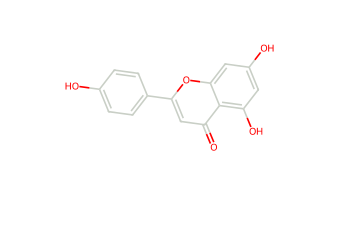
Apigenin is a plant compound found in chamomile and parsley. It is sold to protect NAD, a molecule linked to energy and aging, and to clear worn-out cells. These ideas come from work in cells and animals. No study has tested apigenin alone in people. So there is no evidence in people for the way it is sold.
A letter describes the human evidence, not the product, the manufacturer, or the ingredient's worth.
See the full evidence record →Who responds: this record's trial reading reports no subgroup that identifies who responds.
No human randomized trial has tested this at the dose and form graded, so there is nothing for a higher letter to rest on. A Route 1 Grade D records the absence of trials. It is not a finding against the compound, and it is not a finding that the compound is safe, because neither has been established. It may turn out to work once someone tests it. The grade moves when a qualifying human trial reports.
CD38 inhibition and senolytic A compound intended to clear senescent cells: older cells that have stopped dividing but remain in tissue. activity in cells and animals only. No human randomized trial.
The trial that would change this grade.
A positive trial of this shape would move this entry to C.
Why the current trials fall short
No randomized trial has tested apigenin by itself. The one human trial that included it tested a branded multi-ingredient product (PMID PubMed ID: the permanent number the US National Library of Medicine gives a published paper. Each one links to that paper's record on PubMed. 38302501), so it cannot speak for apigenin.
Why people believe itOne human source; no published case reports of benefit; no reports of harm.
The case for apigenin, a flavonoid found in chamomile and parsley, is that it blocks CD38, the main enzyme that breaks down NAD+, so NAD+ could stay higher with age. In obese mice it raised NAD+. It is often taken with NMN on that reasoning, but it has not been tested on its own in people.
What supporters point to, and what each source actually shows. None of it is enough to move this letter higher; the trial described above under Evidence wanted is what would.
- Human trial, blood or body markerA product combining apigenin with several other ingredients raised blood NAD+ in a crossover A trial design in which each participant receives both the treatment and the comparison, one after the other, and serves as their own control. trial. A multi-ingredient product, so it cannot show what apigenin does by itself. PMID 38302501
A case report describes what happened to one or a few patients. It cannot show the treatment caused the change, and reports of success are published more often than reports of failure.
A PubMed search in October 2026 found no published case report of benefit for this use.
Searched PubMed, October 2026: case report record(s) returned. The search returned no case report of any kind for apigenin.
Animal and laboratory workOne study in animals or cells. Not counted toward the letter.
None of this is human evidence and none of it counts toward the letter. It is listed so the reader can see what the idea rests on. Most findings in animals do not hold up when tested in people.
- MouseApigenin blocked the NAD+-consuming enzyme CD38 in cultured cells, and in obese mice it raised NAD+ and improved several measures of glucose and lipid handling. PMID 23172919
How this letter has changed · latest: October 2026 · Corrected
The record credited Kellenberger 2011 (PMID 21641214) with showing apigenin inhibits CD38; that paper names other flavonoids and not apigenin. Escande 2013 (PMID 23172919) is the apigenin paper and is now cited for it. Henderson 2024 (PMID 38302501), listed as a 'systems approach', is a randomized crossover trial of a branded multi-ingredient product with the maker's founder and an employee among the authors; it is now described that way and the record says 'standalone apigenin' where it says no trial exists. Letter unchanged.PMID 21641214 PMID 23172919 PMID 38302501
Every change to a letter on this site is dated and published. The full evidence log →
Commercial disclosure
EBL earns no commission on any supplement it grades. Grades are assigned by published rubric before any commercial relationship exists and are never influenced by one. Full disclosure.
50-200 mg/day in typical supplements. No human RCT dose established.
Apigenin is available as a standalone supplement and in combination products, and dietary sources include parsley, chamomile and celery. Oral bioavailability The share of a dose that reaches the bloodstream in a form the body can use. is limited. Alternative delivery formulations exist, but they should not be assumed clinically superior without human outcome data.
The one cited human study tested a multi-ingredient formula that includes apigenin, taken as three capsules with breakfast and three with lunch (PMID 38302501). The other cited studies were laboratory and mouse studies (PMID 21641214, PMID 23172919).
Checked against the full report for 2 of the 3 cited studies, and the published summary for the rest. What the cited trials did, not a schedule. Every supplement, by trial timing →
How to buy this: quality criteria, not a brand
No established human RCT dose (products use 50–200mg).
Low oral bioavailability; some use phytosome/nanoparticle delivery. Often bundled with NMN.
Third-party purity, if you proceed.
Expecting human benefit at a D grade; bundled products that mask the actual apigenin dose.
The grade and these criteria are set only from human trials. Any purchase link is convenience and does not affect the grade.
Pregnancy. Thyroid disease, since flavonoids in this class inhibit thyroid peroxidase in laboratory work. Human safety data at the doses used in longevity protocols is limited.
Apigenin inhibits CYP1A2, CYP2C9 and CYP3A4 in laboratory work, so drugs cleared by those routes could reach higher levels. Warfarin, cleared partly by CYP2C9, is the sharpest case. Sedatives and benzodiazepines: apigenin binds benzodiazepine receptors, so additive sedation is plausible. No human study has measured apigenin against a drug cleared by those enzymes. Two human studies do bear on it: apigenin is poorly absorbed, with metabolites equivalent to about 0.5 percent of intake recovered in urine, and a feeding study in healthy volunteers found no effect on platelet function at dietary intakes, while the platelet inhibition seen in the laboratory required concentrations far above anything achievable by mouth.
Apigenin has been given to people, and that is what makes the laboratory findings hard to transfer. The record's CYP and platelet concerns come from laboratory work at concentrations the body does not reach. Two human studies say so directly. An absorption study in healthy male adults found apigenin itself is poorly absorbed, circulating as glucuronide and sulfate metabolites, with metabolites equivalent to about 0.5 percent of intake recovered in urine over 24 hours. And a feeding study in 18 healthy volunteers, run alongside the in vitro work in the same paper, found that the platelet inhibition seen at 2,500 micromol per liter disappeared at concentrations that might occur in vivo, and dietary apigenin from parsley did not change hemostasis. Neither study gave apigenin with a drug, so the warfarin question is still unmeasured; what they establish is that the laboratory concentrations are not a guide to what a capsule does. Borges et al. (Free Radic Biol Med, 2022;190:181-195; PMID 35452808): clinical trial, absorption, distribution, metabolism and excretion of apigenin and its glycosides in healthy male adults. Janssen et al. (Am J Clin Nutr, 1998;67(2):255-62; PMID 9459373): clinical trial, effects of quercetin and apigenin on hemostasis in healthy volunteers, in vitro and dietary supplement study.
No validated human biomarker A measurable sign in the body, such as a blood test value, used to track a condition or the effect of a treatment.. Plasma NAD+ is measurable but the connection to apigenin in humans is not established.
Primary evidenceThree papers, each linked to its PubMed record.
Escande et al. (Diabetes, 2013; PMID 23172919): apigenin inhibits CD38 in cells and raises NAD+ and improves glucose and lipid measures in obese mice; this is the paper that shows apigenin as a CD38 inhibitor. Kellenberger et al. (Bioorg Med Chem Lett, 2011; PMID 21641214): other flavonoids (luteolinidin, kuromanin, luteolin) inhibit CD38 at low micromolar concentrations; the abstract does not name apigenin. Henderson et al. (npj Aging, 2024; PMID 38302501): a double-blind randomized crossover trial in humans of a branded multi-ingredient supplement, which raised whole-blood NAD+; it does not grade apigenin alone, and the maker's founder and chief executive and one of its employees are among the authors. D Route 1: no human outcome trial of apigenin by itself.
Educational use only · Not medical advice · Starting, stopping or changing any supplement or medication is a decision for your physician
These statements have not been evaluated by the Food and Drug Administration. This product is not intended to diagnose, treat, cure, or prevent any disease. The grade on this page describes the strength of published human trial evidence in the populations studied. It is not a recommendation for any individual and is not medical advice. Starting, stopping or changing any supplement or medication is a decision for your physician.
This page carries a letter. EBL takes no commission, referral fee or payment of any kind on anything it grades. No letter has been bought and none is for sale.
How this is enforced
That is not a promise, it is a build condition. Two checks run on every deploy: one refuses to publish if a commission is claimed on anything graded, the other refuses if a page names a commercial relationship that is not declared in the register. If either fails, this page does not go live. You can read how the checks work, and what they do not cover, on the evidence integrity page.
Grades move when new trials publish. A free monthly email lists every grade EBL moved, with the reason and the trial behind it: the sign-up is on the Evidence Log →