Supplement
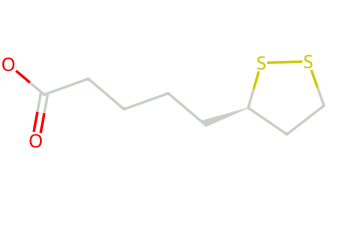
Alpha Lipoic Acid (ALA / R-ALA)
Universal antioxidant (fat and water soluble), insulin sensitivity, peripheral neuropathy, glutathione recycling.
Grade C: human trials exist, but they are small, mixed or not yet repeated. This is not a finding that it does not work. How to read a grade →
Alpha lipoic acid is made in the body and sold as a pill. It is often called a universal antioxidant, but that claim comes from lab work, not from studies of people getting better. In people with diabetes who have nerve pain in their feet, some studies found that pain, burning and numbness eased. The studies were small or short, and results varied.
A letter describes the human evidence, not the product, the manufacturer, or the ingredient's worth.
See the full evidence record →Who responds: this record's trial reading reports no subgroup that identifies who responds.
Symptoms of diabetic peripheral neuropathy. Antioxidant claims rest on mechanism and carry no grade.
The trial that would change this grade.
A positive trial of this shape, supported by further trials, would move this entry to B.
Why the current trials fall short
The oral trials that found symptom relief were short, and the four-year trial missed its main endpoint. A long oral trial with symptoms and nerve function as outcomes, and low blood sugar episodes recorded, is what is missing.
Why people believe itOne human source; one published case report of benefit; four reports of harm.
The case for alpha-lipoic acid is that the body uses it in energy production, that it works as an antioxidant in both fatty and watery parts of cells, and that it is given by infusion for diabetic nerve pain in parts of Europe. Trials found relief of nerve pain symptoms and small falls in blood sugar.
What supporters point to, and what each source actually shows. None of it is enough to move this letter higher; the trial described above under Evidence wanted is what would.
- Human trial, blood or body markerIn 57 adults with type 2 diabetes, 300 mg a day for 8 weeks lowered fasting blood sugar and a measure of insulin resistance against placebo An inactive substitute made to look like the real treatment, so participants cannot tell which one they received.. Blood markers over 8 weeks. PMID 21666939
A case report describes what happened to one or a few patients. It cannot show the treatment caused the change, and reports of success are published more often than reports of failure.
- Two children with cystinuria, an inherited disorder that causes kidney stones, had fewer stones after alpha-lipoic acid was added to standard treatment. A different use, in two patients. PMID 32245805
- A woman in her 70s without diabetes developed repeated episodes of dangerously low blood sugar from insulin autoimmune syndrome, in which the body makes antibodies to its own insulin, a week after starting a vitamin product containing alpha-lipoic acid. PMID 42493219
- A report of insulin autoimmune syndrome caused by alpha-lipoic acid in a woman of European descent; the condition had mostly been reported in East Asian patients. No abstract is indexed; the title reports the case. PMID 21868770
- A 42-year-old woman died of multiple organ failure after deliberately swallowing 6 g of alpha-lipoic acid, ten 600 mg tablets. PMID 36806430
- An older woman who swallowed 6 g by mistake, taking it for her fiber supplement, had seizures and needed a breathing machine; she recovered within 3 days. PMID 41577082
Searched PubMed, October 2026: 46 case report record(s) returned. Twenty describe insulin autoimmune syndrome, most after alpha-lipoic acid, and ten describe poisoning from large doses, including deaths in a teenager and an adult; four are listed. Two more describe kidney and skin reactions. Five describe improvement, with alpha-lipoic acid often one of several treatments; one is listed. The other nine concern inherited disorders, an animal case, a clinical trial and unrelated conditions.
How this letter has changed · latest: October 2026 · Corrected
The protocol was named R-ALA 300 to 600 mg fasted. Every cited trial gave racemic alpha-lipoic acid with no fasting instruction: Ansar et al. (Saudi Med J, 2011; PMID PubMed ID: the permanent number the US National Library of Medicine gives a published paper. Each one links to that paper's record on PubMed. 21666939), 300 mg a day; Ziegler et al. (Diabetes Care, 2006; PMID 17065669, SYDNEY 2), 600 to 1,800 mg a day; Ziegler et al. (Diabetes Care, 2011; PMID 21775755, NATHAN 1), 600 mg a day for four years; and Han et al. (Eur J Endocrinol, 2012; PMID 22837391) pooled intravenous trials. The name now reads Alpha-Lipoic Acid (racemic) 300 to 600 mg/day, and the tracking note no longer asserts an R-form equivalence no trial measured. Letter unchanged at C; the review opened October is closed. Decided October 2026 by editor adjudication (Arnold Sandlow, D.C.).PMID 17065669 PMID 21666939 PMID 21775755 PMID 22837391
Alpha-lipoic acid held a B on SYDNEY 2 (Ziegler et al., Diabetes Care, 2006; PMID 17065669), a 5-week oral trial in 181 adults, with replication The same finding reproduced by a separate research group. A result seen once can be chance or bias; a replicated one is harder to explain away. claimed from Han et al. (Eur J Endocrinol, 2012; PMID 22837391), a meta-analysis A study that pools the numbers from several trials into one combined estimate. of mostly intravenous trials its own authors rate as poor. The 4-year oral trial, NATHAN 1 (Ziegler et al., Diabetes Care, 2011; PMID 21775755; 460 adults, 600 mg/day), missed its primary composite endpoint and recorded more serious adverse events on treatment. The glycemic claim rests on Ansar et al. (Saudi Med J, 2011; PMID 21666939), one 8-week trial of 57 adults. One positive short oral trial, one null long oral trial and an intravenous pool do not meet the B definition of an independently replicated randomized result; the letter is C. Moved October 2026 by editor adjudication; the search is recorded on the record.PMID 17065669 PMID 21775755 PMID 22837391 PMID 21666939
The R-ALA protocol held a B on the same bibliography as the supplement record: Ansar et al. (Saudi Med J, 2011; PMID 21666939), one 8-week glycemic trial of 57 adults; SYDNEY 2 (Ziegler et al., Diabetes Care, 2006; PMID 17065669); NATHAN 1 (Ziegler et al., Diabetes Care, 2011; PMID 21775755), null on its primary; and Han et al. (Eur J Endocrinol, 2012; PMID 22837391), a mostly intravenous pool. None used R-alpha-lipoic acid or fasted dosing. One positive glycemic trial without replication is C. Moved October 2026 by editor adjudication; the name's R-form and fasted claims stay on the review roster.PMID 21666939 PMID 17065669 PMID 21775755 PMID 22837391
Every change to a letter on this site is dated and published. The full evidence log →
Commercial disclosure
EBL earns no commission on any supplement it grades. A purchase made through the dispensary link below pays EBL nothing, the practitioner discount goes to you in full. The dispensary is Fullscript, a practitioner dispensary, and many of the professional-grade brands in it are sold mainly through practitioners rather than in health food stores. Grades are assigned by published rubric before any commercial relationship exists and are never influenced by one. Full disclosure.
R-ALA (active isomer): 100–300 mg/day. Racemic ALA: 300 to 600 mg.
R-ALA is the biologically active isomer with better mitochondrial affinity. Sodium R-ALA (stabilized form) is more stable and better absorbed than standard R-ALA.
The SYDNEY 2 trial gave one oral dose a day (PMID 17065669), and the other cited trial gave 300 mg a day (PMID 21666939). Neither summary states a time of day or whether it was taken with food.
Checked against the published summaries; the full papers could not be read. What the cited trials did, not a schedule. Every supplement, by trial timing →
Insulin autoimmune syndrome is the contraindication that matters here and it is usually missing from supplement labels. Alpha-lipoic acid can trigger it in genetically susceptible people, producing spontaneous hypoglycemia from insulin autoantibodies; susceptibility is HLA-linked and the condition usually remits on stopping. Thiamine deficiency, since ALA can unmask it. Pregnancy.
Diabetes medication including insulin: additive glucose lowering, and the insulin autoimmune syndrome risk above compounds it. Thyroid hormone: ALA may reduce conversion of T4 to T3 at high doses. Biotin: long-term high-dose ALA competes with it for the same transporter.
Alpha-lipoic acid can trigger insulin autoimmune syndrome. Alpha-lipoic acid is a documented trigger of insulin autoimmune syndrome, which produces spontaneous hypoglycemia from insulin autoantibodies. Susceptibility is HLA-linked and the condition usually remits after stopping. Gullo et al. (Clinical Endocrinology, 2014; PMID 24111525): insulin autoimmune syndrome, Hirata disease, in European Caucasians taking alpha-lipoic acid. Yao et al. (Diabetes, Metabolic Syndrome and Obesity, 2024; PMID 39309309): review of the HLA alleles associated with insulin autoimmune syndrome.
Fasting glucose, HbA1c A blood test that reflects average blood sugar over the previous two to three months., neuropathy symptom scale, oxidative stress markers
Primary evidenceFour papers, each linked to its PubMed record.
Ziegler et al. (Diabetes Care, 2006; PMID 17065669): the SYDNEY 2 trial: randomized, placebo-controlled, 181 adults with diabetic polyneuropathy, oral alpha-lipoic acid at 600, 1,200 or 1,800 mg/day for 5 weeks. Symptoms improved at all three doses, and the authors concluded that 600 mg once daily gave the best risk-to-benefit ratio. This is not the ALADIN trial; ALADIN I, II and III are separate, mostly intravenous studies, and ALADIN III did not improve symptoms. Ansar et al. (Saudi Med J, 2011; PMID 21666939): randomized trial of oral alpha-lipoic acid on blood glucose and insulin resistance in type 2 diabetes. Han et al. (Eur J Endocrinol, 2012; PMID 22837391): systematic review A review that searches for every study on a question using a method set in advance, then assesses them together. and meta-analysis of alpha-lipoic acid in diabetic peripheral neuropathy. Ziegler et al. (Diabetes Care, 2011; PMID 21775755): the NATHAN 1 trial: randomized, placebo-controlled, 460 adults with mild to moderate diabetic polyneuropathy, oral racemic alpha-lipoic acid 600 mg once daily for 4 years; the primary composite endpoint did not differ (P=0.105), some secondary impairment scores favored treatment, and serious adverse events were more frequent on alpha-lipoic acid (38.1 versus 28.0 percent). Both oral trials used racemic ALA, not R-ALA. Grade C: on oral trials the evidence is one positive 5-week trial (SYDNEY 2) and one 4-year trial whose primary endpoint The one outcome a trial names in advance as its main test. Results on other outcomes carry less weight. was null with more serious adverse events on treatment (NATHAN 1); the pooled neuropathy analysis (Han 2012) is mostly intravenous and its authors rate the trials poorly. A single positive short trial without an independent oral replication is C.
Educational use only · Not medical advice · Starting, stopping or changing any supplement or medication is a decision for your physician
These statements have not been evaluated by the Food and Drug Administration. This product is not intended to diagnose, treat, cure, or prevent any disease. The grade on this page describes the strength of published human trial evidence in the populations studied. It is not a recommendation for any individual and is not medical advice. Starting, stopping or changing any supplement or medication is a decision for your physician.
This page carries a letter. EBL takes no commission, referral fee or payment of any kind on anything it grades. No letter has been bought and none is for sale.
How this is enforced
That is not a promise, it is a build condition. Two checks run on every deploy: one refuses to publish if a commission is claimed on anything graded, the other refuses if a page names a commercial relationship that is not declared in the register. If either fails, this page does not go live. You can read how the checks work, and what they do not cover, on the evidence integrity page.
How EBL searched for the trials (1 search)
The search that was run, what it returned, and what was left out and why, so the absence of evidence can be checked as well as its presence.
("alpha-lipoic acid"[tiab] OR "thioctic acid"[tiab]) AND oral[tiab] AND (diabetic neuropathy[tiab] OR diabetic polyneuropathy[tiab]) AND randomized controlled trial[pt]Grades move when new trials publish. A free monthly email lists every grade EBL moved, with the reason and the trial behind it: the sign-up is on the Evidence Log →