Supplement · graded by use, two uses
5-HTP (5-Hydroxytryptophan)
Depressive symptoms.
Grade C: human trials exist, but they are small, mixed or not yet repeated. This is not a finding that it does not work. How to read a grade →
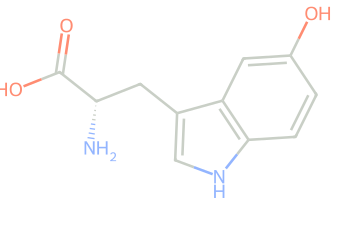
5-HTP is a building block the body uses to make serotonin, a brain chemical linked to mood. Small, older studies found some easing of low mood, but they were of poor quality. The one large modern study, in people with tiredness from bowel disease, found no benefit. So the mood evidence is weak.
The C belongs to one of the two uses graded on this record. The other one carries its own letter.
As studied, and the trials
Shaw et al. (Cochrane, 2002; PMID PubMed ID: the permanent number the US National Library of Medicine gives a published paper. Each one links to that paper's record on PubMed. 11869656): of 108 trials located, only 2 (64 patients) were of sufficient quality; pooled, 5-HTP and tryptophan beat placebo An inactive substitute made to look like the real treatment, so participants cannot tell which one they received. (Peto OR 4.10, 95% CI 1.28 to 13.15) but the authors call the evidence insufficient to be conclusive. Javelle et al. (Nutr Rev, 2020; PMID 31504850): 13 studies, 7 pooled, remission rate 0.65, large effect, high heterogeneity How much the results of the pooled trials differ from each other. High heterogeneity makes a combined estimate less reliable., and the authors rate the studies weak with few placebo groups. Jangid et al. (Asian J Psychiatr, 2013; PMID 23380314): 60 patients, 5-HTP matched fluoxetine on HAM-D over 8 weeks, no placebo arm. Meloni et al. (Eur J Neurol, 2020; PMID 32067288): 25 people with Parkinson's disease, crossover A trial design in which each participant receives both the treatment and the comparison, one after the other, and serves as their own control., HDRS improved on 50 mg/day. Small trials, mostly old, low quality: C.
As studied, and the trials
Read the grade that matches your goal. How EBL grades by use →
- Dose studied
- 100 mg/day
- Form graded
- 5-HTP (Griffonia-derived)
- Evidence behind the C
- PMID 11869656 →PMID 31504850 →PMID 23380314 →PMID 32067288 →
A letter describes the human evidence, not the product, the manufacturer, or the ingredient's worth.
See the full evidence record →5-HTP (5-Hydroxytryptophan) for depressive symptoms, graded on small low-quality randomized trials and two pooled analyses.
How this letter has changed · latest: October 2026 · Corrected
Depressive symptoms rest on randomized evidence that is thin: a Cochrane review that could pool two small trials and called the result inconclusive (Shaw et al., 2002; PMID 11869656), a weak pooled analysis (Javelle et al., Nutr Rev, 2020; PMID 31504850) and two small trials (Jangid et al., 2013; PMID 23380314; Meloni et al., 2020; PMID 32067288). The written C is exactly this: human randomized evidence that exists but is thin. D would require that the depression trials were null, which they were not; the null trial (Truyens et al., Gastroenterology, 2022; PMID 35940251) was in fatigue and carries that use's D Route 2 Human randomized trials have been run and did not show benefit on the stated outcome. One of the two routes to the lowest letter on EBL's scale.. Review closed. Applied the written grade definition under the editor's standing instruction of October 2026 (Arnold Sandlow, D.C.).PMID 11869656 PMID 23380314 PMID 31504850 PMID 32067288 PMID 35940251
The record presented Truyens 2022 (PMID 35940251) as support for a C on fatigue; that trial was null on its primary endpoint The one outcome a trial names in advance as its main test. Results on other outcomes carry less weight. and every secondary one, so fatigue in inactive inflammatory bowel disease is now a D Route 2 use. The depression evidence the record alluded to is now cited: the Cochrane review Shaw 2002 (PMID 11869656), the pooled analysis Javelle 2020 (PMID 31504850), and the small trials Jangid 2013 (PMID 23380314) and Meloni 2020 (PMID 32067288), with their quality warnings. Safety: the unresolved eosinophilia-myalgia syndrome association and 19.6 percent adverse events after a single dose in Jackson 2026 (PMID 42160304). Headline C held, scoped to depressive symptoms, pending editor confirmation.PMID 35940251 PMID 11869656 PMID 31504850 PMID 23380314 PMID 32067288 PMID 42160304
Every change to a letter on this site is dated and published. The full evidence log →
Commercial disclosure
EBL earns no commission on any supplement it grades. A purchase made through the dispensary link below pays EBL nothing, the practitioner discount goes to you in full. The dispensary is Fullscript, a practitioner dispensary, and many of the professional-grade brands in it are sold mainly through practitioners rather than in health food stores. Grades are assigned by published rubric before any commercial relationship exists and are never influenced by one. Full disclosure.
No dose is published here. This record carries no authored dose, because the cited trials do not converge on a single figure. Each trial cited on this page states the dose it used, and EBL has not turned those into a recommendation.
Standardized extracts/forms were used in the cited trials; product quality varies.
The cited trial gave 100 mg twice daily (PMID 35940251). Its summary does not state a time of day or whether doses were taken with food.
Checked against the published summary; the full paper could not be read. What the cited trials did, not a schedule. Every supplement, by trial timing →
Pregnancy and breastfeeding. Carcinoid tumors and other serotonin-secreting conditions.
Serotonergic medication is the principal concern: SSRIs, SNRIs, MAOIs, tricyclic antidepressants, triptans, tramadol, linezolid, and St John's wort. Combining any of them with 5-HTP raises the risk of serotonin syndrome. Carbidopa changes how 5-HTP is metabolized outside the brain, and scleroderma-like skin reactions are a documented caution for that combination.
The serotonin syndrome risk is mechanistic and case-based; the one controlled trial of 5-HTP with an MAOI did not report it. 5-HTP is a direct precursor of serotonin, so adding it to a drug that raises serotonergic tone is additive by construction, and serotonin syndrome is a recognized consequence of combining serotonergic agents. What does not exist is a modern trial measuring how often it happens with 5-HTP specifically. The one controlled human study of the combination gave 5-HTP with an MAOI to 30 hospitalized patients and reported no marked difference in side effects, but it was published in 1976, fifteen years before serotonin syndrome had agreed diagnostic criteria, so its silence is weak evidence of safety. The caution rests on the mechanism and on the syndrome literature, not on a measured rate. Boyer and Shannon (New England Journal of Medicine, 2005;352(11):1112-20; PMID 15784664): review of the serotonin syndrome, its precipitants and its management. Alino et al. (International Pharmacopsychiatry, 1976;11(1):8-15; PMID 770365): double-blind controlled trial, 30 hospitalized patients with endogenous depression given nialamide plus L-5-HTP or nialamide alone, with no marked difference in side effects except less orthostatic hypotension in the combination arm.
The carbidopa scleroderma caution rests on published cases, at myoclonus treatment doses. Carbidopa blocks the peripheral decarboxylation of 5-HTP, which is why the two were given together therapeutically for myoclonus, and it is in that setting that the scleroderma-like illness was described. The evidence is case-level, the doses were therapeutic rather than supplemental, and the reported mechanism involves kynurenine catabolism rather than serotonin. It is a documented caution for that specific combination, not a quantified risk. Sternberg et al. (New England Journal of Medicine, 1980;303(14):782-7; PMID 6997735): scleroderma-like illness during L-5-hydroxytryptophan and carbidopa therapy for intention myoclonus, with high plasma kynurenine that rose further on rechallenge. Joly et al. (Journal of the American Academy of Dermatology, 1991;25(2 Pt 1):332-3; PMID 1918474): pseudobullous morphea and scleroderma-like illness on the same combination.
The PHQ-9 or HAMD-17 at baseline and 6 weeks for depression applications. Sleep quality with the PSQI at baseline and 4 weeks for sleep applications. Combining 5-HTP with SSRIs, MAOIs or triptans carries a documented risk of serotonin syndrome and belongs under physician supervision.
Primary evidenceSix papers, each linked to its PubMed record.
Depressive symptoms: Shaw et al. (Cochrane, 2002; PMID 11869656) found only 2 of 108 trials (64 patients) good enough to pool and called the positive result inconclusive; Javelle et al. (Nutr Rev, 2020; PMID 31504850) pooled 7 mostly uncontrolled studies and rated them weak; Jangid et al. (2013; PMID 23380314) and Meloni et al. (2020; PMID 32067288) are small trials, one without placebo. Fatigue: Truyens et al. (Gastroenterology, 2022; PMID 35940251), the largest and best 5-HTP trial, 166 patients with inactive inflammatory bowel disease, was null on its primary endpoint The outcome a trial measures to decide whether the treatment worked, such as heart attacks, blood pressure or a symptom score. and every secondary one. Safety: the Cochrane review states the possible association with eosinophilia-myalgia syndrome has not been resolved; Jackson et al. (PLoS One, 2026; PMID 42160304) report fatigue, nausea or vomiting in 19.6 percent of adults after a single dose; serotonergic drug interactions are listed under drug conflicts. Grade C rests on the depressive-symptom trials and their low quality; the fatigue use is D, Route 2.
Educational use only · Not medical advice · Starting, stopping or changing any supplement or medication is a decision for your physician
These statements have not been evaluated by the Food and Drug Administration. This product is not intended to diagnose, treat, cure, or prevent any disease. The grade on this page describes the strength of published human trial evidence in the populations studied. It is not a recommendation for any individual and is not medical advice. Starting, stopping or changing any supplement or medication is a decision for your physician.
Who responds: this record's trial reading reports no subgroup that identifies who responds.
This page carries a letter. EBL takes no commission, referral fee or payment of any kind on anything it grades. No letter has been bought and none is for sale.
How this is enforced
That is not a promise, it is a build condition. Two checks run on every deploy: one refuses to publish if a commission is claimed on anything graded, the other refuses if a page names a commercial relationship that is not declared in the register. If either fails, this page does not go live. You can read how the checks work, and what they do not cover, on the evidence integrity page.
How EBL searched for the trials (1 search)
The search that was run, what it returned, and what was left out and why, so the absence of evidence can be checked as well as its presence.
(5-hydroxytryptophan[tiab] OR 5-HTP[tiab]) AND (depress*[tiab] OR fatigue[tiab]) AND (randomized controlled trial[pt] OR meta-analysis[pt]) AND humans[mesh]Grades move when new trials publish. A free monthly email lists every grade EBL moved, with the reason and the trial behind it: the sign-up is on the Evidence Log →